

Buck Supermoon: Keep an eye on the skies for today's Full Moon
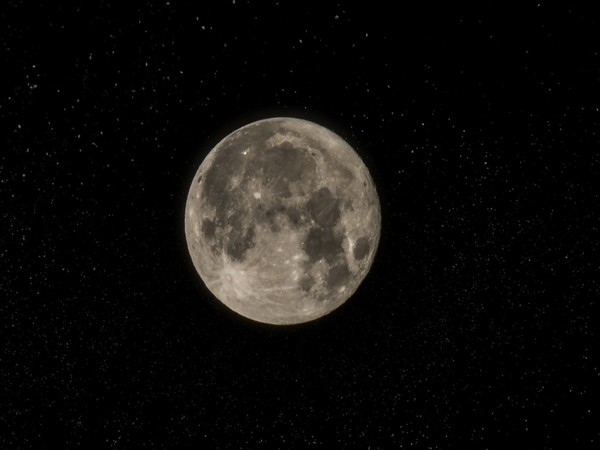
The next full moon is the Buck Supermoon, which will be visible on Wednesday, July 13, 2022. On this day, the Moon will be at perigee, its closest to the Earth for this orbit.
When a full moon appears at perigee (which is an average distance of about 226,000 miles (363,300 kilometres) from Earth) it is slightly brighter and larger than a regular full moon – and that's where we get a supermoon. The Moon will appear full for about three days, from early Tuesday morning through early Friday morning.
According to NASA, in the 1930s the Maine Farmer's Almanac began publishing Native American names for full moons. As per this Almanac, the Algonquin tribes of what is now the northeastern United States called this the Buck Moon. Early summer is normally when the new antlers of buck deer push out of their foreheads in coatings of velvety fur. The July supermoon is also called the Thunder Moon, and the Hay or Mead Moon.
We've spent today looking across the universe, so let's wrap it up with something a little closer to home.Keep an eye on the skies for the Buck Supermoon, our next full Moon, on July 13: https://t.co/H9EI3XIZOu pic.twitter.com/RMAqLw7Qxv
— NASA (@NASA) July 12, 2022
On Wednesday morning, the day of the full moon, as morning twilight begins, four of the five visible planets - Jupiter, Saturn, Mars and Venus - will appear in a line across the sky.
On Wednesday evening, as evening twilight ends at 9:44 p.m. EDT, the Moon will appear 5 degrees above the southeastern horizon. Two bright stars - Vega and Arcturus will be nearly tied for closest to overhead.
Vega, the 5th brightest star in our night sky, will be 60 degrees above the east-northeastern horizon. Located about 25 light-years from Earth, it is about twice the mass of our Sun but shines 40 times brighter.
Arcturus, the 4th brightest star in our night sky, will be 59 degrees above the west-southwestern horizon on the evening of July 13. Lying about 37 light-years from Earth, it is nearly the same mass as our Sun, but older.


 Google News