

New study explains why asteroids look rough and craggy from space
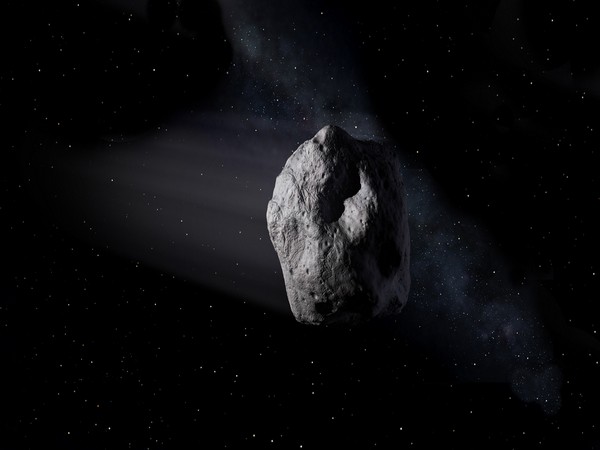
A new study has found that just like corn kernels popping in a frying pan, tiny grains of hopping dust on the surface of asteroids may influence the way these cosmic bodies look and move. The popcorn-like effect may even help to tidy up smaller asteroids, causing them to lose dust and look rough and craggy from space.
The more fine-grained material, or regolith, these asteroids lose, the faster they migrate," said Hsiang-Wen (Sean) Hsu, a research associate at the Laboratory for Atmospheric and Space Physics (LASP) at CU Boulder and co-lead author of this new study.
On October 20, 2020, NASA's OSIRIS-REx spacecraft briefly touched down on asteroid Bennu, which is about as tall as the Empire State Building, and found that its surface looked like rough sandpaper. There were even boulders the size of trucks scattered over its exterior.
According to Hsu, forces akin to static electricity may be kicking the smallest grains of dust off the asteroid and into space - leaving only larger rocks behind.
The researchers ran a series of calculations examining the physics of regolith on two hypothetical asteroids. They tracked how dust might form, and then hop around over hundreds of thousands of years. One of those faux asteroids was about a half-mile across (similar in size to asteroid Ryugu) and the second several miles wide (closer in diameter to big asteroids like Eros).
According to the team's estimates, when grains of dust jumped on the bigger asteroid, they couldn't gain enough speed to break free of its gravity. The same wasn't true on the smaller, Ryugu-like asteroid. That loss, in turn, will expose the surface of the asteroids to even more erosion, leading to a boulder-rich scenery like scientists found on Ryugu and Bennu. Within several million years, the smaller asteroid was almost completely swept clean of fine dust. On the other hand, the Eros-like asteroid stayed dusty.
Based on previous research by other scientists, Hsu suspects that asteroids covered in boulders may move faster than those with a dustier appearance. Their findings are published in the journal Nature Astronomy.


 Google News