

Greenland glacier melting at alarming rate: 100x faster than previously thought
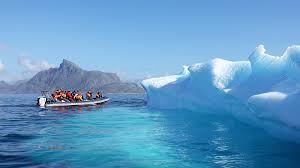
Researchers at the Oden Institute for Computational Engineering and Sciences at The University of Texas at Austin have developed a computer model that can calculate the rate of melting of Greenland's glacier fronts.
This model, as the researchers claim, is the first of its kind to be designed for vertical glacier fronts - where ice meets the ocean at a sharp angle. It has been observed that an Alaskan glacier front is melting up to 100 times faster than previously thought. This model can be used to improve both ocean and ice sheet models, which are essential components of any global climate model.
If the Greenland ice sheet were to completely melt, as it did during the Eemian interglacial period around 125,000 years ago, it could cause global sea levels to rise by a staggering 20 feet, or 6.1 meters. This frozen expanse of glaciers is the second-largest on Earth and covers approximately 80% of the Nordic nation, making it a major predictor of sea level rise.
"For years, people took the melt rate model for Antarctic floating glaciers and applied it to Greenland's vertical glacier fronts. It was the best we could do given the limited observations. If it was wrong or right, who knew? But there is more and more evidence that the traditional approach produces too low melt rates at Greenland's vertical glacier fronts," said lead author Kirstin Schulz, a research associate in the Oden Institute's Computational Research in Ice and Ocean Systems Group (CRIOS).
Schulz and his colleagues Nguyen and Pillar employed a different approach when constructing their model. They included the unique physics of Greenland's glacier fronts and used data gathered nearer to a vertical glacier front than ever before.
The findings are published in the journal Geophysical Research Letters. More details can be found here.


 Google News