

Watch a new comet gracing morning skies; two conjunctions and more in January 2023
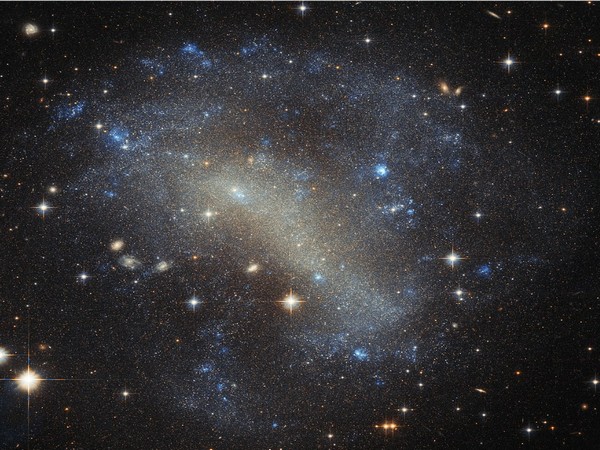
Two celestial conjunctions, winter stars, and a comet - January 2023 is a great time for skywatching!
NASA has shared skywatching highlights for this month that includes some close encounters between the Moon and several planets, the bright stars of winter, and a chance to catch a comet in the morning skies.
Throughout this month, Comet C/2022 E3 (ZTF) is observable with binoculars or a small telescope in the predawn sky for Northern Hemisphere observers. It'll become visible in the Southern Hemisphere in early February. The comet was first sighted in March last year when it was already inside the orbit of Jupiter. It will make its closest approach to the Sun on January 12, and then passes its closest to Earth on February 2.
Other skywatching events for January 2023 include:
- January 2: Find the Moon and Mars high in the southeast after sunset, in a lovely grouping with the Pleiades and Aldebaran.
- January 6: Full moon
- January 18-24: Watch Venus cross paths with Saturn over several days after sunset. Look for the pair low in the southwest about 45 minutes after the Sun dips below the horizon.
- January 21: New moon
- January 22: Venus and Saturn are super close together in the sky after sunset. They'll appear only a third of a degree apart – that's a third of the width of your index finger held at arm's length. Look for the pair low in the southwest about 45 minutes after the Sun dips below the horizon.
- January 23: Venus and Saturn are just a degree apart in the sky. The slim crescent Moon hangs just above them tonight - look for the trio low in the southwest about 45 minutes after the Sun dips below the horizon.
- January 25: Look to the southwest 30-45 minutes after sunset to find the Moon only a degree apart from Jupiter, about halfway up the sky.


 Google News