

Laser systems will enable live, 4K ultra-high-definition video from the Moon
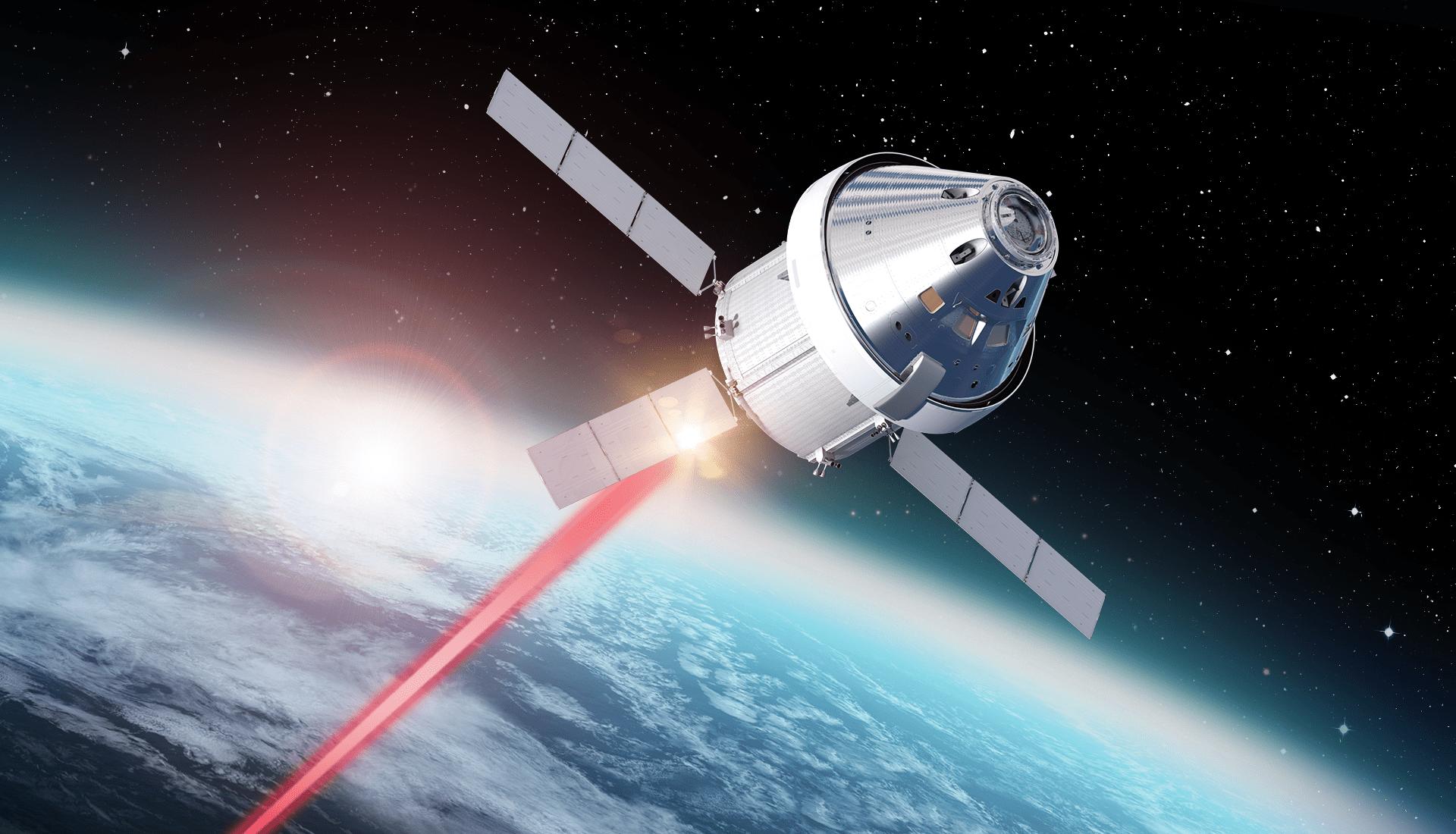
As astronauts prepare to return to the Moon for the first time in almost 50 years, laser or optical communications will play a crucial role in enabling the transmission of high-quality images and video to and from the Moon. People on Earth will be able to experience the upcoming lunar missions in real-time and with more clarity than was possible during previous missions.
Launching on NASA's NASA's Artemis II, the Orion Artemis II Optical Communications System (O2O) will utilize laser communications to enable high-speed data transmission, including live, 4K ultra-high-definition video from the Moon.
Laser communication systems allow for more data transmission, 10 to 100 times more than traditional radio systems. For instance, current radio frequency systems would take roughly nine weeks to transmit a complete map of Mars back to Earth whereas lasers would take about nine days.
This is because lasers use infrared light which is different from radio waves. Infrared light packs data into much tighter waves, meaning ground stations can receive more data at once.
"The idea is to have high-definition video transmissions to and from the Moon over laser links. If you recall the images from the Apollo mission, they were grainy and difficult to see, but O2O will allow Artemis astronauts to send videos and images significantly more vivid and detailed. This is an incredible advancement in technology," said Project Manager Steven Horowitz
O2O will make NASA's Artemis II mission one of the first to use laser communications technologies for crewed spaceflight, sending data to Earth with a downlink rate of up to 260 megabits per second.
I can see clearly now the grain is gone.🎶 Launching on @NASAArtemis II, the O2O system will enable live, 4K ultra-high-definition video from the Moon, as well as enhanced science data transmission using laser communications. Learn more: https://t.co/2uJ8Na5vA5 pic.twitter.com/Ro279pjSyS
— NASA Space Communications and Navigation (@NASASCaN) March 20, 2023
Overall, the ability of laser communication systems to transmit more data in a single downlink means that scientists will have access to more data, ultimately leading to new discoveries and enhancing humanity's understanding of the universe.


 Google News