

RNA building blocks and other organic compounds found in asteroid Ryugu samples
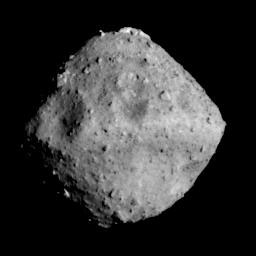
In 2018, the Japanese space agency's Hayabusa2 spacecraft successfully collected samples from the surface of Ryugu, a carbonaceous asteroid located in the asteroid belt between Mars and Jupiter, and returned them to Earth in December 2020. These samples were analyzed by researchers and were found to have uracil, one of the building blocks of RNA, the molecules that carry instructions for the development and function of living organisms.
The international team, led by Associate Professor Yasuhiro Oba at Hokkaido University, also found nicotinic acid, also known as Vitamin B3 or niacin, in the Ryugu samples. The findings, published in the journal Nature Communications, provide further support for the evidence that crucial components for the emergence of life are formed in outer space and could have been transported to our planet via meteorites.
By soaking the Ryugu particles in hot water, scientists were able to extract these biological molecules. The extracted compounds were then subjected to liquid chromatography coupled with high-resolution mass spectrometry for further analysis. Thereafter, the researchers found the presence of uracil and nicotinic acid, along with other organic compounds that contain nitrogen.
"Other biological molecules were found in the sample as well, including a selection of amino acids, amines and carboxylic acids, which are found in proteins and metabolism, respectively," Oba said.
According to the researchers, the compounds detected are similar but not identical to those previously discovered in carbon-rich meteorites.
"The discovery of uracil in the samples from Ryugu lends strength to current theories regarding the source of nucleobases in the early Earth. The OSIRIS-REx mission by NASA will be returning samples from asteroid Bennu this year, and a comparative study of the composition of these asteroids will provide further data to build on these theories," Oba concludes.
NASA's OSIRIS-REx spacecraft is cruising back to Earth with samples it collected from asteroid Bennu in October 2020. The samples are expected to be delivered to the Earth's surface on September 24, 2023.


 Google News