

Science News Roundup: Chinese EV maker Nio invests in nuclear fusion startup; NASA to name second company to build astronaut lunar lander and more
Scientists on Thursday said they had unearthed a partial skeleton of a previously unknown dinosaur species in the town of Cinctorres in the Spanish province of Castellon that helps provide a deeper understanding of a highly successful group of meat-eaters that hunted on land and in the water. Chinese EV maker Nio invests in nuclear fusion startup Chinese electric vehicle maker Nio has invested in a startup firm that is developing fusion technologies, according to a source with direct knowledge and a company filing, placing more bets in other areas of the energy sector.
Following is a summary of current science news briefs.
Genome data sheds light on how Homo sapiens arose in Africa
Our species arose in Africa more than 300,000 years ago, with the oldest-known Homo sapiens fossils discovered at a site in Morocco called Jebel Irhoud, located between Marrakech and the Atlantic coast. But the scarcity of Homo sapiens fossils from early in our evolutionary history and the geographical spread of those remains in Africa in places like Ethiopia and South Africa have made it difficult to piece together how our species emerged and dispersed across the continent before trekking worldwide. A new study tapping into genome data from modern-day African populations is offering insight into how this may have unfolded.
New dinosaur found in Spain illuminates history of meat-eating group
During the Cretaceous Period in a lush coastal region in eastern Spain, an impressive dinosaur with an elongated and vaguely crocodile-like skull was on the prowl for a meal, its curved and serrated teeth able to rip the flesh of its prey. Scientists on Thursday said they had unearthed a partial skeleton of a previously unknown dinosaur species in the town of Cinctorres in the Spanish province of Castellon that helps provide a deeper understanding of a highly successful group of meat-eaters that hunted on land and in the water.
Chinese EV maker Nio invests in nuclear fusion startup
Chinese electric vehicle maker Nio has invested in a startup firm that is developing fusion technologies, according to a source with direct knowledge and a company filing, placing more bets in other areas of the energy sector. The newly established company, Neo Fusion, will research and develop technologies that aim to bring controlled fusion for commercial uses globally in two decades, the source said.
Earth-sized alien planet gripped by widespread volcanism
An Earth-sized planet orbiting a dim star in our galactic neighborhood is offering some of the best evidence to date of volcanism beyond our solar system, with observations suggesting a rugged and rocky world tormented by constant eruptions. Scientists said on Wednesday the planet, the third detected orbiting this particular star, is likely covered with volcanoes - similar to Jupiter's moon Io, the most volcanically active body in our solar system. In our solar system, Earth and Venus are volcanically active, as are some of Jupiter's moons.
Amputees could feel warmth of human touch with new bionic technology
Fabrizio Fidati, who lost his right hand in an accident 25 years ago, had not experienced the sensation of temperature in his missing digits until trials for a bionic technology unlocked the cool of iced water and heat of a stove burner for him. Eventually, the researchers hope it could lead to a more natural feeling of loved ones when he is wearing his prosthetic.
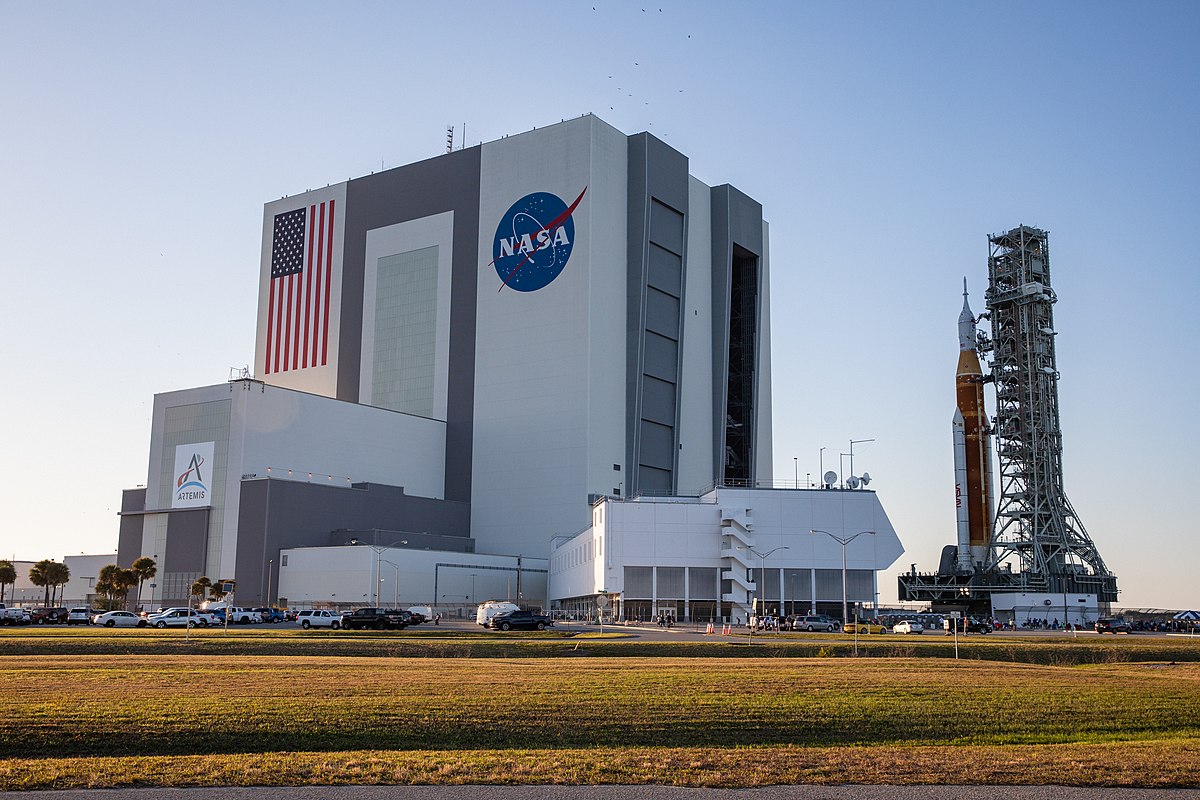
NASA to name second company to build astronaut lunar lander
U.S. space officials are set on Friday to reveal a second company that would build a spacecraft to send astronauts to and from the moon's surface, capping a high-stakes contest between groups that include Jeff Bezos' space firm Blue Origin and defense company Northrop Grumman. NASA's decision will give the agency a second ride to the moon under its Artemis program, after it awarded Elon Musk's SpaceX $3 billion in 2021 to land astronauts on the moon for the first time since the final Apollo mission in 1972.
More than half of the world's large lakes are drying up, study finds
More than half of the world's large lakes and reservoirs have shrunk since the early 1990s, chiefly because of climate change, intensifying concerns about water for agriculture, hydropower and human consumption, a study published on Thursday found. A team of international researchers reported that some of the world's most important freshwater sources - from the Caspian Sea between Europe and Asia to South America's Lake Titicaca - lost water at a cumulative rate of around 22 gigatonnes per year for nearly three decades. That's about 17 times the volume of Lake Mead, the United States' largest reservoir.
AI threatens humanity's future, 61% of Americans say - Reuters/Ipsos
The swift growth of artificial intelligence technology could put the future of humanity at risk, according to most Americans surveyed in a Reuters/Ipsos poll published on Wednesday. More than two-thirds of Americans are concerned about the negative effects of AI and 61% believe it could threaten civilization.
Long-necked dinosaur fossil found by Argentine scientists is one of biggest ever
Argentine paleontologists have discovered the remains of a gigantic new species of long-necked herbivorous dinosaur in the country's southern Patagonia region, saying the beast ranks as one of the largest ever discovered. The find in the Pueblo Blanco Nature Reserve, presented on Thursday, was first discovered by scientists in 2018. The dinosaur's bones were so big they caused the van carrying them to a Buenos Aires laboratory to tip over, though no one was injured and the remains were left intact.


 Google News