

NASA to conduct first major asteroid sample recovery rehearsal for OSIRIS-REx mission
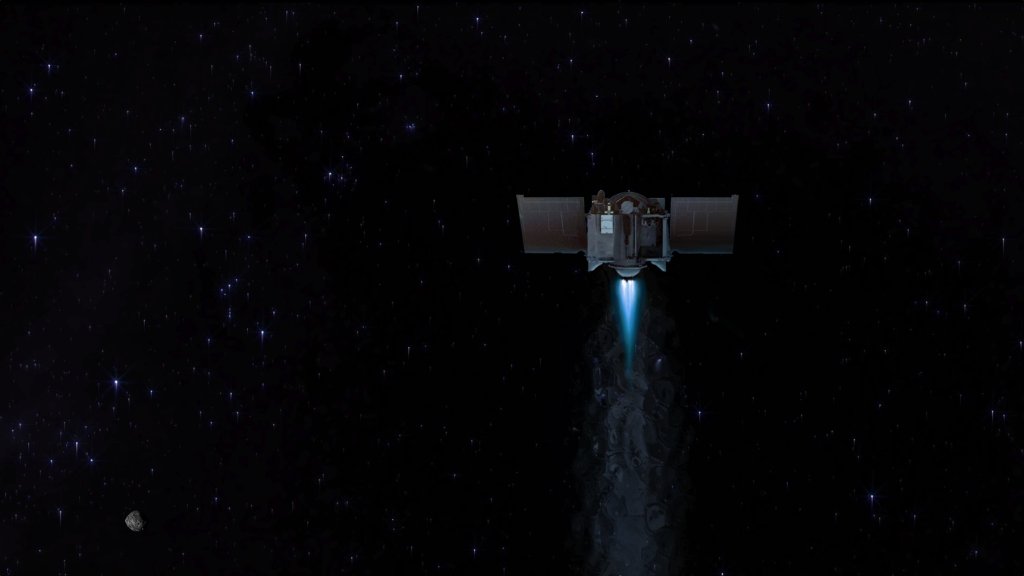
NASA will be conducting a major rehearsal event for its groundbreaking OSIRIS-REx mission, which aims to retrieve a sample from the surface of a near-Earth asteroid and deliver it back to Earth. The agency has invited media to attend the rehearsal, taking place from Tuesday, June 27, to Wednesday, June 28, at Lockheed Martin in Littleton, Colorado.
The OSIRIS-REx (short for Origins, Spectral Interpretation, Resource Identification, and Security – Regolith Explorer) mission marks a remarkable milestone for NASA as it becomes the first U.S. endeavour to capture an asteroid sample and bring it back to Earth for analysis. The anticipated sample delivery from the asteroid Bennu is scheduled to arrive on September 24, carrying valuable insights into the origins of organics and water that could have played a role in the development of life on our planet.
The rehearsal serves as a crucial preparation for the final sample collection mission, allowing NASA and its partners to refine their techniques to safely recover the sample capsule and ensure a successful conclusion of a seven-year mission.
During the rehearsal, media attendees will have the opportunity to witness scientists and engineers conduct a sample capsule recovery practice outdoors, with an additional availability to view a clean room rehearsal the following day.
The OSIRIS-REx spacecraft arrived at asteroid Bennu in December 2018, following which it diligently surveyed the celestial body for over two years, collecting information about its size, shape, mass, and composition. The spacecraft also collected a sample on October 20, 2020, which it will deliver to Earth.
In 2135, asteroid Bennu is projected to zoom by Earth. While the near-Earth object is not expected to pose a threat to our planet during this encounter, scientists are keen on understanding its precise path during this time to accurately predict how Earth's gravity will influence the asteroid's orbit around the Sun and affect the hazard of Earth impact.
It is worth mentioning that while the chances of Bennu colliding with Earth are currently deemed very low, it remains one of the two most hazardous known asteroids in our solar system. The other asteroid, known as 1950 DA, also holds the potential for a future Earth encounter.
In a nutshell, the OSIRIS-REx mission holds immense scientific value, as the analysis of the returned asteroid sample will offer invaluable data regarding the origins of life-sustaining resources on Earth. By studying the organics and water present in the sample, researchers hope to gain a deeper understanding of the conditions that could have supported the emergence of life.


 Google News