

Sun gets super active: A week of intense flares and impact on space weather
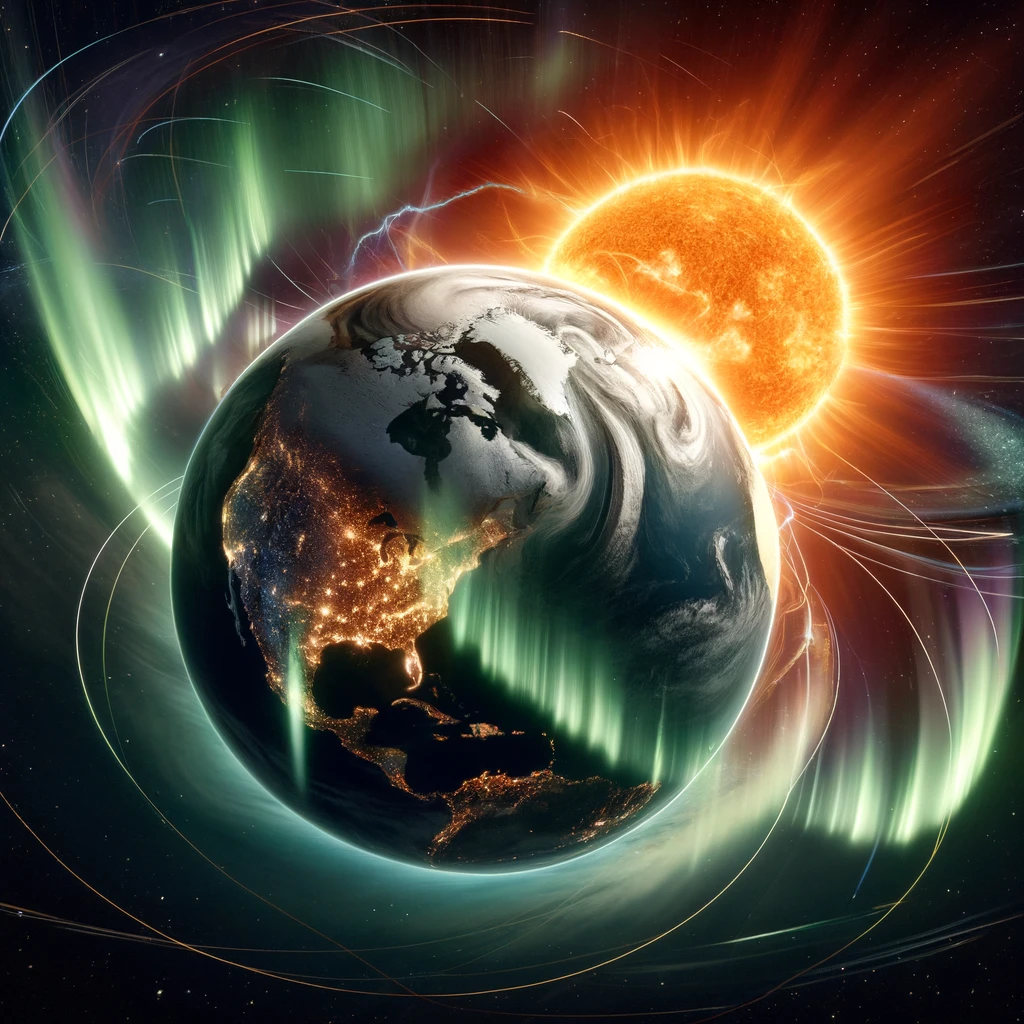
Over the past week, the Sun has exhibited a surge in activity, releasing several powerful solar flares, primarily in the X-class category, which are the most intense form of solar flares. According to observations from NASA's Solar Dynamics Observatory (SDO), the Sun unleashed 82 notable flares between May 3 and May 9. This unusual spike in solar activity has significant implications for space weather, affecting satellite operations and communication systems on Earth.
Solar flares are intense bursts of radiation emanating from the release of magnetic energy associated with sunspots. While the harmful radiation from these flares doesn't reach the Earth's surface and therefore doesn't physically harm humans, they can disrupt the ionosphere - a layer of Earth's atmosphere where GPS and communication signals travel, leading to disturbances in navigation and telecommunications.
The recent flares have been associated with several coronal mass ejections (CMEs) - large expulsions of plasma and magnetic field from the Sun's corona. When these CMEs reach Earth, they can trigger geomagnetic storms. In recent days, such storms have caused auroras, also known as the Northern Lights, to appear in locations further south than usual. These impressive light shows occur as charged particles from the Sun interact with the Earth's magnetic field and atmospheric gases.
Powerful, repeated eruptions like those we've had recently can widen the auroral oval, pushing aurora to lower latitudes. Last night, northern lights were reported as far south as the Bahamas! Here's last night's view from Bear Lake, Utah. Credit: NASA/Bill Dunford pic.twitter.com/E5BnrvqqpP
— NASA Sun & Space (@NASASun) May 11, 2024
Why is the Sun so active?
The Sun goes through approximately 11-year cycles of solar activity, known as the solar cycle, which involves periods of higher and lower solar activity. The current cycle, Solar Cycle 25, is ramping up towards its maximum, expected around 2025. During this phase, the frequency and intensity of solar flares and CMEs increase. The current activity is part of this natural cycle.
Looking ahead
The National Oceanic and Atmospheric Administration (NOAA) has forecasted that the geomagnetic conditions caused by recent CMEs are expected to wane by late Monday into early Tuesday. However, NASA and other space agencies continue to monitor the Sun for any further unusual activity, as additional solar flares could continue to impact space weather.
Geomagnetic storming to persist tonight... pic.twitter.com/FdIRFiiXGP
— NOAA Space Weather Prediction Center (@NWSSWPC) May 13, 2024
The heightened solar activity underscores the importance of monitoring space weather to protect sensitive technologies and infrastructure on Earth, such as power grids and communication networks.


 Google News