

Winter solstice 2018 followed by Full Moon, Next coincide in 2094
Google celebrates winter solstice with a unique doodle on this day.
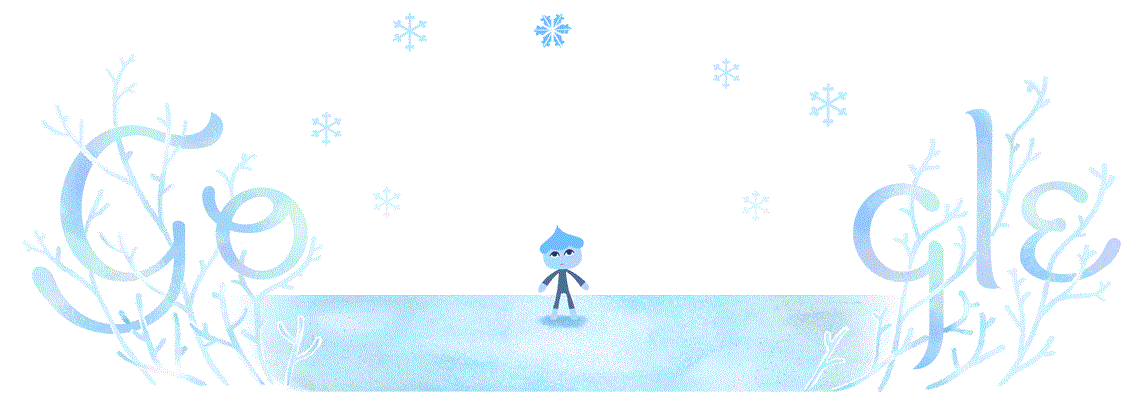
December 21, 2018, which falls on Friday is the shortest day of the year. This day of the winter solstice is the shortest day and longest night in the northern hemisphere. This is the exact time when one of the Earth's poles moves to its farthest distance or gets a maximum tilt away from the Sun. Google celebrates the winter solstice with a unique doodle on this day.
This maximum tilting of both the hemispheres happens twice a year – one in December (winter solstice) and another one in June (June solstice). NASA's Earth Observatory claims that on this day Earth's axis is tilted 23.5-degree from the plane of its orbit around the sun. This (23.5-degree tilt in Earth's axis of rotation) gives various parts of Earth more exposure to the Sun at various times in a year resulting seasons. During this December, the northern hemisphere (and north pole) turns away from the Sun, as a result of it, the southern hemisphere (and south pole) gets the most sunlight. You can get to know more about it by clicking on Google doodle that takes the users to the search page for winter solstice.
The word 'solstice' is derived from the Latin 1st century BC word 'solstitium'. The Latin word 'sol' means 'Sun' and 'sistere' means 'to stand still'. Although due to modern technological innovations, the instant of solstice can be calculated, it is impossible by an amateur to get a direct observation of the solstice as the sun appears to stand still.
Each year the date and time of winter solstice vary, though it typically falls between December 20 and 23. According to National Weather Service, the northern hemisphere winter solstice will take place at 3:23 pm MST on December 21, 2018 and the Sun will appear at its lowest elevation around noon. This day (of 2018) will feature just 9 hours and 47 minutes of daylight in Albuquerque compared to 9 hours and 48 minutes in 2017. Since the Sun's angle remains low for a period of time in the post-solstice period, the temperature continues to fall during that time until the Sun starts rising higher in the sky. This lag in temperature takes place as the Earth's surface continues to lose energy than it receives from the Sun.
Another interesting of this year's winter solstice is Full Moon and a Meteor. Full Moon (called Full Cold Moon) arrives on December 22, just a day after the winter solstice. It is said to be at the fullest at 12:49 pm ET, NASA claims (via Space.com). Last time, Full Moon coincided with solstice in 2010 and the same will take place in 2094. On the other hand, the Full Moon will share the sky with the annual Ursid meteor shower.


 Google News