

IAEA Task Force Confirms Fukushima Treated Water Discharge Meets International Safety Standards
Since the discharge commenced on August 24, 2023, TEPCO has released approximately 55,000 cubic meters of treated water in batches.
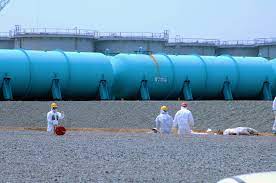
The International Atomic Energy Agency (IAEA) Task Force has confirmed that the discharge of treated water from Japan's Fukushima Daiichi Nuclear Power Station (FDNPS) continues to adhere to international safety standards, according to its latest report released today. This is the second report since the discharge began in August 2023, and it reaffirms the findings from the IAEA's comprehensive safety assessment conducted last year.
The Task Force's latest mission took place from April 23 to April 26, 2024, marking its seventh visit since its establishment in 2021. During this mission, the Task Force inspected the FDNPS site, engaged with Japan's Ministry of Economy, Trade and Industry (METI), Tokyo Electric Power Company (TEPCO), and the Nuclear Regulation Authority (NRA).
The IAEA's comprehensive report issued on July 4, 2023, prior to the start of the discharge, had already determined that Japan's plan for managing the treated water was in line with international safety standards, and that the planned discharge would have minimal radiological impact on people and the environment.
Since the discharge commenced on August 24, 2023, TEPCO has released approximately 55,000 cubic meters of treated water in batches. The Task Force's review of the seven batches released so far confirms that the tritium levels are well below Japan's operational limits.
During the April mission, the Task Force evaluated various components of the discharge system, including measurement tanks, flow control valves, emergency isolation valves, and seawater pumps. They also examined the radiation monitors and flow rate detectors that provide real-time data, accessible through the IAEA's monitoring page.
The Task Force reviewed the IAEA's independent verification of Japan's monitoring programs and analyzed onsite sampling and data. They are conducting interlaboratory comparisons (ILCs) to validate the data reported by TEPCO and Japanese authorities.
Key findings from the April mission include:
- Regulatory Oversight: The regulatory infrastructure in place is deemed adequate for overseeing the operational safety of the treated water discharge. The Task Force observed the continuous onsite presence of the NRA.
- Compliance: Equipment and facilities are operated in accordance with Japan's Implementation Plan for the discharge and meet international safety standards.
- Transparency: The ongoing independent verification activities by the IAEA are crucial for ensuring transparency and reliability in the data reported by TEPCO and the Japanese government.
IAEA Director General Rafael Mariano Grossi established the Task Force in 2021 to ensure a thorough and transparent review of Japan's water discharge plans. The Task Force, composed of IAEA and independent experts from 11 countries, provides diverse technical perspectives to ensure compliance with international safety standards.
The IAEA will continue its multiyear safety review, with the next mission scheduled for the last quarter of 2024. The Agency maintains a continuous presence at the IAEA Fukushima Daiichi NPS Office, which was set up in July 2023 to monitor and assess the ongoing discharge process.


 Google News