

U.S. Pledges $41.1 Million to Global Soil and Crop Resilience Initiative at UN COP16
Funding to Empower Farmers and Restore Land in Climate-Vulnerable Regions through IFAD’s VACS Program.
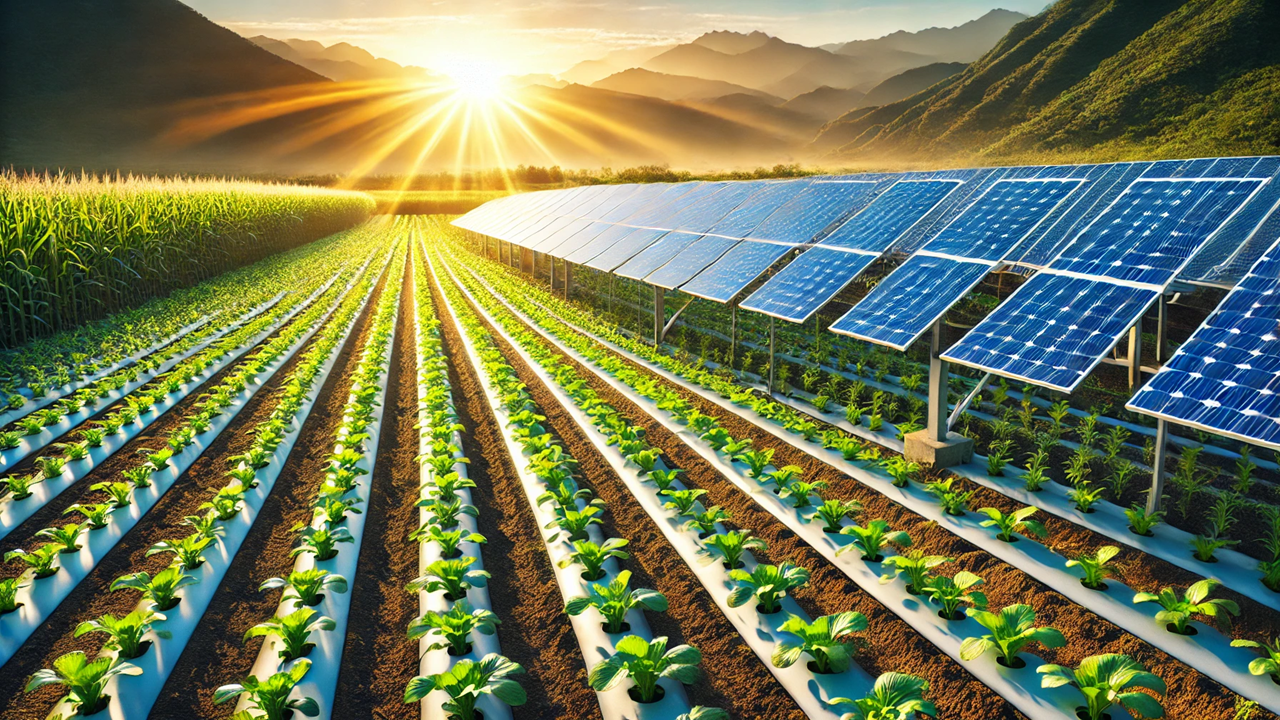
At the UN Climate Summit on Land Degradation and Desertification (COP16), the United States announced the disbursement of $41.1 million to the Vision for Adapted Soils and Crops (VACS) initiative, hosted by the UN's International Fund for Agricultural Development (IFAD). This multi-donor trust fund seeks to bolster small-scale farmers' resilience by improving soil fertility, enhancing crop diversity, and increasing agricultural productivity in the face of intensifying climate challenges.
The U.S. contribution is part of its $50 million pledge announced at COP28 and will directly target dryland regions, home to two billion people. These areas experience severe land degradation, costing between 4% and 8% of their GDP annually. The funding will help reclaim degraded lands, strengthen food security, and enhance economic stability in Angola, Mozambique, Tanzania, and Zambia, among other priority nations.
Key areas of focus include:
Soil health improvement and sustainable land management.
Development of climate-resilient crops tailored to local environments.
Building robust seed systems and efficient crop management techniques.
Promoting gender-inclusive agricultural practices to strengthen value chains.
"This generous contribution bolsters IFAD's efforts to support small-scale farmers on the frontlines of the fight against land degradation," said Alvaro Lario, President of IFAD.
Scaling Climate-Smart Agriculture
In Malawi, VACS-backed initiatives are making strides in scaling climate-resilient crops such as sweet potato, sorghum, and sesame. Improved breeding and community seed systems have introduced 25 new crop varieties and produced 7 metric tons of seeds. These efforts are directly benefiting 4,000 food-insecure households, with 8,000 farmers trained annually in climate-smart practices through demonstration farms.
In Côte d'Ivoire, agroforestry techniques and legumes are revitalizing 1,000 hectares of hydro-agricultural facilities while mapping 10,000 hectares for soil fertility. Over 35,000 smallholders and micro-entrepreneurs, nearly half of them women, are gaining access to climate-smart agriculture training.
"VACS has become a global movement for sustainable food security," said Cary Fowler, U.S. Special Envoy for Global Food Security. "Together with IFAD, we are committed to building healthy soils and integrating opportunity crops to address food system weaknesses."
Partnerships for Long-Term Impact
The IFAD President emphasized the need for collaboration with organizations such as the Food and Agriculture Organization (FAO), Crop Trust, CIMMYT, and CGIAR to achieve systemic change at scale.
"Partnerships are the most efficient route to restore millions of hectares and stabilize vulnerable economies," said Lario.
The IFAD-VACS initiative has already reclaimed 1.9 million hectares globally through agroforestry and conservation agriculture, proving the power of collective action.
Global Implications and Future Goals
The $41.1 million funding marks a significant step in addressing food system weaknesses exacerbated by climate change. As part of IFAD's innovative financing mechanisms, it aims to scale these efforts to ensure food security for vulnerable populations, restore degraded lands, and empower small-scale farmers worldwide.
The success of these projects underscores the urgency of sustained public and private investments in land management and climate-smart agriculture to combat land degradation and ensure a resilient global food system.


 Google News