

IAEA Confirms 17th Fukushima ALPS-Treated Water Release Meets Global Safety Standards
The IAEA maintains a permanent presence at FDNPS and provides continuous verification of data from TEPCO’s monitoring systems.
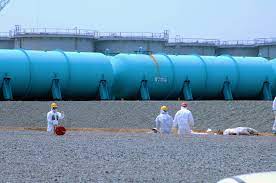
- Country:
- Japan
Independent sampling and analysis conducted by the International Atomic Energy Agency (IAEA) has confirmed that the 17th batch of Advanced Liquid Processing System (ALPS)-treated water discharged today from the Fukushima Daiichi Nuclear Power Station (FDNPS) remains far below Japan's operational safety limits for tritium concentration. The findings reaffirm earlier conclusions that Japan's discharge operations meet international nuclear safety standards.
Sampling Confirms Tritium Levels Far Below Limits
As part of its ongoing, multi-year safety review, IAEA experts collected samples directly from the discharge vertical shaft and the seawater pipe header, where treated water is diluted with seawater prior to being released into the Pacific Ocean via a one-kilometre undersea tunnel.
On-site laboratory analysis confirmed that tritium concentrations in the 17th batch are well below Japan's 1,500 becquerels per litre limit, and consistent with global radiological protection guidelines. These results match findings from all 16 previous discharge batches, which also showed tritium levels far below regulatory thresholds.
Consistent Monitoring Since August 2023
Since Japan began releasing ALPS-treated water in carefully controlled batches in August 2023, approximately 125,400 cubic meters of water has been safely discharged. Each release undergoes independent monitoring, transparent reporting, and real-time environmental tracking to ensure continued public confidence and compliance.
The IAEA maintains a permanent presence at FDNPS and provides continuous verification of data from TEPCO's monitoring systems. This includes cross-checking Japan's measurements, conducting its own sampling and analysis, and publishing results openly for international review.
IAEA's 2023 Comprehensive Safety Review
Before the first release commenced, the IAEA issued a detailed report on 4 July 2023, concluding that Japan's plan:
-
Is consistent with international safety standards
-
Will result in a negligible radiological impact on people and the environment
-
Uses a scientifically validated approach centered on dilution and controlled discharge
-
Demonstrates strong regulatory oversight and transparency
These findings provided a critical scientific basis for Japan's decision to begin discharges and have been reinforced by multiple rounds of independent verification.
Ongoing International Oversight
The IAEA continues to play an oversight role, ensuring long-term compliance and providing assurances to neighbouring countries and the global community. International experts from multiple member states also participate in review missions to ensure neutrality and technical rigor.
As the discharge programme proceeds, the IAEA will continue monitoring environmental indicators such as seawater quality, sediment samples, marine life, and radiation levels near the release point. All results will remain publicly accessible.
Safeguarding the Environment and Public Health
ALPS removes nearly all radionuclides except tritium, a radioactive isotope of hydrogen that is naturally present in the environment and routinely released in small quantities by nuclear facilities worldwide. The dilution method used at Fukushima ensures tritium levels remain significantly below both Japanese and international regulatory standards.
The IAEA's ongoing assessments reaffirm that, based on current operations and safety controls, the treated water discharge does not pose a risk to human health or the marine environment.


 Google News