

NASA selects four promising proposals to study cosmic explosions, debris
The Explorers Program has launched more than 90 missions to date.
- Country:
- United States
US space agency NASA said Tuesday it has selected four proposals under the Explorers Program that would study cosmic explosions and the debris they leave behind. The agency will finalize two proposals in 2021 to be the next astrophysics missions that will be targeted for launch in 2025.
The Explorers Program is NASA's oldest continuous program that seeks to provide frequent flight opportunities for world-class scientific investigations from space utilizing innovative, streamlined and efficient management approaches within the heliophysics and astrophysics science areas. The Explorers Program has launched more than 90 missions to date.
Based on potential science value and feasibility of development plans, NASA selected two astrophysics Small Explorer (SMEX) missions and two Missions of Opportunity (MO) proposals. Each SMEX mission cost is capped at USD 145 million while MO costs are capped at USD 75 million each, NASA said in a statement.
The SMEX proposals include ESCAPE and COSI missions, each of which will receive USD 2 million to conduct a nine-month mission concept study.
ESCAPE Mission
The Extreme-ultraviolet Stellar Characterization for Atmospheric Physics and Evolution (ESCAPE) Mission would study nearby stars, watching for rapid, strong ultraviolet flares.
COSI Mission
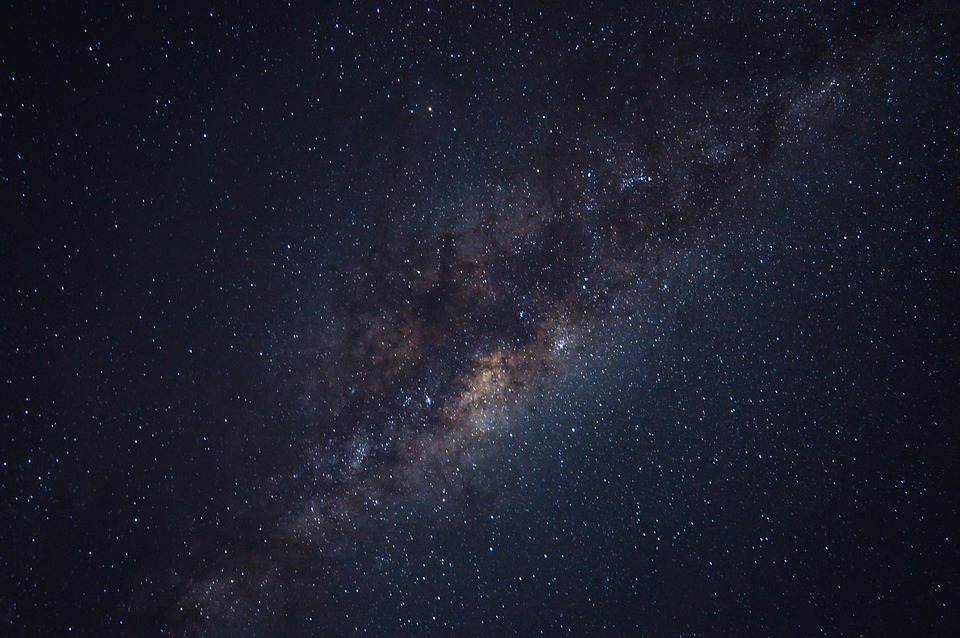
The Compton Spectrometer and Imager (COSI) would scan the Milky Way galaxy, measuring gamma rays from radioactive elements produced during stellar explosions to map the recent history of star death and element production whilst also measuring polarization to understand the production of gamma rays.
MO proposals include Gravitational-wave Ultraviolet Counterpart Imager Mission and LEAP mission, each of which will receive USD 500,000 to conduct a nine-month implementation concept study.
Gravitational-wave Ultraviolet Counterpart Imager Mission
The Gravitational-wave Ultraviolet Counterpart Imager Mission would map the sky in ultraviolet light, finding other bright objects such as exploding stars. It comprises two independent small satellites, each scanning the sky in a different ultraviolet band.
LEAP mission
LargE Area burst Polarimeter mission would study the energetic jets launched during the explosive death of a massive star or the merger of compact objects such as neutron stars. The mission would complement NASA's Imaging X-ray Polarimetry Explorer (IXPE), due to be launched in 2021.
These promising proposals under the Explorers Program bring out some of the most creative, innovative ways to help uncover the secrets of the universe. From studying stars and planets outside our solar system to seeking answers to the largest cosmic mysteries, I look forward to the breakthrough science from these modest size missions


 Google News