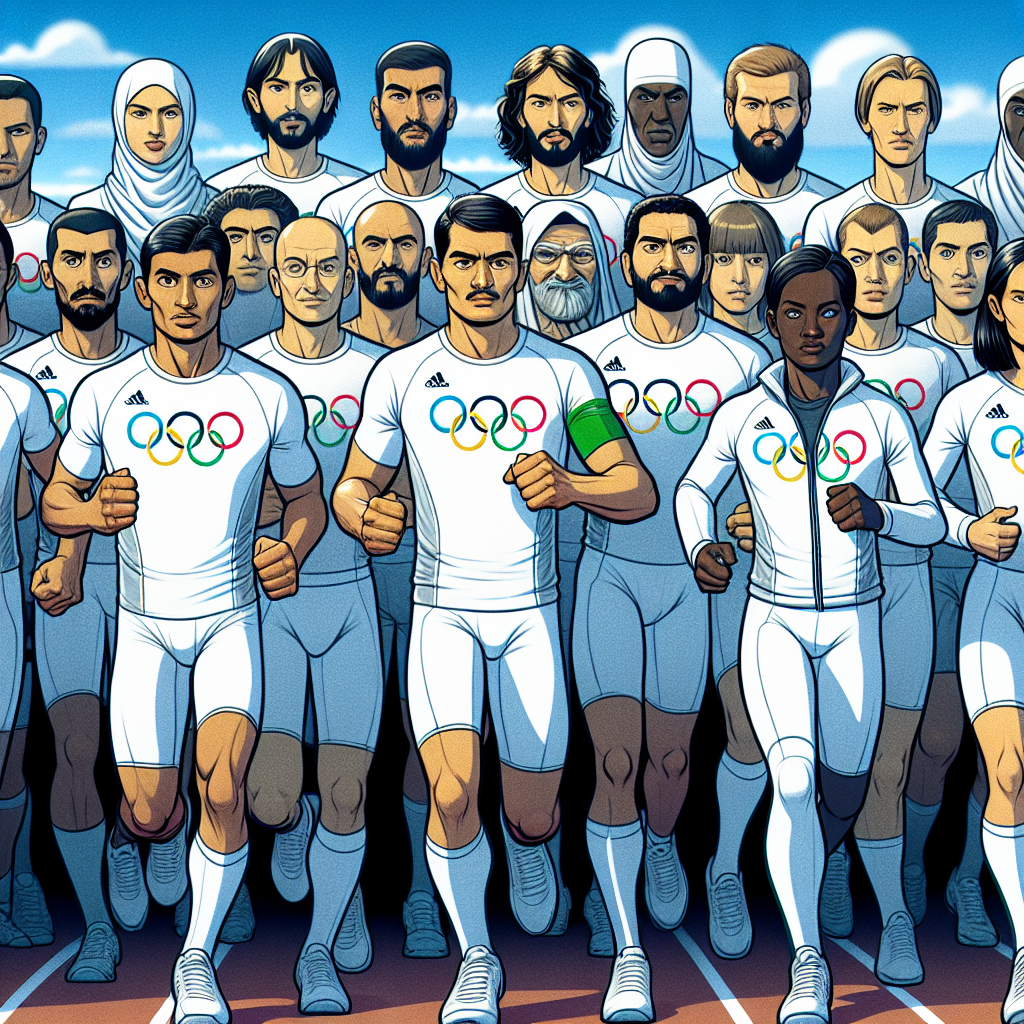
The Refugee Olympic Team, established by the International Olympic Committee (IOC) and the Olympic Refuge Foundation (ORF) with support from UNHCR, has made a remarkable impact at the Paris 2024 Olympic Games. This team, which first competed at the Rio 2016 Games, exemplifies the strength and determination of forcibly displaced athletes on the global stage.
"This team of 37 athletes has demonstrated what refugees can achieve when given the opportunity to excel," said Jojo Ferris, Head of the Olympic Refuge Foundation. "Their success is a powerful reminder of the potential within every refugee."
Boxer Cindy Ngamba achieved a historic milestone by winning bronze in the women's 75kg category, marking the first time a member of the Refugee Olympic Team has earned a podium finish. Ngamba's achievement was a highlight among many notable performances.
In athletics, Dominic Lokinyomo Lobalu narrowly missed out on a medal in the men's 5,000-metre final, finishing fourth. Perina Lokure Nakang and Jamal Abdelmaji also delivered impressive performances, setting personal bests in the women's 800m and men's 10,000m, respectively.
On the water, three refugee canoe sprinters advanced to the quarterfinals: Fernando Dayan Jorge Enriquez in the men's canoe 1,000m, Saeid Fazloula in the men's kayak 1,000m, and Saman Soltani in the women's kayak 500m.
Despite varying placements, every athlete in the 37-member Refugee Olympic Team demonstrated immense courage and determination across 12 different sports, representing the 120 million forcibly displaced people worldwide.
At the Tokyo 2020 Games, the Refugee Olympic Team featured 29 athletes. For Paris 2024, road cyclist Masomah Ali Zada led the team as its Chef de Mission and spokesperson. Ngamba and Yahya Al Ghotany, who competed in taekwondo, carried the team's flag at the opening ceremony. During the closing ceremony, Farida Abaroge and Kasra Mehdipournejad represented the team, with Ngamba joining IOC President Thomas Bach and other athletes to extinguish the Olympic flame.
In addition to the IOC Refugee Team's achievements, other displaced athletes also made significant strides. Kimia Alizadeh, who competed for the Refugee Olympic Team in Tokyo and now represents Bulgaria, won the country's first-ever taekwondo medal, a bronze in the women's 57kg category. South Sudan's men's basketball team, composed of former refugees, competed vigorously, securing a win against Puerto Rico before facing tough losses to Serbia and the United States.
The Refugee Olympic Team's participation in Paris 2024 underscored the power of sport to inspire, uplift, and provide hope to displaced individuals worldwide. "As the Olympic flame is extinguished here in Paris, the legacy of the Refugee Olympic Team will continue to inspire us all," concluded Deputy High Commissioner for Refugees, Kelly T. Clements.


 Google News
RSS
Google News
RSS



