

Smart foam material gives robotic hand the ability to self-repair
According to the researchers at the National University of Singapore, this allows the spongy material to fuse easily into one piece when cut. "There are many applications for such a material, especially in robotics and prosthetic devices, where robots need to be a lot more intelligent when working around humans," explained lead researcher Benjamin Tee. To replicate the human sense of touch, the researchers infused the material with microscopic metal particles and added tiny electrodes underneath the surface of the foam. When pressure is applied, the metal particles draw closer within the polymer matrix, changing their electrical properties.
- Country:
- Singapore
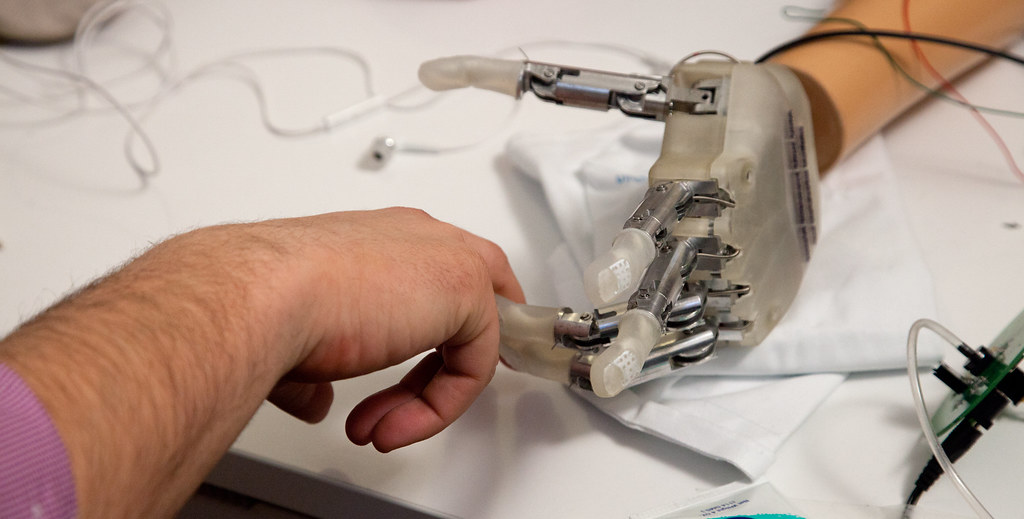
Singapore researchers have developed a smart foam material that allows robots to sense nearby objects, and repairs themselves when damaged, just like human skin.
Artificially innervated foam, or AiFoam, is a highly elastic polymer created by mixing fluoropolymer with a compound that lowers surface tension. According to the researchers at the National University of Singapore, this allows the spongy material to fuse easily into one piece when cut.
"There are many applications for such a material, especially in robotics and prosthetic devices, where robots need to be a lot more intelligent when working around humans," explained lead researcher Benjamin Tee. To replicate the human sense of touch, the researchers infused the material with microscopic metal particles and added tiny electrodes underneath the surface of the foam.
When pressure is applied, the metal particles draw closer within the polymer matrix, changing their electrical properties. These changes can be detected by the electrodes connected to a computer, which then tells the robot what to do, Tee said. "When I move my finger near the sensor, you can see the sensor is measuring the changes of my electrical field and responds accordingly to my touch," he said.
This feature enables the robotic hand to detect the amount and the direction of applied force, potentially making robots more intelligent and interactive. Tee said AiFoam is the first of its kind to combine both self-healing properties and proximity and pressure sensing. After spending over two years developing it, he and his team hope the material can be put to practical use within five years.
"It can also allow prosthetic users to have more intuitive use of their robotic arms when grabbing objects," he said.


 Google News