

Apple Heart Study opens door to further research into wearable tech
The study sponsored by Apple enrolled over 400,000 participants who used an iPhone and Apple Watch (series 1, 2 or 3) to monitor irregular pulse using the Apple Heart Study app.

- Country:
- United States
Researchers at Stanford Medicine have published the full findings of the Apple Heart Study which was launched back in November 2017 to determine whether a mobile app that uses data from a heart-rate pulse sensor can identify atrial fibrillation (AFib), a deadly and often undiagnosed disease and also a leading cause of stroke and hospitalization in the United States.
The study sponsored by Apple enrolled over 400,000 participants who used an iPhone and Apple Watch (series 1, 2 or 3) to monitor irregular pulse using the Apple Heart Study app. Participants who received an irregular heart rhythm notification were sent ambulatory electrocardiogram (ECG) patches for additional monitoring.
According to the findings published in the New England Journal of Medicine (NEJM), only 0.5 percent of the overall participants received irregular pulse notifications, a finding that researchers termed as 'important' owing to the concerns about over-notification in healthy participants. Furthermore, only 34 percent of the participants who received a notification and used ECG patches thereafter had atrial fibrillation.
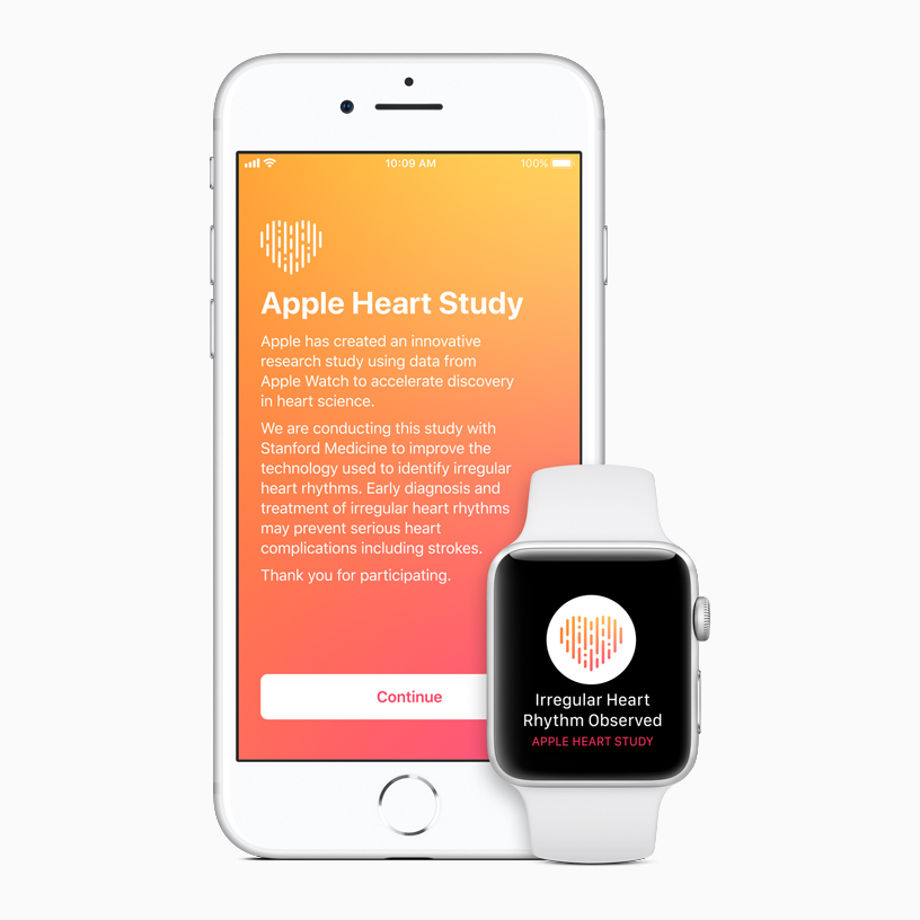 Image Credit: Apple
The ECG patch recordings revealed that 84 percent of the notifications were concordant with atrial fibrillation. Further, 57 percent of the participants sought medical attention after receiving irregular rhythm notification.
"The results of the Apple Heart Study highlight the potential role that innovative digital technology can play in creating more predictive and preventive health care," said Lloyd Minor, MD, dean of the Stanford School of Medicine.
In the recent few years, the popularity of wearable technology such as fitness bands, smartwatches, smart glasses, smart sensors has dramatically increased. Owing to the user-friendly nature and health monitoring features that the wearables provide for individualized care, not only consumers but researchers and healthcare experts are also keen to explore the potential impact of wearable technology on the health system.


 Google News