The World Bank's Board of Executive Directors has approved a $35 million loan for the first phase of the Enhancing Energy Security through Power Interconnection and Renewable Energy (ESPIRE) Program for Georgia. This initial phase is part of a broader $500 million initiative aimed at bolstering Georgia's energy security and digital connectivity.
The ESPIRE Program is structured in three phases, designed to:
Improve Georgia's institutional capacity for developing submarine cable projects.
Strengthen Georgia's domestic power transmission system.
Establish a direct electricity interconnection between the South Caucasus and Southeast Europe, along with a parallel digital interconnection to reduce internet costs and enhance bandwidth across the Black Sea.
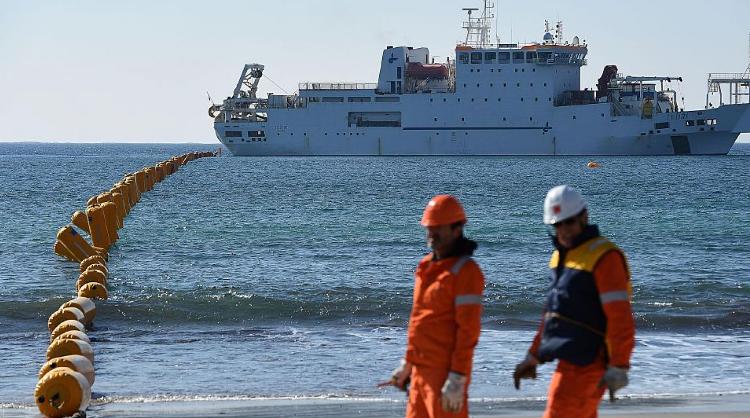
A key focus of the ESPIRE Program is the preparation for the Black Sea Submarine Cable (BSSC) Project, which aims to create electricity and fiber-optic submarine cable links between Georgia and Romania.
"The ESPIRE Program can play a pivotal role in realizing one of the most strategic and ambitious energy and digital connectivity initiatives in the region," said Rolande Pryce, World Bank Regional Director for the South Caucasus. "The Black Sea Submarine Cable Project has the potential to become a transformational interconnection between the South Caucasus and Southeast Europe, helping the countries on both sides of the Black Sea improve energy security, decarbonize energy supply, and develop renewable energy, as well as increase direct digital connectivity."
First Phase Focus
The first phase of the ESPIRE Program is critical for identifying a suitable corridor for the BSSC Project and supporting preparatory activities such as seabed surveys and geophysical and geotechnical investigations. This phase will also include capacity building and technical assistance for establishing institutional mechanisms for intergovernmental coordination and joint decision-making among the countries involved in the BSSC project.
If Georgia and other participating countries decide to proceed, Phase 2 of the ESPIRE Program will focus on strengthening the on-land transmission grid in Georgia and potentially other countries. Phase 3 will support the financing of the submarine cable itself, with the fiber-optic component expected to attract significant private-sector investment.
Strategic Importance
"The Black Sea Submarine Cable is a flagship project initiated by Georgia, providing a direct connection of the South Caucasus countries to the European energy system," said Levan Davitashvili, First Vice Prime Minister, Minister of Economy and Sustainable Development of Georgia. "The first phase of financing, approved by the World Bank, is fundamental for further development. Implementation of the BSSC project implies large-scale infrastructure development, job creation, and increased investments in Georgia's economy."
"The World Bank-supported first phase of the ESPIRE Program will contribute to Georgia's energy security and support preparatory works for the BSSC Project," said Lasha Khutsishvili, Minister of Finance of Georgia. "We believe the project will strengthen Georgia's role as a reliable transit country and exporter of renewable energy, contributing to energy diversification and regional connectivity."
Broader Goals
The ESPIRE MPA Program aligns with the World Bank Group's Global Challenge Programs on "Energy Transition, Efficiency, and Access" and "Accelerating Digitalization." It is also consistent with the forthcoming World Bank Georgia Country Partnership Framework 2025-2029, which focuses on enhancing inclusive growth, competitiveness, and improving connectivity and integration.
By supporting these initiatives, the ESPIRE Program aims to foster economic growth, development, and closer integration between the South Caucasus region and the European Union.




 Google News