

SARB Cuts Repo Rate by 25 Basis Points to Support Low Inflation Outlook
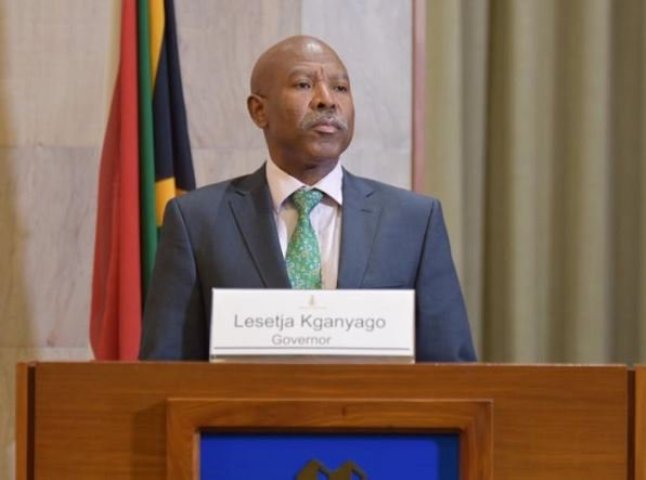
“Now that inflation has slowed, we have a chance to lock in lower inflation at low cost. This scenario illustrates that opportunity,” Kganyago remarked.
- Country:
- South Africa
In a cautious but notable shift in monetary policy, the South African Reserve Bank (SARB) has announced a 25 basis point cut to the repo rate, bringing it down from 8.25% to 8.00%, effective 30 May 2025. This move reduces the prime lending rate to 10.75%, providing much-needed relief to borrowers while reinforcing the central bank's confidence in a moderating inflation environment.
The decision was taken at the conclusion of the Monetary Policy Committee (MPC) meeting on Thursday, with five of the six members voting in favor of a 25 basis point cut. One member advocated for a deeper 50 basis point cut, reflecting a more aggressive stance on supporting the domestic economy amid subdued growth forecasts.
Inflation Outlook Improves Amid Global Disinflationary Pressures
Delivering the MPC statement, SARB Governor Lesetja Kganyago said the decision was underpinned by a meaningful decline in inflation, both headline and core, which now sits at the bottom of the Bank's target range of 3–6%. In April 2025, inflation dipped below 3%, driven largely by falling fuel prices, a stronger rand exchange rate, and the absence of anticipated tax hikes such as a proposed VAT increase that was ultimately cancelled.
"Now that inflation has slowed, we have a chance to lock in lower inflation at low cost. This scenario illustrates that opportunity," Kganyago remarked.
The core inflation rate, which strips out volatile food and fuel prices, came in at 3%, offering further evidence of subdued underlying price pressures.
The SARB has accordingly revised its inflation forecasts downward, with improved assumptions around global oil prices and currency strength outweighing domestic cost pressures, including a higher fuel levy announced in the latest national budget.
Economic Growth Forecast Trimmed; Reforms Urged
Despite the improved inflation outlook, the economic growth picture remains fragile. The SARB trimmed its Gross Domestic Product (GDP) projections, now expecting growth of 1.2% in 2025, inching up to 1.8% by 2027.
Governor Kganyago attributed the muted growth to both global headwinds—such as trade tensions, geopolitical uncertainty, and slowing global demand—as well as persistent structural weaknesses at home.
"The global environment remains difficult, which makes domestic reform critical for achieving healthy growth," Kganyago said.
He reiterated that while the SARB's primary mandate is to deliver price stability, broader reforms are needed to unlock South Africa's economic potential. These include:
-
Reducing public debt to prudent levels
-
Reforming network industries such as energy, transport, and water
-
Lowering administered prices such as electricity and fuel tariffs
-
Ensuring real wage growth aligns with productivity gains
Rand Volatility and Stagflation Scenario Considered
While current conditions support a more accommodative monetary policy stance, the SARB emphasized that risks remain. One of the key downside scenarios considered was a sharp depreciation of the rand, which could lead to stagflation—a situation where economic growth slows, but inflation rises due to currency-induced cost pressures.
"The threat of rand depreciation that we warned of at our last meeting... manifested last month, with the currency briefly touching a multi-year low against the US dollar," Kganyago said.
Although the rand has since recovered, thanks to a stabilizing global outlook and some domestic political clarity, volatility remains a concern, especially in an environment of high external debt and low investor confidence.
In this context, the SARB reaffirmed its commitment to a data-dependent policy framework, indicating that future interest rate moves will be carefully calibrated based on inflation expectations, currency movements, and fiscal developments.
Easing Opens Room for Recovery, But Reforms Remain Key
This 25 basis point rate cut is the SARB's first monetary easing move since 2022, signaling a shift toward supporting economic recovery without jeopardizing its inflation-fighting credentials. However, the central bank was quick to note that monetary policy alone cannot drive growth, and that structural reforms are essential to create an enabling environment for investment, employment, and innovation.
"We see scope to lock in low inflation and clear the way for sustainably lower interest rates," said Kganyago, underlining the central bank's role in stabilizing expectations and maintaining policy credibility.
Tags:


 Google News