

AfDB Calls for Urgent Mobilization of African Capital to Fund Infrastructure
With development assistance declining by 10% and foreign direct investment into Africa dropping by 12% to USD 40 billion, the call to action was urgent.
- Country:
- Ivory Coast
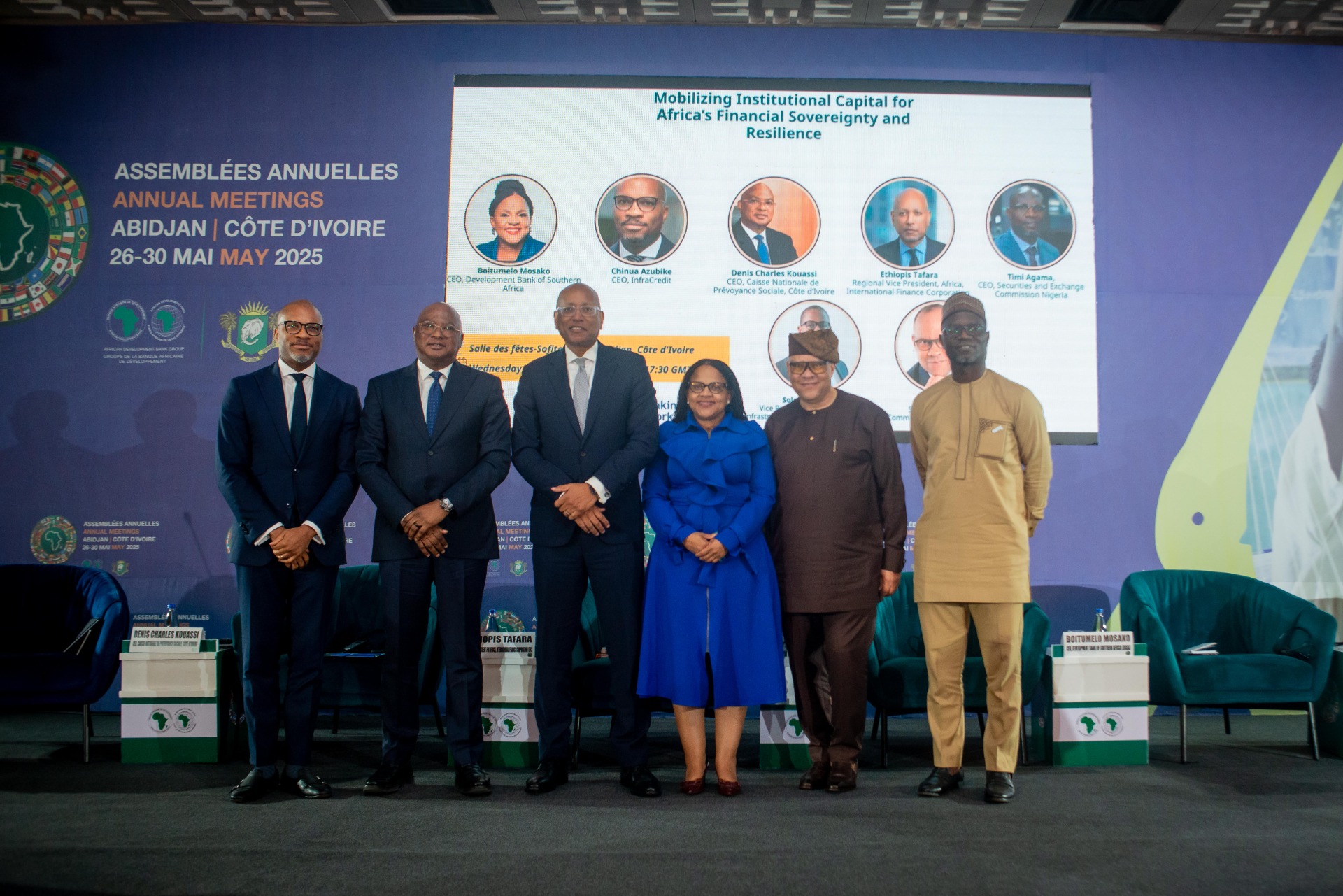
As foreign aid shrinks and foreign direct investment weakens, Africa is at a pivotal moment, where its future growth hinges on harnessing its own capital resources and institutional ingenuity. This was the central message delivered at a high-level side event during the African Development Bank Group's (AfDB) 2025 Annual Meetings on 28 May, where senior policymakers, financiers, and thought leaders gathered to recalibrate the continent's approach to infrastructure financing.
The event, themed around mobilizing African institutional capital, was organized by the AfDB's Resource Mobilization and Partnerships Department, in collaboration with the Making Finance Work for Africa initiative. It was moderated by Victor Oladokun, Senior Advisor to the AfDB President for Communication and Stakeholder Engagement.
With development assistance declining by 10% and foreign direct investment into Africa dropping by 12% to USD 40 billion, the call to action was urgent. Meanwhile, Africa faces an infrastructure funding gap of USD 68 billion to USD 108 billion annually, yet the continent attracts only 2% of global infrastructure investment.
"The real question is not whether the capital exists – it does. The question is how to mobilize it at scale for high-impact development," said Solomon Quaynor, AfDB Vice-President for Private Sector, Infrastructure & Industrialization.
Africa's Trillion-Dollar Opportunity
Quaynor highlighted that African institutional investors—pension funds, sovereign wealth funds, insurance companies, and central banks—currently control more than USD 2.1 trillion in assets.
"If just 5% of these funds were redirected toward infrastructure and private sector growth, Africa could unlock more than USD 100 billion in long-term capital," he added.
This homegrown capital is key to breaking the cycle of dependency and vulnerability to external shocks, which has been amplified by global crises like the COVID-19 pandemic, climate change, and geopolitical uncertainty.
Proven Models and Innovation in Capital Mobilization
Participants discussed several African-led initiatives that are already proving successful. One such example is InfraCredit Nigeria, which provides local currency credit guarantees for infrastructure projects. CEO Chinua Azubike noted that InfraCredit has supported over 20 projects in 12 sectors over eight years with no recorded losses.
"The risks associated with infrastructure assets are often overstated," Azubike said. "InfraCredit has demonstrated that risk mitigation and disciplined project selection can deliver stable, long-term returns."
The International Finance Corporation (IFC) also weighed in, with Vice President Tafara Ethiopis stressing the importance of project bankability through balanced public-private risk-sharing. "We must calibrate the distribution of risk and rewards to make infrastructure projects attractive to private capital," Ethiopis urged.
Institutional Reform and Governance Are Key
Boitumelo Mosako, CEO of the Development Bank of Southern Africa (DBSA), highlighted governance and project preparation as foundational to building investor confidence.
"Yes, we need governance and accountability. But as Africans, we also need to learn to trust each other," she said, underlining the importance of intra-African trust and collaboration.
Timi Agama, Director General of Nigeria's Securities and Exchange Commission (SEC), stressed the role of regulatory reform, financial education, and investor protection in fostering a reliable environment for capital markets to thrive.
Meanwhile, Denis Charles Kouassi, CEO of Côte d'Ivoire's National Social Security Fund, emphasized the potential of pension funds to drive local development:
"All the income we generate is reinvested directly into the national economy to finance public services and stimulate economic growth," he said.
AfDB's Role in Catalyzing Institutional Investment
The Resource Mobilization and Partnerships Department is spearheading a range of instruments to support this transformation. These include:
-
The Capital Markets Development Trust Fund, which helps strengthen domestic financial markets
-
Strategic partnerships with multilateral, regional, and private sector stakeholders
-
Technical assistance and capacity building for domestic institutional investors
These mechanisms are designed to create scalable, bankable projects, improve financial intermediation, and support innovative financing tools like blended finance, green bonds, and local currency guarantees.
Call for Collective Action: From Vision to Reality
In his closing remarks, Solomon Quaynor delivered a rallying call:
"The moment calls for vision. It calls for innovation. But above all, it calls for action. Let us pool our capital, our ideas, and our will, to build an Africa where infrastructure is a lever for prosperity—not a barrier to it."
The AfDB meeting made clear that the next phase of Africa's development must be driven by Africans investing in Africa, with institutional investors leading the charge in partnership with governments and development finance institutions.
By mobilizing even a small portion of its existing wealth, Africa can begin to fill its infrastructure gaps, enhance its economic sovereignty, and build a more resilient, self-sustaining development model for future generations.
ALSO READ
-
African Development Bank Steps Up Push to Deliver Roads, Airport and Services in CAR
-
DRC Pushes Electricity Reforms to Protect Household Budgets and Unlock Power Investment
-
AfDB and Germany Join Forces to Connect Africa Through Better Rail
-
Morocco Secures €270 Million for Airport Upgrades as Passenger Demand Keeps Growing
-
AfDB Shifts Focus in CAR From Funding Projects to Fixing Delivery Bottlenecks


 Google News