

Here is how US sanctions are impacting major Iranian oil buyers
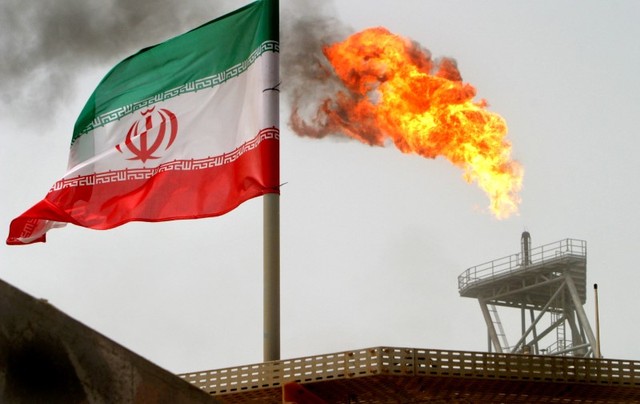
The Trump administration surprised Iran's oil customers, including India, China and Turkey, last week by saying no waivers on the sanctions would be granted after May 1, ending six months of exceptions to the sanctions for reductions in purchases.
Now as the six-month waiver on Iranian oil granted by the US to eight countries is to expire, here is how the US-imposed sanctions against Iran are affecting its major oil consumers around the world.
China, India, South Korea, Turkey, Italy, Greece and Japan have been top importers of the Iranian oil, while Taiwan occasionally buys cargoes of Iranian crude but is not a major buyer.
China is Iran's largest crude oil customer, with total imports last year of 29.27 million tonnes, or about 585,400 barrels a day, roughly 6 per cent of China's total oil imports, according to customs data. Last week, China's Foreign Ministry said it has formally complained to the United States over its decision to end waivers on sanctions on Iranian oil imports, adding another fault line to already complicated Beijing-Washington ties.
India, the second biggest buyer of Iranian oil after China, has lined up alternate sources to make up for the likely shortfall in supplies after the US decided not to give waiver from its sanctions for buying oil from the Persian Gulf nation. Iran is India's third-largest oil supplier behind Iraq and Saudi Arabia. Iran supplied 18.4 million tonnes of crude oil during April 2017 and January 2018 (first 10 months of 2017-18 fiscal).
India has restricted its monthly purchase to 1.25 million tonne or 15 million tonne in a year (300,000 barrels per day), down from 22.6 million tonne (452,000 barrels per day) bought in the 2017-18 financial year. U.S. sanctions on Iran could boost oil prices and inflation to a point that hurts the common person in India, the country's ambassador to the United States said on Tuesday after the Trump administration said it would end waivers for Iran's oil buyers.
Japan, the world's fourth-biggest oil consumer, has been reducing its reliance on Iranian crude supplies. Iran now accounts for about 3 per cent of purchases, the country's trade and industry minister said last month.
South Korea, the world's fifth-largest crude importer is the biggest buyer of Iranian condensate, an ultra-light oil prized by the country's refiners as a raw material for petrochemicals manufacturing. South Korea, imported 227,941 tonnes of Iranian crude in January 2019, or 53,676 barrels per day (bpd), data from the country's customs office showed. This was well down on 950,013 tonnes of Iranian crude a year earlier.
Iran is one of the biggest oil suppliers for Turkey, which is almost completely reliant on imports to meet its energy needs. Turkey used to import about 200,000 bpd of Iranian crude before Washington announced last year that it would pull out of the 2015 Iran nuclear deal and reimpose sanctions. Last week, Turkey's Foreign Ministry spokesman Hami Aksoy said it is trying to convince the United States to allow refiner Tupras, its biggest oil importer, to continue buying crude oil from Iran free of sanctions.
"Washington's decision not to extend sanction waivers on Iranian oil exports would harm countries that rely on the supplies, Qatar said on Wednesday. "The sanctions should not be extended because they have an adverse impact on countries benefiting from Iranian oil," foreign minister Sheikh Mohammed bin Abdulrahman al-Thani told a press conference in Doha.
The US re-imposed sanctions on Iran last November after Trump pulled out of the landmark 2015 Iran nuclear deal. The US move, seen as an escalation of the Trump administration's "maximum pressure" on Iran, comes after it gave temporary 180-days waiver to eight countries, including India, China, Turkey and Japan among others last year.
ALSO READ
-
Poverty in the Line of Fire: UN Experts Demand Iran End Border Courier Killings
-
Iran’s Civilians Trapped Between State Repression and Deadly Strikes, UN Warns
-
Lee Jae Myung's Diplomatic Milestones: Balancing Amidst Global Tensions
-
Hackers Compromise US-Bound Vessels: Security Breach in the Gulf of Mexico
-
Tanker Trouble: Togo Vessel's Fiery Halt in Hormuz


 Google News