

Dutch King: Trade wars and Brexit a "profit warning", spending to increase
- Country:
- Netherlands
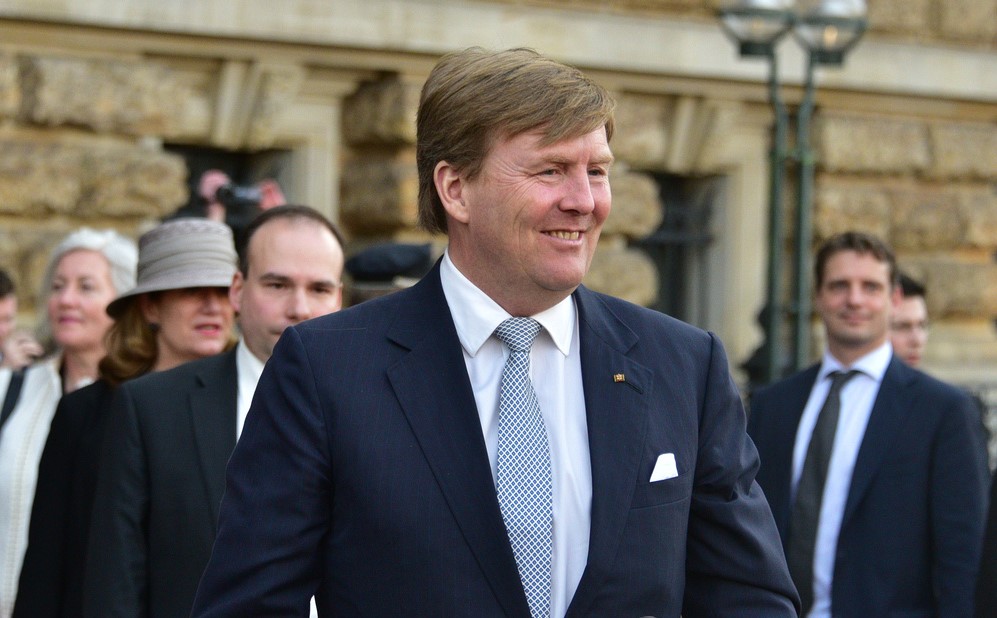
The Netherlands' King Willem-Alexander said on Tuesday that U.S. trade wars and the threat of Brexit were acting as a "profit warning" for the economy and the government intended to increase investments to protect its future.
He addressed Parliament as Prime Minister Mark Rutte's frugal government was set to release details of how it would loosen the purse strings in its 2020 budget. Plans include a national investment fund to take advantage of its ability to borrow at negative rates. "The approaching Brexit casts its shadow forward," the monarch said in his annual speech written by Rutte's government.
"It's a profit warning for the short term and the long term, that forces us to consider how the Netherlands will earn money in the future and remain a country with good social services." The decision to relax fiscal discipline - flagged up in interviews with media outlets and other announcements - comes just a week after European Central Bank President Mario Draghi urged Germany and the Netherlands to spend more to avoid a downturn in the eurozone.
The Dutch government estimates it will lose 1.2% of trade by 2030 if Britain, a key trading partner, leaves the European Union. Dutch gross domestic product growth is forecast to slow to 1.8% this year and 1.4% in 2020, according to August forecasts by the economic policy office CPB.
In his speech, Willem-Alexander said the government had a "growth agenda" and will present a draft plan next year for the national investment fund, which will target education and infrastructure. "National debt is under control and the (tax) burden can be lowered," he said in his address to both houses of Parliament gathered in the 13th-Century Hall of Knights in the Hague.
After years of austerity following the global financial crisis, the Dutch government now runs a 1.2% budget surplus and the national debt is due to fall to 49.3% of GDP, compared with the 60% required by European Union budget rules. "There is no reason to bring the national debt to zero," Economic Affairs Minister Eric Wiebes said in an interview with the AD Newspaper on Monday.
"I have never before pleaded that the government should spend more money," but the country needs fundamental investment, he said.
ALSO READ
-
South Korean Stance on Middle East Conflict
-
South Korean Leadership and Constitutional Amendments: Lee Jae Myung's Stance
-
France's Bold Budget Battle: A €54 Billion Deficit Dilemma
-
Romania's Political Turmoil: A New Prime Minister Nominee Amidst Uncertainty
-
Unleashing Market Forces: The Path to Reviving Britain's High Streets


 Google News