

Global Push to End Malaria Gains Ground with New-Gen Dual-Insecticide Nets
In 2017, the World Health Organization (WHO) endorsed the first ITN capable of improving protection against pyrethroid-resistant mosquitoes.
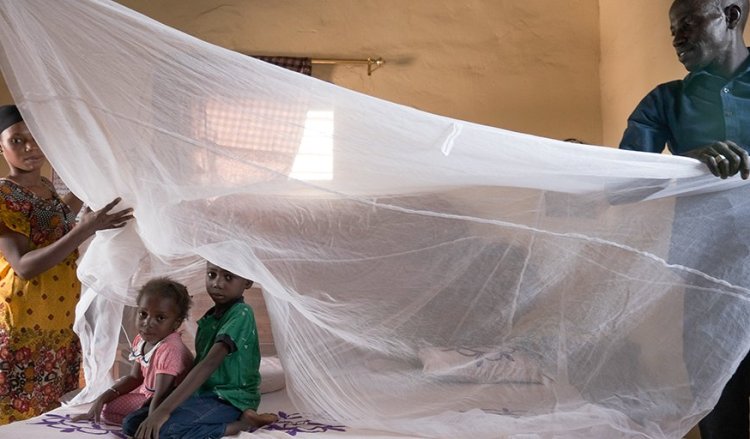
For over two decades, insecticide-treated nets (ITNs) have been at the heart of malaria prevention strategies across the globe. These lifesaving tools, especially prominent in sub-Saharan Africa, have played a vital role in reducing the burden of this deadly disease. Since the year 2000, efforts like ITN distribution campaigns have been pivotal in averting more than 2 billion malaria cases and saving nearly 13 million lives.
Yet, as with many public health interventions, challenges have emerged. Chief among them is the growing resistance of malaria-carrying mosquitoes to pyrethroids, the most widely used class of insecticides in ITNs. This biological adaptation threatens to undermine decades of progress and has prompted a global call for innovation.
The Rise of Dual-Insecticide ITNs: A Science-Driven Response
In 2017, the World Health Organization (WHO) endorsed the first ITN capable of improving protection against pyrethroid-resistant mosquitoes. This groundbreaking step catalyzed the development of dual-insecticide nets, designed to restore efficacy and significantly reduce malaria transmission in affected regions.
These next-generation nets incorporate two types of insecticides:
-
Pyrethroid-chlorfenapyr nets: Combine a traditional pyrethroid with a pyrrole insecticide, enhancing mosquito lethality.
-
Pyrethroid-pyriproxyfen nets: Pair a pyrethroid with an insect growth regulator that hampers mosquito development and reproduction.
The New Nets Project: Catalyzing Innovation and Impact
Launched in 2018, the New Nets Project—a collaborative initiative by Unitaid and the Global Fund—marked a pivotal moment in the fight against malaria. Managed by the Innovative Vector Control Consortium (IVCC) and in close cooperation with National Malaria Programmes, global funders, and implementation partners, the project sought to gather evidence and accelerate the adoption of dual-insecticide nets in malaria-endemic regions.
The pilot phase began in Burkina Faso in 2019, with Benin, Mozambique, Rwanda, and Tanzania joining soon after. These diverse environments provided a robust testing ground for assessing the nets' performance under varying ecological and transmission conditions.
Proven Success: Clinical Trials and Field Deployment
By the close of 2022, the New Nets Project and its partners had distributed over 56 million dual-insecticide nets across 17 sub-Saharan African countries grappling with insecticide resistance.
Clinical trials and field studies yielded compelling results:
-
Dual-insecticide nets improved malaria control by 20–50% compared to standard pyrethroid-only nets.
-
In Benin and Tanzania, trials using pyrethroid-chlorfenapyr nets showed a marked reduction in malaria infections, especially among children aged 6 months to 10 years.
These outcomes directly translated into community-level impact. For example, Elizabeth, a tailor and mother from Tanzania, shared how her family no longer needed costly malaria treatments after receiving the new nets. "Instead, I use the money to pay for school fees," she said.
WHO Endorsement and Policy Shift
Backed by strong evidence, WHO updated its malaria prevention guidelines in 2023, officially recommending dual active ingredient ITNs. This endorsement has been pivotal in driving wider procurement and distribution efforts.
As of 2023, about 80% of all ITNs delivered in sub-Saharan Africa were dual-insecticide varieties—an encouraging increase from 59% in 2022, as reported in the World Malaria Report.
Beyond Nets: Broadening the Arsenal Against Malaria
The battle against malaria is evolving, and while new-generation ITNs represent a leap forward, additional tools are under development:
-
Spatial repellents: To deter mosquitoes from entering homes.
-
Lethal house lures (eaves tubes): Which attract and kill mosquitoes entering houses.
-
Genetic engineering of mosquitoes: A long-term strategy aiming to curb mosquito reproduction or disease transmission capacity.
Investments from organizations such as the Bill & Melinda Gates Foundation, USAID, and MedAccess have fueled these efforts, alongside research contributions from institutions like Tulane University and the London School of Hygiene & Tropical Medicine.
Sustaining Momentum: Financing and Global Collaboration
The success of malaria control innovations hinges not only on science but also on sustained funding and international collaboration. Future gains will depend on replenishing the financial coffers of global health mechanisms like the Global Fund and Gavi, the Vaccine Alliance.
Dr. Philippe Duneton, Executive Director of Unitaid, emphasized this point: "The New Nets Project significantly advanced malaria control… The success of this initiative is the result of strong partnerships that helped us overcome access barriers and reach communities faster."
Similarly, Dr. Daniel Ngamije, Director of WHO's Global Malaria Programme, remarked, "Their [dual-insecticide nets] development and wide deployment are a testament to what can be achieved through science, sustained investment and global collaboration."
Looking Ahead: A Future Free of Malaria?
As the world marks World Malaria Day 2025, there's renewed optimism. The introduction and scale-up of dual-insecticide nets, combined with vaccines and other novel interventions, offer real hope for reducing malaria burden even in the most affected regions.
Yet, the fight is far from over. Ongoing efforts must include:
-
Enhanced surveillance of resistance and vector behavior.
-
Monitoring effectiveness of deployed interventions.
-
Continuous innovation in vector control technologies.
With coordinated action and persistent investment, the vision of a malaria-free world may finally be within reach.


 Google News