

Unsafe to Eat? Heavy Metals Threaten Urban Street Food Safety Worldwide
The study, conducted by researchers from the University of Pretoria, the Indian Institute of Food Processing Technology, and the University of Hong Kong, reveals widespread heavy metal contamination in urban street foods, especially across Asia and Africa. It warns that lead, cadmium, and arsenic levels often exceed global safety limits, posing serious long-term health risks to millions of consumers and calling for urgent reforms in food safety governance and urban environmental management.
 CoE-EDP, VisionRI
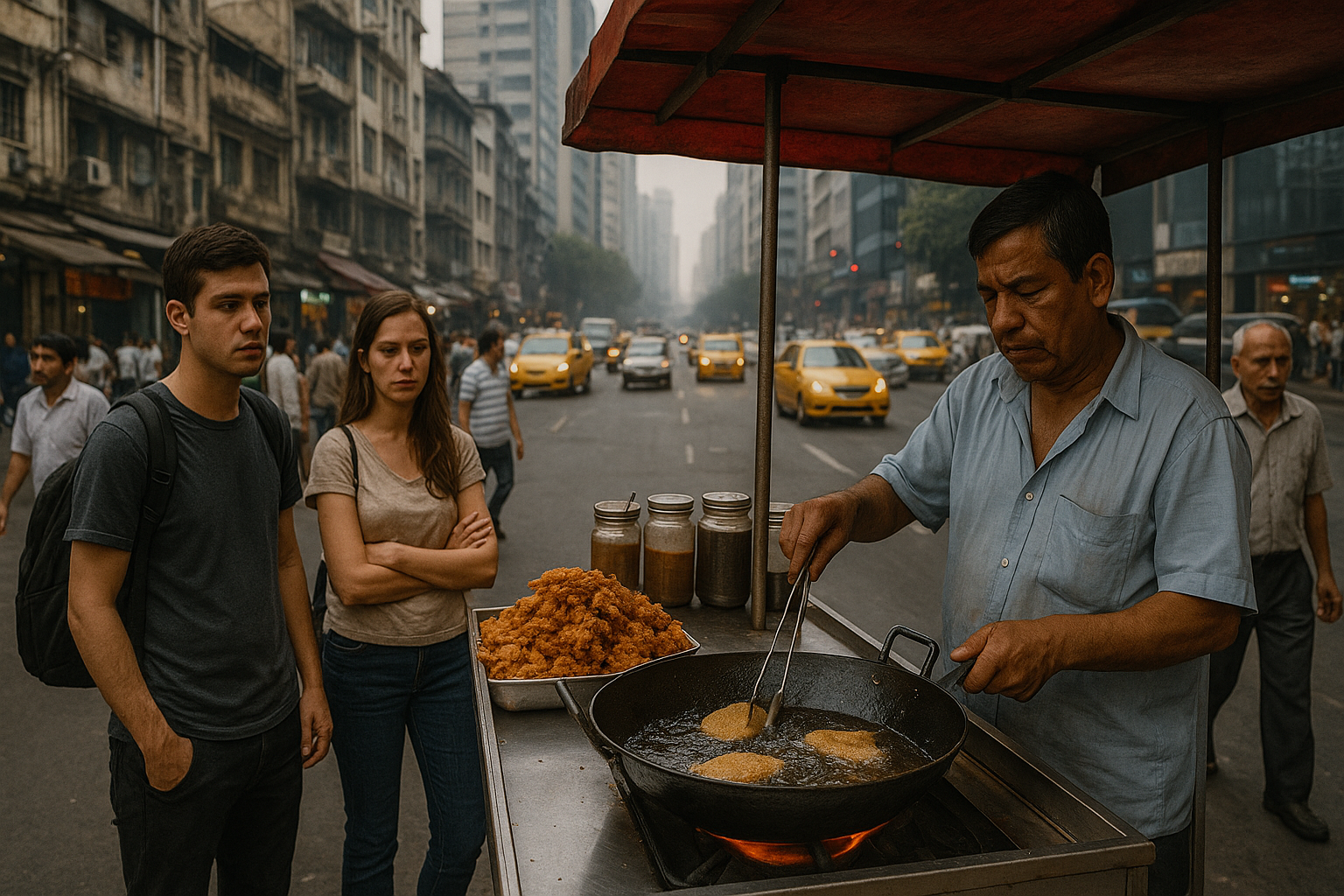
A study "Unsafe to Eat? A Systematic Review of Heavy Metal Contamination in Urban Street Foods: Sources, Risks, and Regional Disparities" is the result of a major international collaboration involving the Department of Environmental Health at the University of Pretoria (South Africa), the Indian Institute of Food Processing Technology (IIFPT, Thanjavur, India), and the School of Public Health at the University of Hong Kong. It provides a sweeping, data-driven assessment of how heavy metals infiltrate the informal street food economy across continents. Synthesizing findings from over a hundred studies, the researchers reveal how unchecked urbanization, traffic emissions, and industrial discharge are combining with weak food safety enforcement to create a global but uneven crisis. Street food, vital for millions of urban consumers in low- and middle-income countries, is increasingly contaminated with lead, cadmium, arsenic, mercury, and chromium, making it unsafe to eat in many cities.
The Street Food Paradox: Vital but Vulnerable
Street food sustains the urban poor, offering affordable, flavorful meals that are often the only accessible source of nutrition. Yet, as the study explains, this very sector operates within polluted environments that foster contamination. Vendors typically set up near busy roads, open drains, or industrial areas where food is constantly exposed to vehicle fumes and airborne particles. Inadequate waste management, poor water quality, and limited access to clean cooking utensils compound the problem. The researchers emphasize that the issue is not just one of hygiene but of environmental injustice, where the poorest populations consume food most exposed to toxic pollutants. Urbanization has intensified this imbalance, as expanding cities concentrate more pollution in informal food markets with little regulatory oversight.
Tracking the Toxins: A Systematic Global Review
Using the PRISMA (Preferred Reporting Items for Systematic Reviews and Meta-Analyses) framework, the team analyzed scientific papers published between 2000 and 2024 across databases such as Scopus, Web of Science, and PubMed. The inclusion criteria focused on foods prepared and sold by informal vendors, with laboratory-measured concentrations of at least one toxic metal, benchmarked against FAO/WHO or Codex Alimentarius standards. The review found striking geographic disparities: Asia and Africa reported the highest levels of contamination, with South and Southeast Asian cities like Kolkata, Dhaka, and Bangkok showing lead concentrations five to ten times above permissible limits. In Sub-Saharan Africa, especially in Nigeria and Ghana, roasted meats and plantains often contained excessive cadmium, primarily from contaminated charcoal and cookware. Latin American cities such as Mexico City and São Paulo exhibited moderate levels, while Europe and North America reported comparatively low but still notable contamination hotspots near industrial zones and highways.
What Makes Street Food Toxic?
The study identifies several overlapping contamination pathways. Environmental pollution is the most significant, as airborne particulates from vehicle exhaust and industrial emissions settle on foods exposed during cooking and selling. Contaminated ingredients, such as vegetables irrigated with polluted water or fish caught from dirty rivers, carry metals directly into food items. Additionally, the use of recycled metal cookware, often made from aluminum or brass, introduces lead and cadmium during frying or storage. A visual schematic in the paper illustrates how these sources interact in densely populated urban zones, making exposure nearly unavoidable. Health implications are profound: lead impairs brain development and blood function; cadmium accumulates in kidneys and bones; arsenic and mercury are carcinogenic and neurotoxic; and hexavalent chromium damages DNA. The authors' comparative analysis shows that daily intake levels for several of these metals exceed World Health Organization safety thresholds, posing long-term health risks to regular consumers.
From Science to Policy: The Path Forward
The researchers argue that this is not merely a food safety problem but a systemic urban health failure demanding multi-sectoral reform. Current regulations are fragmented, with most low- and middle-income nations lacking standardized street food monitoring or enforcement mechanisms. The paper recommends vendor education, clean water infrastructure, and designated vending zones away from high-pollution areas. It also advocates for city-level contaminant surveillance systems supported by real-time data collection and laboratory testing. Importantly, the authors warn against criminalizing street vendors, who are essential to urban food systems, and instead urge policymakers to provide them with training, safe equipment, and recognition within food governance frameworks. They propose linking these reforms to Sustainable Development Goals 3 and 11, on health and sustainable cities, to ensure that public health and economic inclusion progress together.
A Call for Safe and Equitable Urban Food Futures
The paper closes with a clear and urgent message: the contamination of street foods by heavy metals is a global public health emergency hidden in plain sight. Millions of low-income consumers are unknowingly exposed to toxic substances daily, and the scale of the risk rivals that of recognized epidemics. Solving this crisis requires coordination between environmental agencies, public health departments, and urban planners to address both pollution control and food safety simultaneously. The authors urge global institutions and city governments to invest in preventive systems rather than reactive policies. Safe street food, they conclude, is not a privilege but a right, and ensuring it is vital to building healthier, fairer, and more resilient cities.
- FIRST PUBLISHED IN:
- Devdiscourse


 Google News