

Scientists in Japan develop a chip to find better cancer fighting drugs
- Country:
- Japan
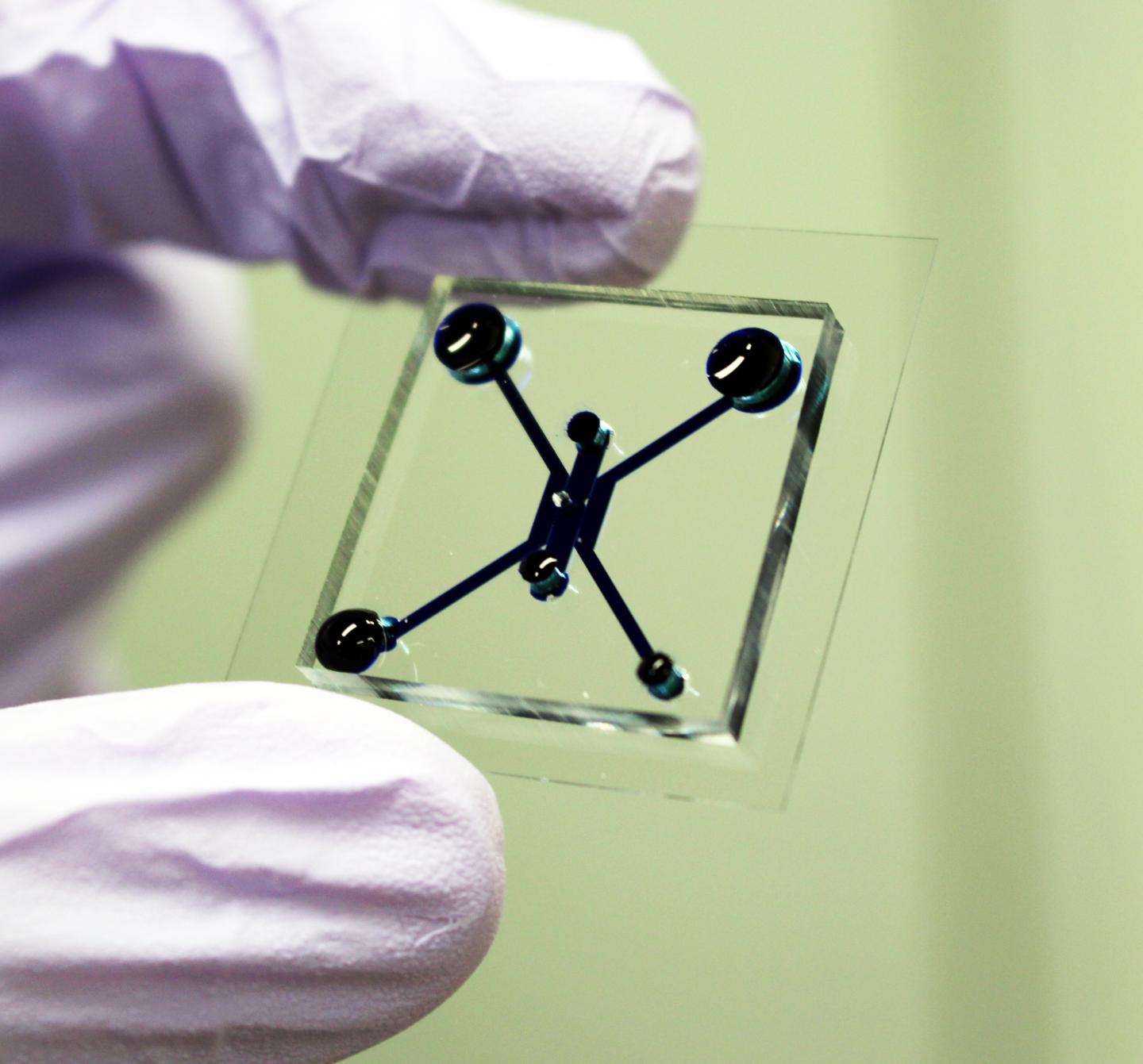
The researchers at the second oldest Japanese university, Kyoto University have recently developed a new 'tumor-on-a-chip' device that can better mimic the environment inside the body, paving the way for improved screening of potential cancer fighting drugs.
The path to drug discovery is never easy. Scientists and clinicians can go through tens-of-thousands of potential compounds for years to find a handful of viable candidates, only for them to fail at the clinical level.
"Potential compounds are tested using animal models and cells cultured in a dish. However, those results frequently do not transfer over to human biology. Furthermore, cells on a dish lack the three-dimensional structure and blood vessels, or vasculature that keep it alive. So, we came up with a plan to construct a device that solves these issues," explains first author Yuji Nashimoto formally of the Graduate School of Engineering, and now at Tohoku University.
The device, reported in the journal Biomaterials, is the size of a coin with a 1 mm well at the center. This well is flanked by a series of 100 μm 'microposts'. The idea is that a three-dimensional culture of tumor cells is placed in the middle well, and then cells that construct blood vessels are places along the microposts. Over a few days the vessels grow and attaches to the culture.
"This 'perfusable vasculature' allows us to administer nutrients and drugs into the system to mimic the environment in the body. This allows us to have a clearer picture of the effectiveness of cancer treating compounds," continues Nashimoto.
This perfusion did significantly keep the tumor cells healthy by keeping cell proliferation up and cell death down. A drug assay was then performed with the team administrating an anti-tumor drug at low doses. Interestingly, the drug was more effective under static conditions compared to when nutrients were flowing through the tumor cells.
In contrast, the drug's effects became more potent when the flow was turned on and the dosage was increased. Ryuji Yokokawa, who lead the team, explains that the unexpected results prove that we need to consider the balance between proliferation of tumor cells and the efficacy of the drug under flow conditions.
"We hypothesize that at low doses the benefit of the nutrient flow outweighs the effect of the anti-tumor drug. It proves the importance of blood flow in the vasculature when screening for drugs," Ryuji Yokokawa said.
"Due to its size and utility, we hope the new device can expedite the tests on the countless number of potential new drugs. While many questions remain, we are happy to have developed this device and have shown that three-dimensional perfused cell culture is vital for the next step in drug discovery," he concluded.


 Google News