

Timely facilitation of COVID-19 kits from China will send 'best signal' for Sino-India ties: Envoy
- Country:
- China
India has ordered 15 million personal protection gears besides a few million testing kits from China to fight the coronavirus pandemic in the country and their smooth procurement at stable prices will send the "best signal possible" for Sino-Indian ties, India's Ambassador here Vikram Misri said on Tuesday. As its factories resumed operations after over two-month of the grim battle against coronavirus, China is busy tapping into the vast business opportunities of export of key medical goods, specially ventilators and personal protection equipment (PPE), across the world, including India, where both private and government bodies are placing orders for the import of these products. Addressing an online press briefing here, Misri highlighted India's efforts to contain the spread of COVID-19.
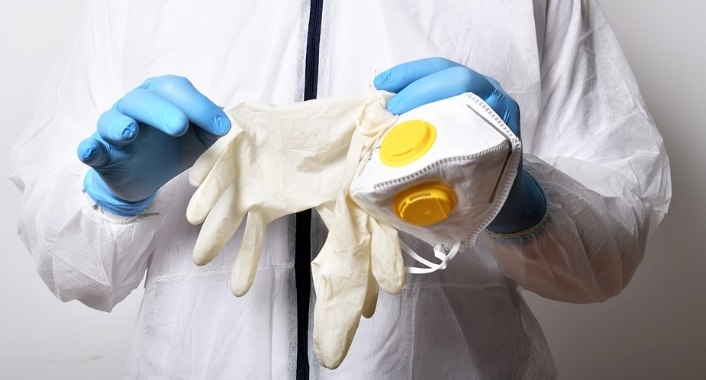
The envoy said India is procuring a host of medical equipment from both domestic and international firms as part of its efforts to expand hospital facilities across the country to deal with coronavirus cases. "The requirement in India at this time is medical equipment such as personal protective equipment (PPE) and kits, masks, gloves, ventilators, etc, and China is a very large and significant producer of these products," Misri said.
He said orders are being placed to procure 15 million medical kits from China. India, Misri said, also plans to procure three million COVID-19 testing kits, half of which have already been delivered. "I think facilitation of our needs and our requirements in a timely manner, in a smooth manner, on a predictable timeline at prices that are stable and orderly, would be the best signal possible to send for the India-China relationship," he said.
Misri said India's current target is to produce and procure a total of 17 million PPE sets and "tens and thousands of ventilators". "This offers us the opportunity of cooperating in a smooth manner. We are identifying bonafide suppliers and entering into agreements. What is important is quality material continues to be available at reasonable and stable prices and we are able to re-establish freight and cargo lines (which were disrupted by the initial impact of the coronavirus crisis)," Misri said.
"When China was at the height of dealing with this outbreak, we had offered and provided medical assistance," the envoy said, referring to India dispatching 15 tons of medical supplies to China. Misri said India appreciated efforts by China to ensure the quality of goods being exported and requested the Chinese government to expedite the new registration process of the local companies, which have been supplying the materials to India in the past.
China on Friday last stepped up quality checks on exports of 11 categories of medical products, including masks, protective suits, goggles and ventilators, following a string of complaints from several countries about the faulty and substandard supplies. Commenting on reports of Chinese firms diverting supplies due to the burgeoning demand, Misri said, "We have seen media reports. But we have not come across authoritative reports of supplies intended for India having been diverted." Replying to a question, he said India has extended visas of foreigners till April-end and hotlines have been set up to address individual issues.
Misri also highlighted India's effort to convene the video conference of the heads of the South Asian Association for Regional Cooperation (SAARC) nations and the establishment of the SAARC COVID-19 emergency fund. He underlined India's delivery of the much-needed medical supplies and assistance to Maldives, Sri Lanka, Nepal, Bangladesh, Bhutan, and Afghanistan combat the coronavirus outbreak.
New Delhi has also provided medical assistance to Myanmar, Seychelles, and Mauritius, all of which are part of India's extended neighborhood, he noted. Explaining how India and China can cooperate in controlling COVID-19, Misri said, "Given our size, our position, there is considerable space for both to cooperate in controlling the spread of this pandemic." India and China have repositories of large pools of scientific and technological manpower and there is enormous scope to cooperate in research and development in dealing with COVID-19 as well as general public health issues, he said. "I think it would be mutually beneficial to intensify engagement between our biologists, our epidemiologists, and other scientists and relevant national institutes in these fields, including on efforts such as developing a vaccine," he said.
The envoy said India has dispatched medical supplies, including anti-malarial drug hydroxychloroquine to the US, Spain, Brazil, Israel and 25 other countries in South Asia, Africa, Latin America, and the Caribbean region. "We remain committed to larger international efforts to both find a vaccine ad improve treatment protocols," he said. Misri said countries can cooperate on pharmaceuticals, especially the active pharmaceutical indicators (APIs).
"We import a considerable amount of APIs from China to manufacture pharmaceuticals that we export to the rest of the world. And in certain cases, Chinese companies import APIs from India to manufacture certain drugs that they need for domestic consumption as well as export," he said. Misri also spoke about the differences between China and India in handling the coronavirus crisis.
While China poured its resources in coronavirus epicenters Hubei province and Wuhan to contain the spread there, India has to deal with the problem at a national level, he said.
ALSO READ
-
More Than Shorter Commute: How Compact Cities Can Help Migrant Workers Find Jobs
-
ILO Report Reveals How to Bring Social Security Within Reach of Informal Workers
-
Japanese Lawmakers Visit India to See Worker Protection and Skills Projects in Action
-
Indian Unions Push for Fair Recruitment and Rights for Care Workers in Germany
-
WTO Sets Up Panel on EU Carbon Border Rules as Russia Challenges Restrictions


 Google News