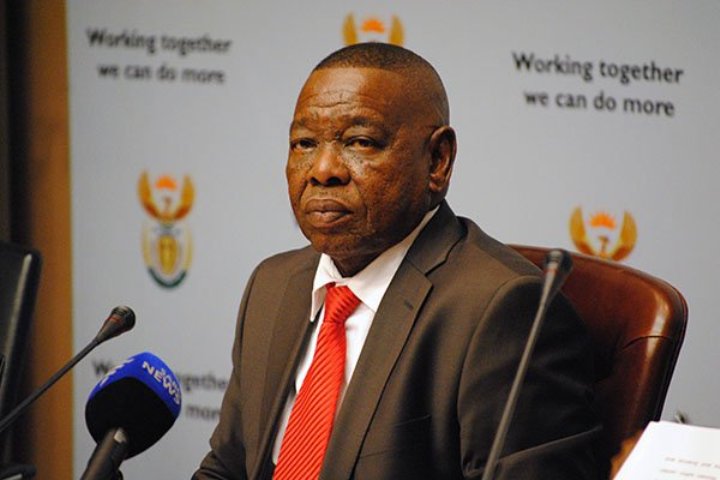
In his address at the opening of the 32nd General Assembly of the International Astronomy Union (IAU) in Cape Town, Minister of Science, Technology and Innovation Professor Blade Nzimande emphasized the need to demystify science for marginalized communities in Africa. Nzimande underscored that bridging the gap between scientific knowledge and underdeveloped populations is crucial for fostering inclusivity and engagement in scientific fields.
"Astronomy offers a remarkable opportunity to naturalize and indigenize scientific thinking within our communities," Nzimande said. He praised the General Assembly for its Open Access features, which aim to spark broader public interest in science. The event has seen young volunteers and researchers actively participating, with initiatives like satellite viewing sites across Africa and an astronomy ambassadors program designed as legacy projects.
Minister Nzimande highlighted the importance of increasing African participation in astronomical sciences. He acknowledged the contributions of the IAU Office for Astronomy Development (OAD) and the African Astronomical Society (AfAS) in supporting African nations to leverage opportunities in the field.
The Minister also noted the impressive submission of over 3000 abstracts for the General Assembly, reflecting the robust engagement and new data being explored. He emphasized that this assembly serves as a platform to share experimental work and test theoretical models.
South Africa's vision for astronomy includes becoming a global hub for astronomical sciences, as outlined in the National Strategy for Multiwavelength Astronomy of 2015. This strategy aims to leverage South Africa's strengths, such as its clear southern skies, significant investments in projects like MeerKAT/SKA and the Southern African Large Telescope (SALT), and growing international collaborations.
The Minister revealed ongoing efforts to enhance the strategy, particularly in the era of multi-messenger techniques and technological advancements. He highlighted the MeerKAT/SKA project's potential to drive transformation and contribute to the global knowledge economy.
In addition, Nzimande announced plans to develop an astro-tourism sector through public-private partnerships in South Africa's remote areas. He anticipates the approval of a new Astro-Tourism Strategy by Cabinet soon. Alongside Tourism Minister Patricia de Lille, Nzimande will co-host the Annual World Tourism Day in Carnarvon on September 27, 2024, focusing on promoting dark sky preservation and radio silence essential for successful star-gazing and astro-tourism.
The Minister's remarks reflect South Africa's commitment to advancing its role in global astronomy while promoting inclusive growth and leveraging scientific developments for broader socio-economic benefits.


 Google News
RSS
Google News
RSS



