

VP Lauds Uttarakhand’s Implementation of Uniform Civil Code and Advocates for National Unity and Progress
The Vice-President addressed criticisms of the UCC, emphasizing its constitutional mandate and the need to foster gender equality.
- Country:
- India
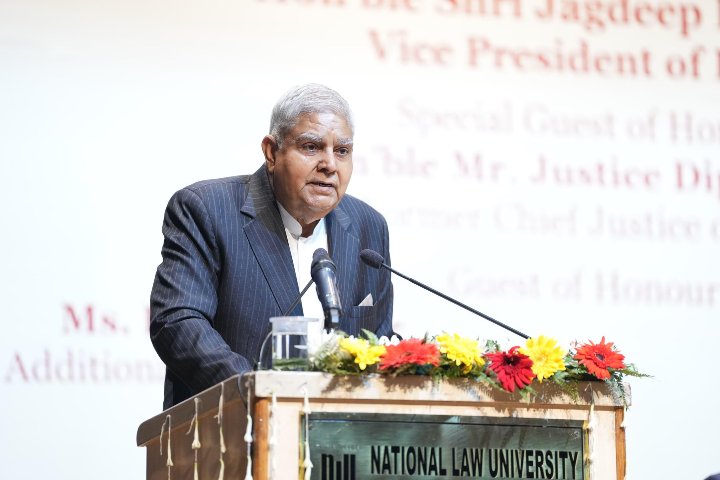
Vice-President Shri Jagdeep Dhankhar expressed his pride as Uttarakhand became the first Indian state to implement the Uniform Civil Code (UCC), a directive envisioned in Article 44 of the Indian Constitution. Speaking at the inauguration of the fifth batch of the Rajya Sabha Internship Programme and the launch of its online portal, Shri Dhankhar lauded Uttarakhand's foresight and called it a milestone for India's governance.
"This is a day of joy for all citizens. The framers of our Constitution envisioned this directive, and Uttarakhand has taken the first step toward making it a reality. It is only a matter of time before the entire country adopts such legislation," he said.
Addressing Opposition to UCC and Challenges of Illegal Migration
The Vice-President addressed criticisms of the UCC, emphasizing its constitutional mandate and the need to foster gender equality. He urged detractors to study its roots in the Constituent Assembly debates and Supreme Court rulings, describing political opposition to the UCC as a barrier to nationalism.
Shri Dhankhar also voiced concerns over the threat posed by illegal migrants, highlighting their impact on national resources and security. "Millions of illegal migrants threaten our sovereignty and democracy. They exploit our resources and influence our electoral system," he stressed, urging immediate government action.
Opportunities for Youth and Aspirational Development
Reflecting on India's transformation under Prime Minister Narendra Modi, Shri Dhankhar discussed the expanding opportunities for youth. He called for a shift away from the traditional pursuit of government jobs, highlighting advancements in infrastructure, digital connectivity, and entrepreneurship.
"The aspirational mindset of Indians has shifted. Today, people experience development through better housing, connectivity, and access to resources. This is the result of policies aimed at inclusive growth," he said. The Vice-President also commended the success of aspirational districts, previously considered underdeveloped, which have now seen dramatic improvements.
Dialogue, Diplomacy, and the Role of Inclusivity
Underscoring the importance of debate and consensus in Indian democracy, Shri Dhankhar lamented the rise of political disruptions. He called for a return to constructive dialogue, citing the Constituent Assembly as a model of consensus-building.
"Our culture thrives on dialogue and inclusivity. Issues like climate change and global conflicts require diplomacy and deliberation, not disruption," he remarked, emphasizing India's role as a model of tolerance and adaptability.
Reflections on Article 370 and Dr. Ambedkar's Vision
Highlighting the legacy of Dr. B.R. Ambedkar, the Vice-President revealed that Dr. Ambedkar had refused to draft Article 370, which granted special status to Jammu & Kashmir. "Ambedkar's vision prioritized nationalism and sovereignty. If his will had prevailed, the challenges we faced due to Article 370 might have been avoided," he stated.
Strengthening India's Unity and Future
Shri Dhankhar concluded by celebrating India's achievements in economic growth, technological advancement, and social development. He called on citizens, especially the youth, to embrace opportunities and work collectively toward making India a global leader.
The event, attended by Rajya Sabha officials and dignitaries, reflected the Vice-President's commitment to promoting constitutional values, inclusivity, and national progress.


 Google News