

Escalating Violence in Colombia: UN Report Highlights Human Rights Crisis and Calls for Urgent Action
UN High Commissioner for Human Rights, Volker Türk, emphasized the urgent need to prioritize civilian protection in ongoing government negotiations with armed groups.
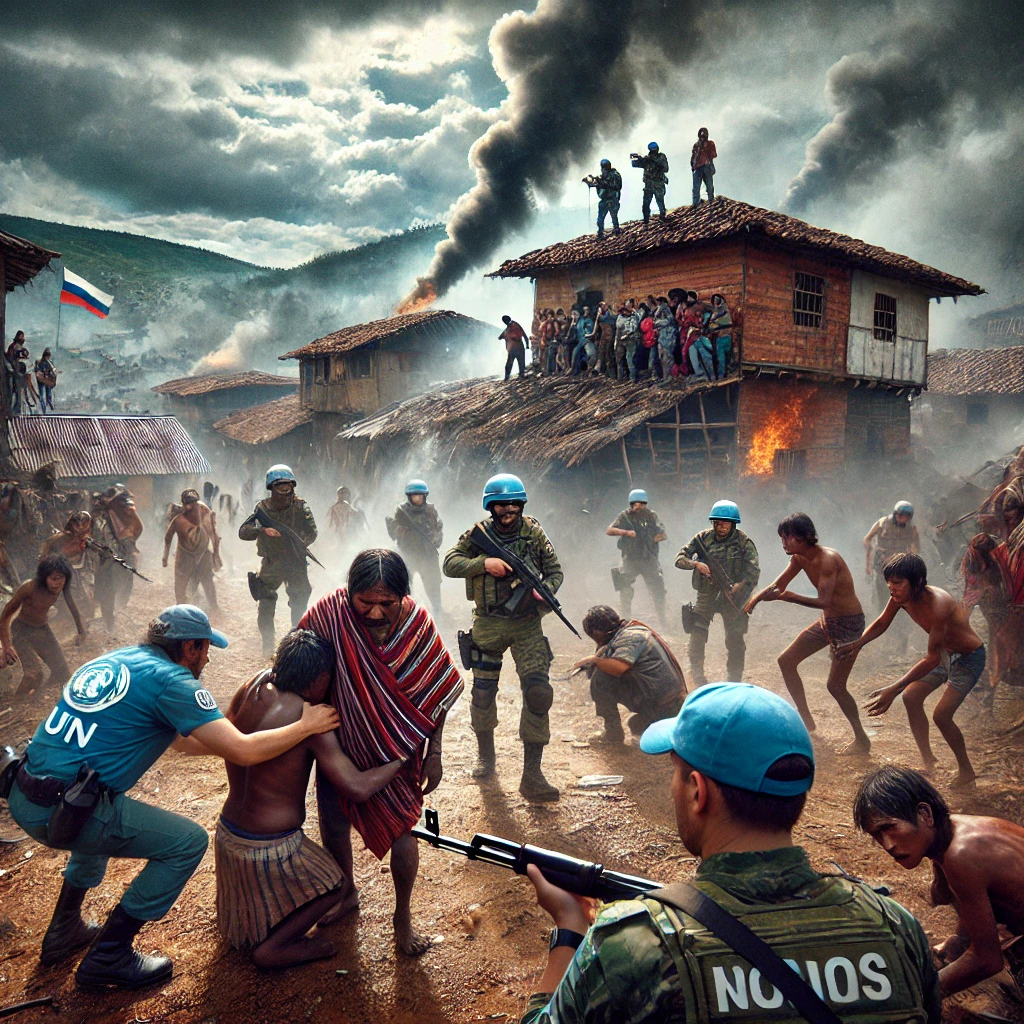
Violence by non-State armed groups and criminal organizations in Colombia continues to devastate lives and tear apart communities, according to a new report published today by the UN Human Rights Office. The 2024 report details the growing impact of armed groups that exert control through violence, furthering economic interests and undermining governance, with Indigenous Peoples, Afro-descendant communities, and peasants disproportionately affected.
The situation has worsened in regions like Catatumbo, where escalating conflict since mid-January has resulted in over 52 deaths and the forced displacement of tens of thousands of civilians. UN High Commissioner for Human Rights, Volker Türk, emphasized the urgent need to prioritize civilian protection in ongoing government negotiations with armed groups. He also called for the State's presence across Colombia to safeguard human rights and prevent child recruitment by armed factions.
The report reveals that 216 children, many from Indigenous communities, were forcibly recruited in 2024. "I urge the authorities to take immediate measures to protect Indigenous Peoples, particularly those at extreme risk due to the ongoing internal armed conflicts," Türk stated.
The UN verified 72 massacres resulting in 252 deaths last year, along with the targeted killing of 89 human rights defenders. While welcoming renewed dialogue between the government and civil society for human rights defender protection, Türk stressed the need for stronger measures, especially for environmental defenders who face severe risks. He also highlighted the importance of implementing the Escazú Agreement, a regional environmental and human rights treaty ratified by Colombia in 2023.
The report urges the Colombian authorities to prioritize civilian protection while accelerating the implementation of the 2016 Peace Agreement. Strengthening governance in conflict-affected regions and coordinating security, peace, and demobilization efforts are identified as key steps to reducing violence.
Despite the challenges, the report acknowledges progress in several areas, including comprehensive rural reform and transitional justice measures under the Special Jurisdiction for Peace (JEP). The indictment of former FARC-EP commanders and high-ranking military officials for crimes against humanity and war crimes is seen as a vital step toward accountability and justice for victims.
Security sector reforms, including police and intelligence services, aimed at strengthening human rights, transparency, and accountability, are also noted as positive developments. The UN Human Rights Office welcomes the willingness of these institutions to continue cooperation in these efforts.
The full report will be presented to the Human Rights Council on March 3, 2025.
ALSO READ
-
Mozambique Faces Fossil Fuel Trap; UN Expert Calls for Solar-Powered Future for All
-
Dora Moutot’s Conviction Sparks UN Expert’s Concern Over Women’s Safety and Free Speech
-
West Bank Checkpoints Are Taking Palestinian Time, Livelihoods and Lives, UN Expert Warns
-
Nicaragua’s Deepening Rights Crisis Prompts Urgent Call for OAS Action on Democracy
-
Asturias Backs Women Care Workers in Cali With New ILO Community Support Agreement


 Google News