

W20 Inception Meeting Sparks Bold Agenda for Gender and Disability Empowerment
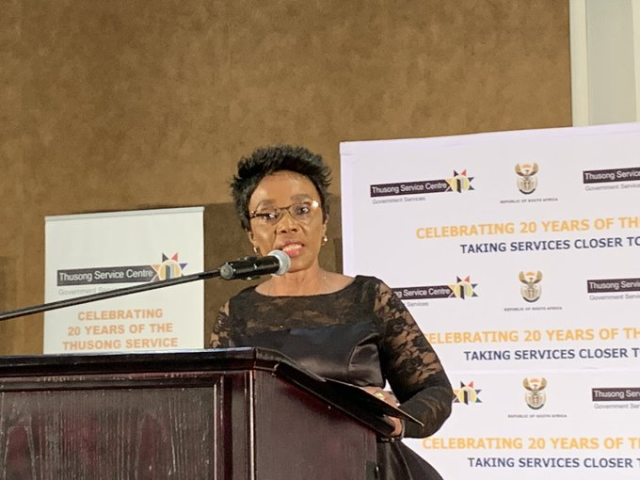
In her keynote address, Minister Chikunga emphasized that this convening must be a springboard for action rather than a ceremonial endpoint.
- Country:
- South Africa
At the opening of the Women20 (W20) South Africa Inception Meeting in Cape Town, Minister in the Presidency responsible for Women, Youth and Persons with Disabilities, Sindisiwe Chikunga, declared that the legacy of South Africa's G20 Presidency will be measured not by ceremonial metrics, but by tangible, enduring change. "It will not be defined by the number of meetings held or the elegance of its communiqués," she asserted, "but by lives changed, systems reformed, and the power redistributed."
The two-day W20 meeting, hosted under the milestone theme "Women in Solidarity", marks the 10th anniversary of the W20, an official G20 engagement group dedicated to promoting gender equality and the economic empowerment of women. With over 100 delegates from governments, businesses, academia, and civil society in attendance, the meeting aims to craft innovative, high-impact solutions to the enduring challenges women face worldwide.
A Platform for Change, Not Ceremony
In her keynote address, Minister Chikunga emphasized that this convening must be a springboard for action rather than a ceremonial endpoint. "This is a beginning—a global call to mobilise transformative change for women," she said. According to the Minister, the current moment offers a rare opportunity for the Global South and Africa in particular to redefine the international narrative and reclaim agency in shaping a just global recovery.
"We can prove that leadership from our regions is not only possible—it is indispensable," Chikunga said passionately. She called on delegates to commit to weaving women's voices into the very fabric of public policy, fiscal frameworks, institutions, and socioeconomic outcomes.
Honouring South African Heroines
Chikunga invoked the legacy of South African struggle icons Charlotte Maxeke, Ruth Mompati, and Albertina Sisulu, reminding participants that the struggle for freedom is incomplete without gender equality. "Freedom without equality is fiction," she declared, urging that structural transformation remain at the core of the W20 and G20 policy objectives.
Long-Term Initiatives to Outlast the Presidency
As Chair of the G20 Empowerment of Women Working Group, South Africa has launched two key programmes designed to drive long-term structural reform:
1. Transformative Emerging Industrialists Accelerator
This initiative supports women entrepreneurs across key strategic sectors—including energy, maritime, defence and aerospace, digital platform economies, and agriculture. Participants will receive holistic support spanning the entire business lifecycle: from idea generation and product development to financing, market entry, and commercialisation. The programme relies on collaborations with State-Owned Enterprises (SOEs), private firms, and industry associations to ensure success and sustainability.
2. Disability Inclusion Initiative (DII)
The DII represents South Africa's flagship strategy for embedding disability rights and inclusive frameworks into every level of public and private sector practice. At its core is the Disability Inclusion Nerve Centre, which will lead several transformative undertakings:
-
Conducting research on inclusion in sectors such as the care economy, artificial intelligence, financial services, and climate resilience.
-
Launching a National Disability Data Observatory to improve evidence-based decision-making.
-
Designing and implementing early childhood disability screening protocols.
-
Enhancing capacity through dedicated disability focal points in institutions.
-
Promoting inclusive schooling and investment in assistive technologies to expand access for children and youth with disabilities.
"These are not once-off initiatives," Chikunga emphasized. "They are long-term structural interventions designed to outlive the Presidency."
Using Data to Address Systemic Gaps
Chikunga also underscored the importance of data and accountability in driving sustainable change. She extended an invitation to development partners, the private sector, and multilateral institutions to support these efforts. The forthcoming National Disability Data Observatory will not just collect data—it will influence policy decisions, foster accountability, and enhance service delivery across sectors.
She referenced alarming findings from the Human Sciences Research Council revealing that women with disabilities in South Africa remain among the most marginalised groups. These women often face compounded challenges, including disproportionate exposure to violence, economic exclusion, and social invisibility.
"That is not just a gap. It is a systemic failure," Chikunga said, reinforcing the urgency for deep-rooted policy reforms and targeted interventions.
A Call to Action
As the W20 Inception Meeting proceeds, South Africa's message is clear: real progress lies in structural change, shared responsibility, and global solidarity. Chikunga's address was a rousing call to world leaders, policymakers, and civil society to move beyond rhetoric and build systems that empower women and persons with disabilities—not just during the G20 term, but for generations to come.


 Google News