

SA Municipal Debt Hits R416.1bn as Treasury Flags Spending and Grant Gaps
The report paints a mixed picture of progress, with some signs of improved revenue billing but deepening financial instability in many local councils.
- Country:
- South Africa
South African municipalities are facing growing financial distress, with consumer debt owed to local government rising sharply to R416.1 billion as of 31 March 2025. This marks a significant increase from the R347.6 billion recorded at the same point in the 2023/24 financial year, highlighting persistent structural challenges in municipal revenue collection, liquidity management, and grant expenditure.
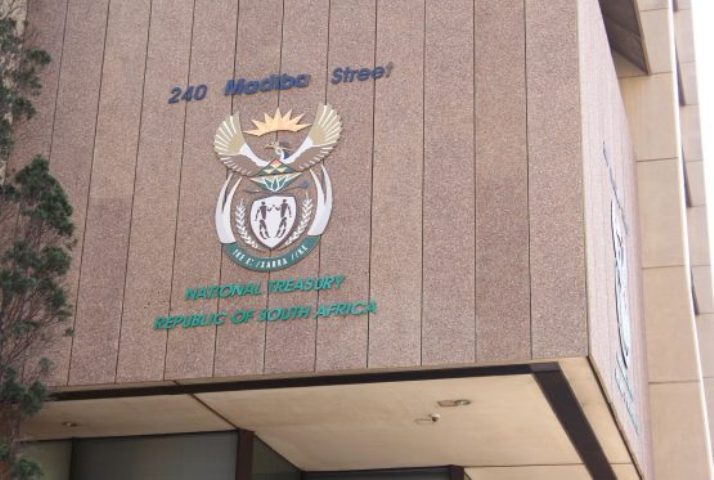
These figures are part of the third quarter Local Government Revenue and Expenditure Report released by National Treasury, which covers 257 municipalities across South Africa. The report paints a mixed picture of progress, with some signs of improved revenue billing but deepening financial instability in many local councils.
Ballooning Municipal Debt and Bad Debt Write-Offs
According to the Treasury, R10.8 billion or 2.6% of the outstanding consumer debt has been written off as bad debt. The overwhelming portion of the debt, 72% (or R299.5 billion), is attributed to households—up from 73% (or R253.6 billion) a year earlier. Government departments accounted for 6% or R24.9 billion, compared to R21 billion in the previous period.
The increasing reliance on deferred payments and household non-payment signals rising financial pressure on communities, compounded by broader economic stagnation, unemployment, and service delivery dissatisfaction.
Creditors Also Climb, Indicating Cash Flow Pressure
In parallel, municipalities are themselves struggling to meet their financial obligations. Total municipal creditors stood at R131.8 billion as of March 2025—an increase from R106.7 billion reported during the same quarter in the previous fiscal year.
Alarmingly, R111.8 billion or 84.8% of this debt has been outstanding for more than 90 days. Provinces with the most severe creditor backlogs (over 90 days) include:
-
Free State – 94.4%
-
Mpumalanga – 93.9%
-
Northern Cape – 93.8%
-
North West – 84.4%
These figures suggest municipalities are increasingly cash-strapped, delaying payments to suppliers and service providers, which can have knock-on effects on local economies and service continuity.
Revenue Collection vs. Billing Gap
Despite an average collection rate of 85% against adjusted budgets, actual collections against billed and other revenues are far lower at 63.6%. This trend is more pronounced in major metros, which projected an 87.9% collection rate but only achieved 58.2%.
Secondary cities budgeted for 86.3% but collected 69.7%, indicating a significant revenue shortfall across urban and semi-urban municipalities alike. These gaps can lead to shortfalls in service delivery, infrastructure development, and salary payments.
Expenditure Performance: Operating vs. Capital Budget Use
By 31 March 2025, municipalities had spent 64.9% (R432.2 billion) of the adjusted total expenditure budget of R665.9 billion. Operating expenditure accounted for R405.8 billion or 69.1% of the R587.5 billion budgeted.
Capital expenditure, however, significantly lagged at only R26.4 billion or 33.6% of the R78.5 billion capital budget. This underutilisation of infrastructure budgets reflects long-standing issues in project implementation, supply chain inefficiencies, and planning delays.
Salaries and Wages: Budget Adjustments and Actual Spend
Municipalities revised their combined salaries and wages budget downward from R162.6 billion to R161.1 billion, a modest 0.9% decrease. This category, which includes remuneration for councillors, constitutes 27.4% of total adjusted operating expenditure.
By the end of Q3, R114.2 billion or 70.9% of the adjusted salary budget had been expended, indicating cautious but steady progress on personnel cost containment.
Conditional Grants: Underperformance Despite Transfers
Of the R44.7 billion allocated for direct conditional grants, R38.9 billion had been transferred by the end of March. However, municipalities had only spent R19.5 billion or 43.7%—a notable decline from 46.8% recorded in the previous year. National Transferring Officers (NTOs) reported a higher expenditure of R25 billion or 55.9%.
Reasons for this underperformance include:
-
Delays in submitting business and implementation plans
-
Ongoing Supply Chain Management (SCM) issues
-
Disruptions in procurement timelines
-
Reallocation of unspent funds to better-performing municipalities
Treasury warns that these persistent inefficiencies may continue to erode service delivery and delay infrastructure improvements.
Infrastructure Grant Spending: Uneven Progress
Total infrastructure grant expenditure was R23.8 billion or 56.3% of the R42.8 billion allocated. While some grants such as the Integrated Urban Development Grant (IUDG), Municipal Infrastructure Grant (MIG), and Regional Bulk Infrastructure Grant (RBIG) showed healthy spending levels (above 60%), others like the Municipal Disaster Recovery Grant (MDRG) and Water Services Infrastructure Grant (WSIG) lagged significantly.
Treasury emphasized the need for a balanced approach:
-
Reward well-performing municipalities with additional support
-
Penalise chronic underperformance with stricter enforcement and possible budget cuts
Looking Ahead: Strategic Interventions Needed
The third quarter findings underscore the growing need for improved municipal financial governance, planning accuracy, and procurement reform. Treasury reiterated its commitment to enhancing oversight, capacity building, and enforcing compliance to strengthen service delivery.
The full report and detailed data are available on the National Treasury website: www.treasury.gov.za


 Google News