

Govt Deploys Enhanced Task Force Green to Support Flood Recovery Efforts
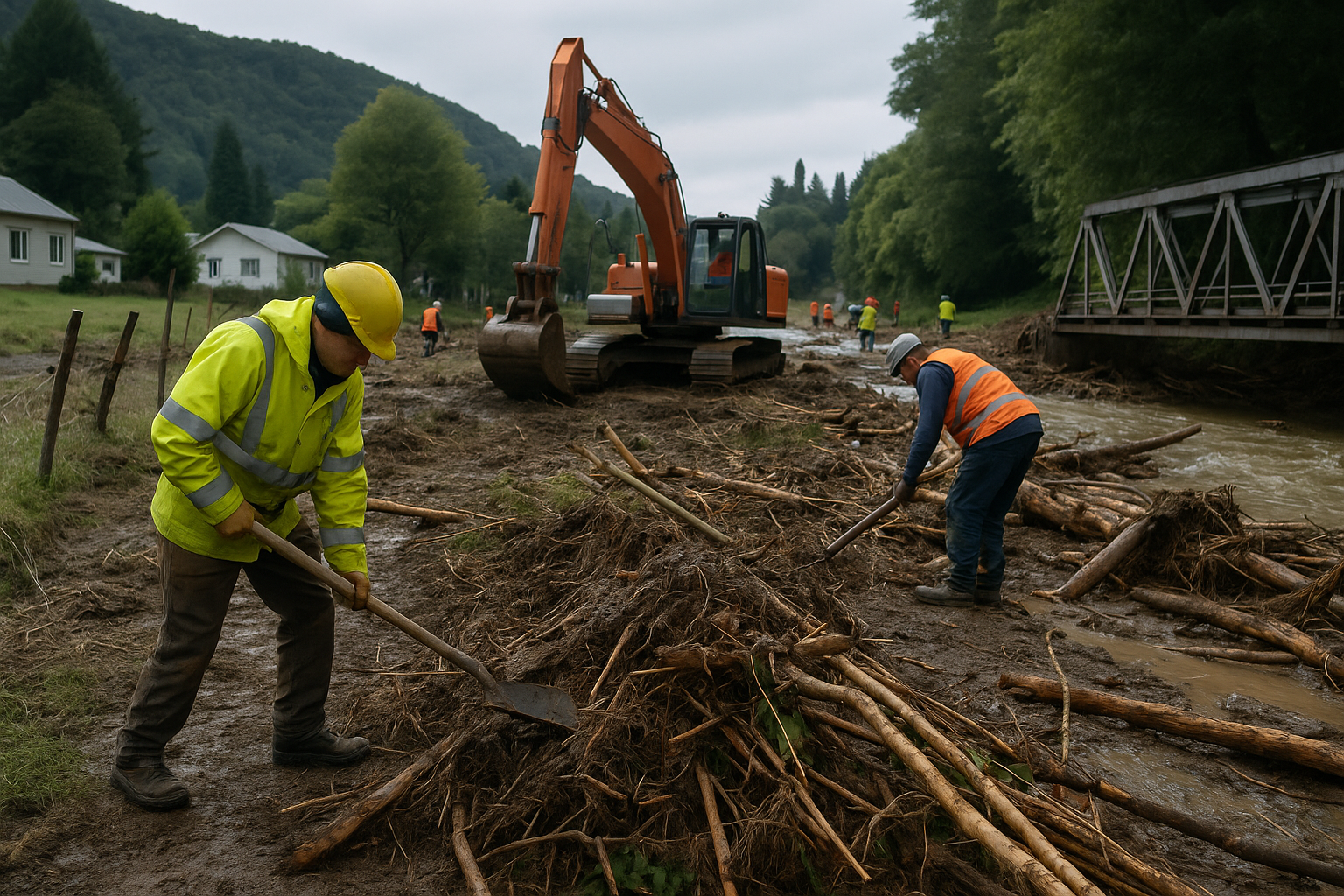
Enhanced Task Force Green is a government-funded employment program traditionally used to assist communities following natural disasters or major events. tr
- Country:
- New Zealand
In the wake of severe flooding across the Tasman and Marlborough districts, the New Zealand Government has activated an Enhanced Task Force Green (ETFG) response to aid in the recovery efforts. The initiative, led by the Ministry of Social Development (MSD), is aimed at supporting communities, farmers, and public infrastructure affected by the recent adverse weather events.
Heavy rainfall led to widespread damage, with farms, homes, roads, and bridges either partially or completely compromised. Many areas remain submerged or isolated due to landslides, blocked routes, and debris-filled waterways. In response, Minister for Social Development and Employment, Louise Upston, confirmed the rollout of ETFG as a vital step in the government's coordinated recovery approach.
What Is Enhanced Task Force Green?
Enhanced Task Force Green is a government-funded employment program traditionally used to assist communities following natural disasters or major events. It serves a dual purpose—providing temporary employment opportunities for job seekers and supplying much-needed manpower for affected communities.
Under the ETFG initiative, job seekers are mobilized and deployed to work on recovery tasks. These typically include:
-
Clearing flood debris from rural and urban properties
-
Restoring fence lines and repairing damaged agricultural infrastructure
-
Assisting in the rebuilding of sheds, homes, and other structures
-
Helping clear and restore community assets like playgrounds, community halls, public gardens, and sports grounds
-
Restoring waterways to reduce the risk of further environmental impact
According to Minister Upston, "The ETFG programme puts job seekers to work where they will be of most help to the farmers and growers cleaning up their properties... It also provides support to enable public assets... to be returned to the same condition they were prior to the event."
Support for Farmers and Rural Communities
Rural areas bore the brunt of the flooding, with many farmers facing the dual challenge of losing crops and livestock while trying to restore their operations. The government's rapid deployment of ETFG resources is intended to bolster the resilience of these farming communities.
Damage assessments are currently being carried out across both regions by local authorities and response agencies. The Ministry of Social Development will coordinate closely with emergency services, councils, and agricultural support bodies to ensure that the assistance reaches those who need it most—swiftly and efficiently.
Farmers and growers in the impacted areas are being encouraged to self-register for support by contacting the Rural Support Trust at 0800 787 254, a vital first point of contact to link them with recovery teams and resources.
Job Seekers Urged to Lend a Hand
ETFG also opens a critical pathway for job seekers who want to be part of the recovery. Locals who are currently unemployed or seeking temporary employment are encouraged to participate in this coordinated effort.
Job seekers interested in supporting the clean-up efforts can register by:
-
Emailing: totsemploymentteam@msd.govt.nz
-
Calling Work and Income: 0800 559 009
This initiative not only supports flood-affected areas but also helps provide purposeful employment at a time when community solidarity is crucial.
A Community-Led Recovery, Backed by Government
Louise Upston praised the spirit of unity among locals:
"We know these are resilient communities which are pulling together to help each other. ETFG is designed to support those efforts and to lend a hand."
As the region begins its long path to recovery, the government's timely intervention through Enhanced Task Force Green demonstrates a commitment to rebuilding stronger, safer, and more connected communities.
Residents, businesses, and agricultural operators are urged to stay informed through local updates and continue working with community networks to ensure all recovery resources are effectively deployed.


 Google News