

ECI Reviews Nationwide Voter Roll Preparedness at CEOs Conference in Delhi
Election Commissioner Dr. Sukhbir Singh Sandhu remarked that "Every eligible citizen must be on the electoral roll, and no ineligible person should remain."
- Country:
- India
The Election Commission of India (ECI) launched its two-day Conference of Chief Electoral Officers (CEOs) at the India International Institute for Democracy and Electoral Management (IIIDEM), New Delhi, on October 22, 2025. The high-level conference serves as a crucial preparatory meet ahead of the upcoming Special Intensive Revision (SIR) exercise of the electoral rolls, a nationwide campaign aimed at strengthening the accuracy and integrity of India's voter database.
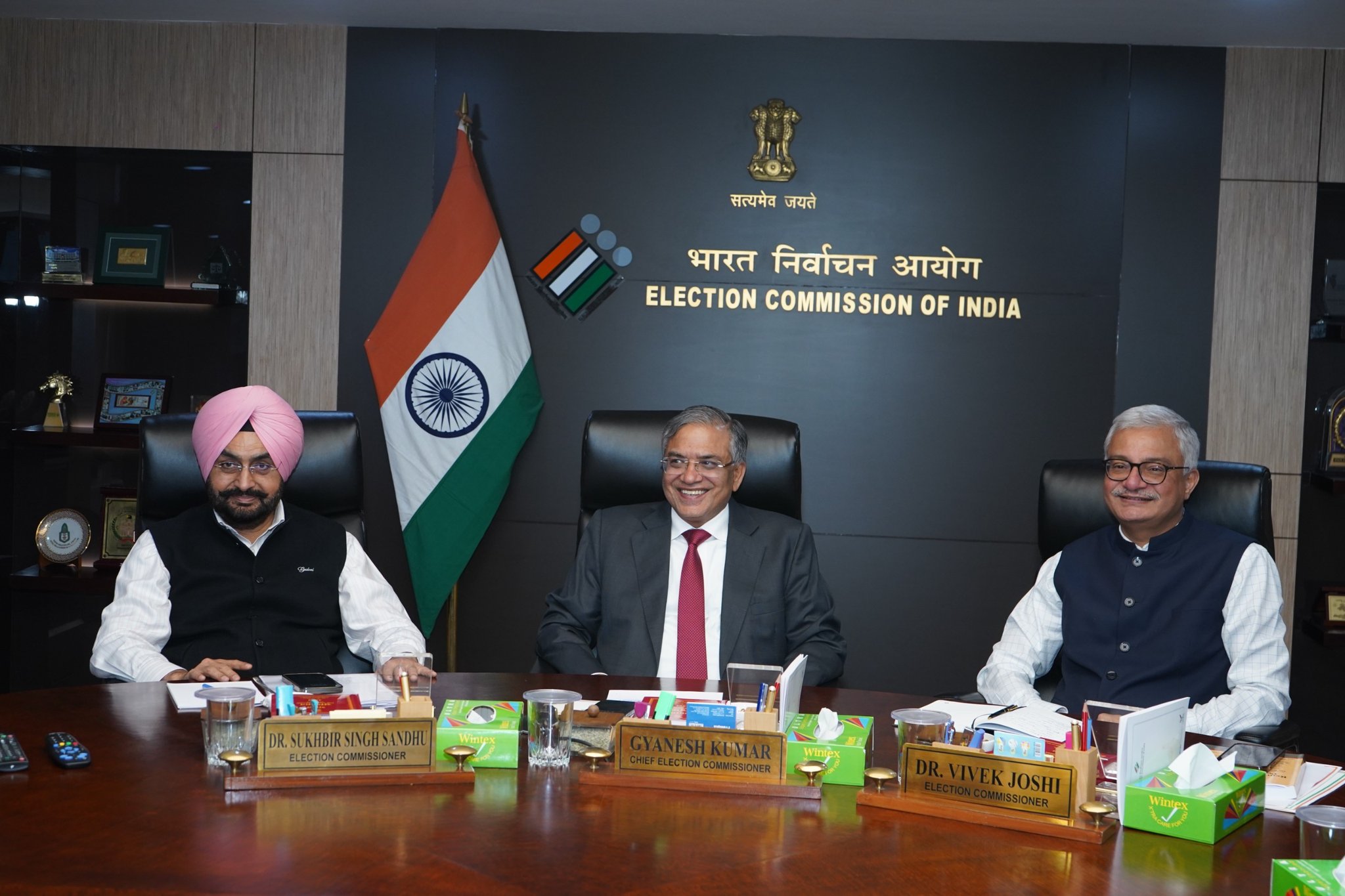
Presiding over the conference was newly appointed Chief Election Commissioner (CEC) Shri Gyanesh Kumar, joined by Election Commissioners Dr. Sukhbir Singh Sandhu and Dr. Vivek Joshi. Senior officials from all States and Union Territories (UTs), responsible for managing the electoral machinery, were present to review, discuss, and fine-tune the groundwork being laid for the upcoming revision of the electoral rolls.
Building Upon September SIR Strategy Session
This conference builds on the earlier SIR preparedness session held on September 10, 2025, during which all States and UTs had made detailed presentations. Those presentations covered vital electoral statistics such as the number of electors, qualifying dates, and the status of the last SIR completed in their respective jurisdictions.
The current session focused on reviewing the action taken based on the directions issued during the September meet. A key agenda was the mapping of current electors against the electors listed in the last SIR, with an emphasis on identifying duplications, deletions, and fresh inclusions. The process is vital to ensure a clean and updated Electoral Roll that reflects the true number of eligible voters.
Evaluation of Ground-Level Preparedness
A significant portion of the conference was devoted to assessing the training and appointment status of key electoral functionaries across the country. These included:
-
District Election Officers (DEOs)
-
Electoral Registration Officers (EROs)
-
Assistant Electoral Registration Officers (AEROs)
-
Booth Level Officers (BLOs)
-
Booth Level Agents (BLAs)
The Commission reviewed whether the requisite number of these officials had been appointed, and whether they had received proper orientation and training to carry out their roles effectively. This cadre forms the backbone of India's massive electoral apparatus, especially during high-scale exercises like SIR, which cover every corner of the nation, from remote tribal belts to bustling metros.
Focus on Electoral Roll Purity and Voter Inclusivity
Chief Election Commissioner Shri Gyanesh Kumar underlined the importance of ensuring the purity of the electoral rolls, stressing that inclusion and deletion must be based on clear, verified processes. The ECI has already issued directives that aim to remove dead or shifted electors, while facilitating the inclusion of new and first-time voters, especially the youth who will attain the qualifying age of 18 by January 1, 2026.
Moreover, efforts are being made to enhance voter inclusivity, ensuring marginalized and migratory populations are not left out of the electoral framework. This includes deploying awareness teams in slums, remote villages, and sensitive areas and using technology for real-time reporting and tracking.
Technological Integration in Voter Management
The Commission is also investing in technology-driven tools to manage the voter list more effectively. Digital integration of data with Aadhaar (where permissible), GIS-based mapping of polling stations, and AI-supported tools to detect duplication and anomalies are being increasingly deployed. These innovations aim to reduce human error and improve efficiency in maintaining an updated, secure, and verifiable electoral database.
Way Forward and Future Polls
The SIR exercise is not only a statutory mandate under the Representation of the People Act, 1950, but also a foundational step ahead of the next cycle of State Assembly elections and the General Elections of 2029. With the electorate growing at a rapid pace, periodic intensive revisions are necessary to uphold democratic participation and integrity.
Election Commissioner Dr. Sukhbir Singh Sandhu remarked that "Every eligible citizen must be on the electoral roll, and no ineligible person should remain." Meanwhile, Election Commissioner Dr. Vivek Joshi added that "Timely and error-free electoral rolls are the cornerstone of free and fair elections. SIR 2025 is a national priority."
As the conference continues into its second day, it is expected that the ECI will finalise revised timelines and monitoring frameworks for the Special Intensive Revision. The outcome of this conference will have a significant bearing on the voter experience and transparency of upcoming elections in the world's largest democracy.
With increasing emphasis on digitisation, accountability, and inclusivity, the Election Commission of India continues to uphold its mandate of delivering free, fair, and accessible elections—a task that begins long before polling day, with the meticulous preparation of the electoral rolls.


 Google News