

Millions of Ukrainians Face Deepening Crisis After Brutal Winter
Four years into the full-scale war, humanitarian needs remain staggering both inside Ukraine and across Europe, where millions continue to live as refugees.
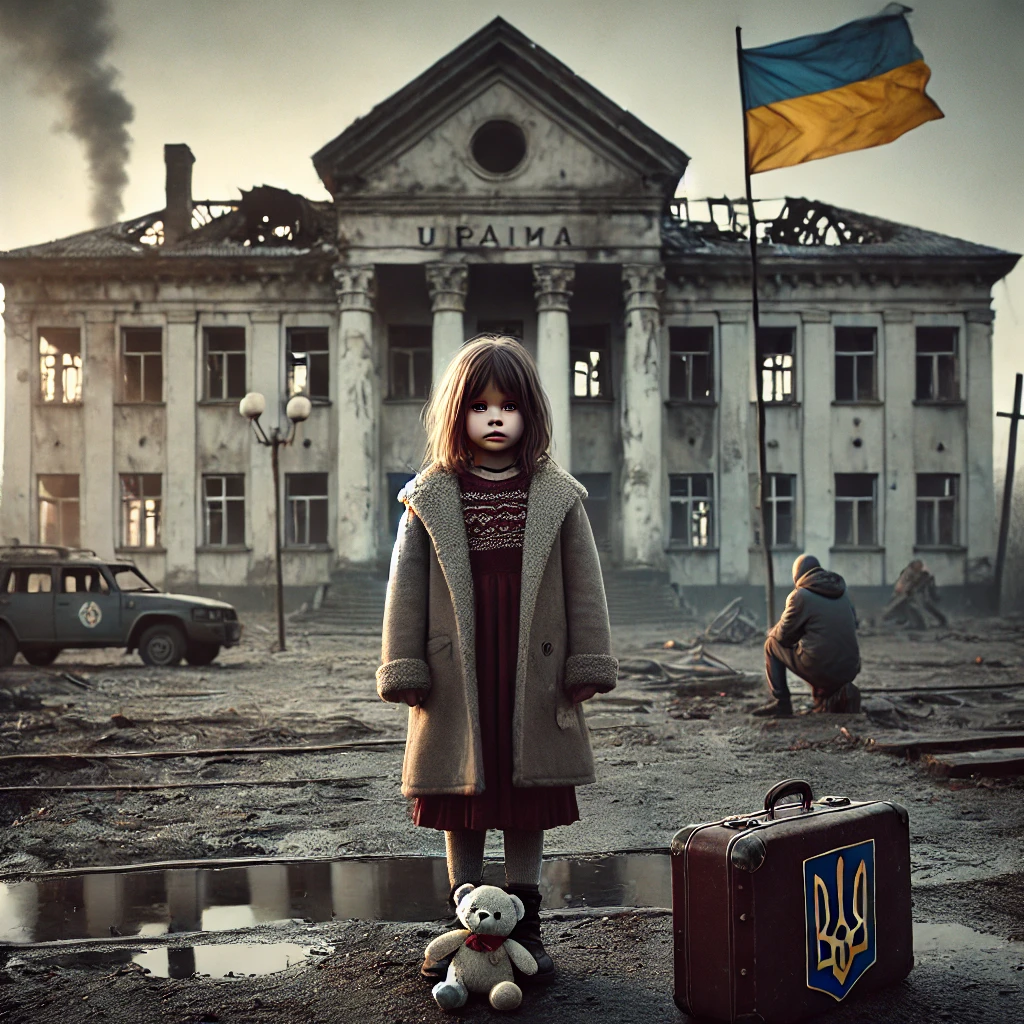
After enduring the harshest winter in a decade, millions of displaced Ukrainians are emerging into spring not with relief, but with mounting hardship as conflict persists and peace prospects remain distant.
Four years into the full-scale war, humanitarian needs remain staggering both inside Ukraine and across Europe, where millions continue to live as refugees.
10.8 Million Need Aid Inside Ukraine
Repeated attacks on housing, energy infrastructure and essential services throughout the winter left vast swathes of the country without reliable heating or electricity for prolonged periods. Although temperatures are rising, the destruction to homes and public systems remains severe.
An estimated 10.8 million people inside Ukraine will require humanitarian assistance in 2026, including 3.7 million internally displaced people (IDPs) uprooted from their communities.
Communities, supported by UNHCR and NGO partners, continue to repair homes, restore utilities and rebuild livelihoods. But after years of sustained bombardment and disruption, resilience is wearing thin.
"Sustained humanitarian assistance remains essential, alongside scaled-up recovery and reconstruction support to prevent further displacement and enable safe conditions for return," UNHCR said.
5.9 Million Refugees Abroad
Beyond Ukraine's borders, 5.9 million Ukrainians remain refugees, primarily across Europe.
Host countries have provided Temporary Protection at an unprecedented scale, granting access to education, healthcare and labour markets. This has enabled many refugees to regain stability and contribute economically to their host communities.
In Poland, joint analysis by UNHCR and Deloitte found that Ukrainian refugees contributed a net positive impact equivalent to 2.7 per cent of Poland's GDP in 2024, underscoring the economic benefits of inclusion.
However, with no clear end to the war, policymakers are being urged to look beyond short-term protection frameworks.
Alongside Temporary Protection, States are encouraged to consider longer-term legal arrangements for vulnerable refugees who may not be able to return immediately — even if hostilities cease.
Inclusion Key to Stability
Evidence consistently shows that meaningful inclusion — including language training, recognition of qualifications and access to decent work — improves refugee self-reliance and boosts host economies.
"Meaningful inclusion delivers results," UNHCR noted, calling for expanded support measures to strengthen economic participation across the region.
Inside Ukraine, Return Depends on Safety
While gradual and voluntary returns will be critical to Ukraine's long-term recovery, conditions in many areas remain unsafe.
UNHCR is working with the Ukrainian Government and partners to:
-
Restore lost identity and civil documentation
-
Rehabilitate social infrastructure
-
Repair war-damaged homes
-
Analyse refugee intentions and forecast return movements
These efforts aim to lay the groundwork for sustainable, voluntary return when security conditions permit.
Funding Critical for 2026 Response
Since the start of the full-scale invasion, UNHCR and its partners have supported 10 million people with emergency shelter, protection services and psychosocial assistance.
In 2026, the agency plans to assist a further 2 million people inside Ukraine, contingent on adequate funding. Across neighbouring countries, support is planned for 1.7 million refugees and host communities, with a focus on inclusion and self-reliance.
But as winter ends, the humanitarian crisis shows no sign of easing.
"We must support the people of Ukraine with humanitarian relief and recovery inside the country, and with safety and self-reliance abroad," UNHCR said.
With millions still displaced, damaged infrastructure widespread, and peace elusive, sustained international commitment will be essential to prevent further suffering — and to prepare for the eventual recovery of a nation deeply scarred by war.


 Google News