

Better Work Indonesia Forum Unites Industry to Drive Sustainable Progress
Panelists emphasized that trade agreements must go hand in hand with social justice, ensuring that economic growth translates into better jobs, fairer wages, and safer workplaces.
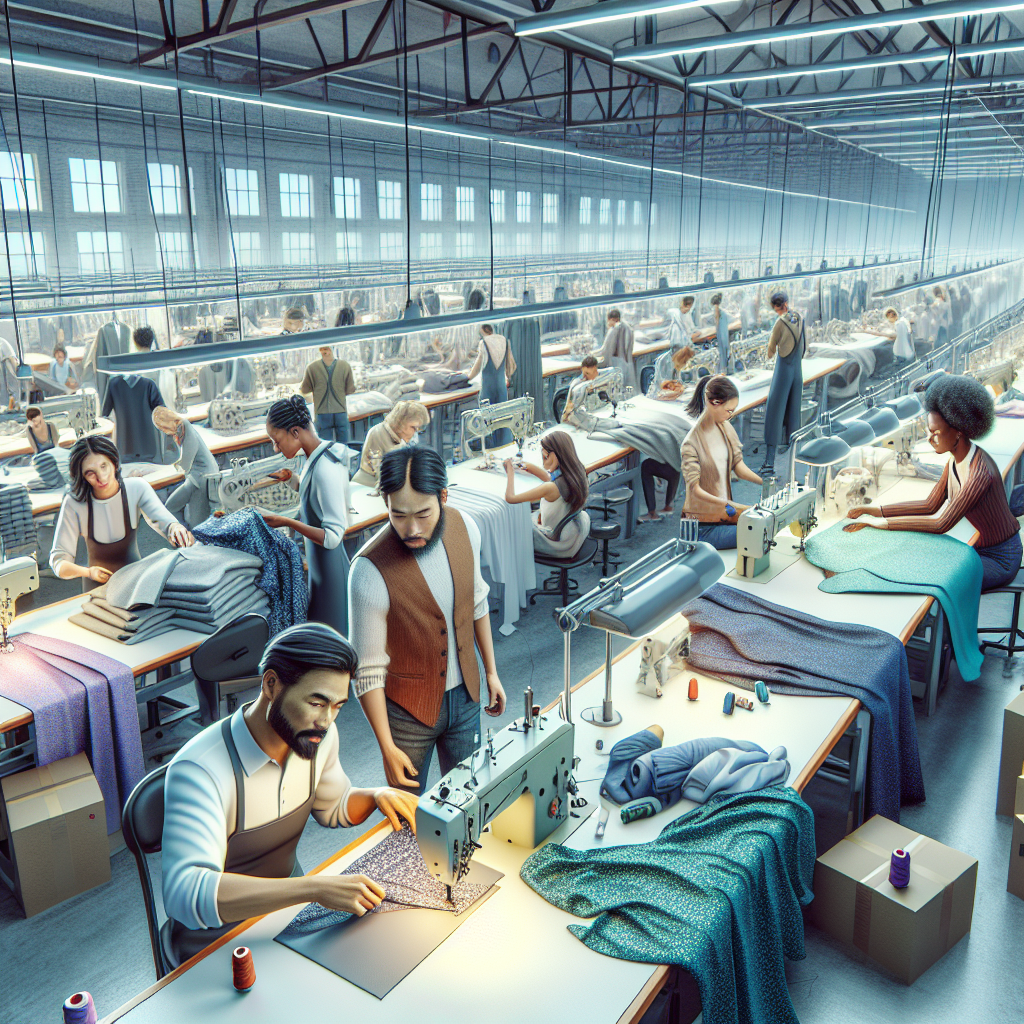
The Better Work Indonesia (BWI) programme, a joint initiative of the International Labour Organization (ILO) and the International Finance Corporation (IFC), hosted its annual Indonesia Business Forum (IBF) in Jakarta under the theme "The Power of Unified Efforts in Driving Sustainable Progress."
Gathering more than 130 stakeholders from across the garment and textile industry — including international buyers, sourcing intermediaries, manufacturers, workers' representatives, and government officials — the event underscored the growing importance of tripartite collaboration in shaping a more sustainable, inclusive, and competitive Indonesian garment sector.
The 2025 forum highlighted collective responsibility, the integration of human rights due diligence (HRDD), and alignment with global trade frameworks as essential elements for the industry's long-term transformation.
A Stronger Industry Through Partnership and Accountability
Opening the forum, Kristina Kurths, representing the ILO Country Director for Indonesia and Timor-Leste, commended the strength of Indonesia's tripartite partnership among government, employers, and workers' organizations.
"Indonesia's garment industry has evolved into one of the region's most dynamic sectors. As the programme transitions toward sustainability, the ILO remains committed to supporting the next chapter under the Kemitraan Kerja Foundation (KKF) — ensuring that the industry remains competitive, compliant, and that no one is left behind," said Kurths.
BWI, established in 2011, has become a model for improving working conditions, promoting compliance with labour laws, and enhancing factory productivity through dialogue and shared accountability. As it transitions to local ownership under KKF, the programme seeks to ensure that the progress achieved is institutionalized and integrated within national frameworks and policy structures.
Trade, Labour Standards, and Human Rights Due Diligence
The first panel discussion explored how emerging trade and due diligence frameworks — including the EU–Indonesia Comprehensive Economic Partnership Agreement (EU-CEPA) and evolving global HRDD requirements — are reshaping the international trade landscape.
Panelists emphasized that trade agreements must go hand in hand with social justice, ensuring that economic growth translates into better jobs, fairer wages, and safer workplaces.
"This is a historic agreement and a game changer for both the EU and Indonesia," said Jerome Pons, Head of Cooperation at the EU Delegation to Indonesia. "EU–CEPA will allow us to transition from free trade to sustainable trade, promoting stronger protection of workers' rights, women's empowerment, and compliance with labour laws."
Representing the workers' perspective, Eko Purwantoro, Head of International Affairs and Networks at the National Workers' Union (SPN), said that HRDD strengthens the role of trade unions:
"Human rights due diligence is meant to strengthen the role of trade unions and workplace standards. It gives workers a platform to ensure their voices are heard."
From the employers' side, Anne P. Susanto, Head of Trade at the Indonesian Employers' Association (Apindo), emphasized the need to balance HRDD with competitiveness:
"HRDD is important, but we also need to focus on productivity and efficiency to attract long-term investment."
This dialogue reflected the forum's broader message — that sustainable progress requires balance between social responsibility and economic performance.
Labour Law Compliance and the New PKWT Guidelines
The second panel session featured representatives from the Ministry of Manpower's Directorate General of Labour Inspection and Occupational Safety and Health, who discussed the implementation of Fixed-Term Employment Contract (PKWT) provisions under Article 59 of the Job Creation Law.
Gian A. Sugandi and M. Nico D. Priastomo presented the updated PKWT Guidelines, clarifying that the regulation limits fixed-term contracts to a maximum of five years for specific roles or tasks.
"If there is an extension beyond five years, it raises concerns for labour inspectors," said Nico. "It suggests the role may be permanent, which could constitute a violation."
Gian added that after the maximum duration, a PKWT can be converted into a Permanent Employment Contract (PKWTT), reinforcing the government's commitment to protecting job security and ensuring fair employment practices.
This session underscored the government's focus on strengthening labour inspection, enhancing occupational safety, and ensuring compliance with Indonesia's evolving Job Creation Law — a key component in building confidence among both workers and investors.
Recognizing Good Practices: Factories Leading by Example
The forum concluded with inspiring case studies from three high-performing garment factories recognized by Better Work Indonesia for their commitment to decent work, compliance, and innovation.
PT Ungaran Sari Garments (Central Java)
Recognized as a high-performing factory since 2018, PT Ungaran Sari Garments showcased its success in maintaining compliance and productivity through strong social dialogue, continuous worker training, and investments in technology. The company has adopted automation and digital systems to improve efficiency while preserving fair labour standards.
PT Uwu Jump Indonesia (Subang, West Java)
This company, affectionately calling its workers "jumpers," exemplifies innovation in digital worker engagement. It uses an interactive online platform for employees to access information on contracts, wages, and benefits — and to share feedback or grievances. Monthly bipartite meetings and a dedicated HRD liaison officer help ensure transparency and trust between management and workers.
PT TPINC Trading Jakarta (Central Java)
A fast-growing manufacturer, PT TPINC prioritizes worker well-being and inclusivity. The company conducts annual employee surveys to capture workplace concerns and holds direct elections for its Bipartite Committee to ensure democratic representation. With 1,400 female employees, it provides lactation facilities and actively hires persons with disabilities, promoting diversity and inclusion in the workplace.
BWI plans to expand this recognition initiative, targeting 20 additional factories by 2026, reinforcing its vision that sustainable progress is built on respect, innovation, and dialogue.
Unified Efforts for a Sustainable Future
Throughout the day, participants reaffirmed that the garment industry's sustainability depends on collaboration — between policymakers, employers, workers, and international partners. The discussions highlighted Indonesia's ongoing transformation into a regional leader in responsible production, one that aligns competitiveness with fairness.
BWI's transition to the Kemitraan Kerja Foundation (KKF) marks a major milestone in local ownership and institutional sustainability, ensuring that improvements achieved under international partnerships are fully embedded in national frameworks.
"Better Work Indonesia has shown that when government, employers, and workers unite, sustainable change becomes possible," said Kurths. "The ILO will continue to walk alongside Indonesia as it strengthens its labour systems, industry competitiveness, and social dialogue."
From Compliance to Culture: The Next Chapter
As the Indonesian garment sector continues to evolve amid global supply chain shifts, BWI's success story demonstrates the power of shared accountability and data-driven reform.
With HRDD becoming a new global standard, and sustainability expectations rising, Indonesia's garment industry is setting an example for how developing economies can build resilience, uphold rights, and attract ethical investment.
Through collective action, Better Work Indonesia and its partners are proving that decent work and competitiveness go hand in hand — driving not only profits but also dignity, equality, and shared prosperity.
ALSO READ
-
ADB Backs Indonesia With $650 Million to Expand Markets and Safer Digital Finance
-
Belize Communities Take the Lead in New Push for Jobs, Skills and Stronger Futures
-
ILO Report Reveals How to Bring Social Security Within Reach of Informal Workers
-
Japanese Lawmakers Visit India to See Worker Protection and Skills Projects in Action
-
Indonesian Employers Seek a Stronger Voice in OECD Reforms on Jobs, Skills and Business


 Google News