

PM Shinzo Abe expects to win ruling party's leadership election
- Country:
- Japan
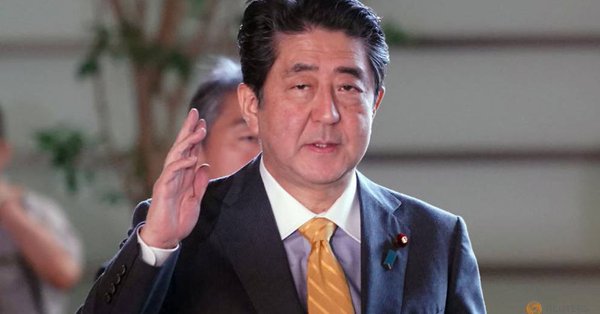
Prime Minister Shinzo Abe is widely expected to win his ruling party's leadership election Thursday, setting him on course to become Japan's longest-serving premier.
"I'm determined to build a new country together with you," Abe, who has managed to recover from a series of cronyism and cover-up scandals, said on the eve of the election.
"I promise to take the lead in handing over a proud and hopeful Japan to younger generations," he said in a stump speech in Tokyo.
Polls show Abe, 63, is expected to romp to victory in a two-horse race with former defense minister Shigeru Ishiba, a hawkish self-confessed "military geek".
Final results -- combining votes from lawmakers of the Liberal Democratic Party and its party members -- are expected to be announced early Thursday afternoon.
A win would effectively hand him three more years as PM, allowing him to break the record of the nation's longest-serving premiership held by Taro Katsura, a revered politician who served three times between 1901 and 1913.
While voters see the economy and social security as a top priority, Abe aims to use the election to push his dream of reforming the country's post-World War II pacifist constitution.
Abe has frequently voiced his wish to rewrite the charter, imposed by the victorious US occupiers, which forces the country to "forever renounce war" and dictates that armed forces will "never be maintained".
Abe insists any changes would merely remove the country's well-equipped Self-Defense Forces from the constitutional paradox whereby they should not technically exist.
But any changes to the text would be hugely sensitive in pacifist Japan and almost certainly greeted with fury in China and the Koreas, 20th-century victims of Japanese military aggression.
In addition, surveys show that tinkering with the legal text is far from the top of most Japanese voters' to-do list, as the country faces an aging and declining population and a still-sluggish economy.
Even if Abe manages to force a revision through parliament, he would face a referendum, raising the prospect of a Brexit-style political meltdown if the people vote against him, said Yu Uchiyama, a political scientist from the University of Tokyo.


 Google News