

Trump's Lawyer Frames Him as Blackmail Victim in Daniels Scandal Trial
Donald Trump's lawyer argued that Trump was a victim of blackmail by porn star Stormy Daniels. The lawyer claimed prosecutors failed to prove that Trump covered up a hush money payment. Trump faces 34 felony counts, but his lawyer emphasized the lack of evidence and credibility of key witnesses.
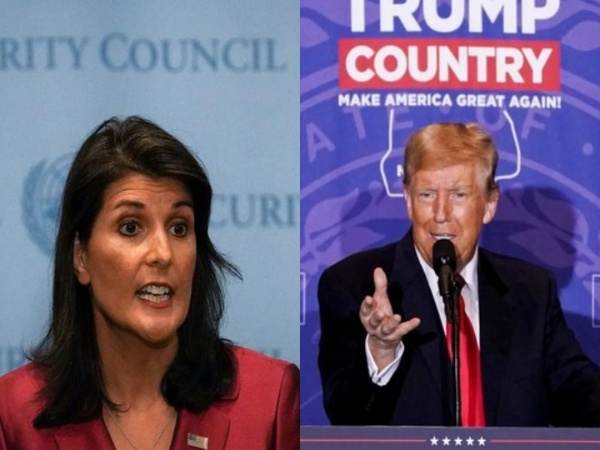
Donald Trump's lawyer cast the former U.S. president as a victim of a porn star's blackmail and argued that prosecutors had failed to prove he covered up a hush money payment to her as Trump's historic criminal trial neared a conclusion on Tuesday.
In his closing argument, Trump lawyer Todd Blanche said porn star Stormy Daniels had been trying to extort Trump by threatening to go public with her story of a sexual encounter as he battled a string of unflattering stories in the final weeks of the 2016 election. "She was trying to use the 2016 election as leverage to try and get paid," Blanche told the 12 jurors who will decide whether Trump, 77, becomes the first U.S. president to be convicted of a crime.
The jury could begin deliberations as soon as Wednesday. During the trial, Daniels testified in unflattering detail about a 2006 encounter with Trump at a celebrity golf tournament. Trump, president from 2017-2021, denies wrongdoing and says he never had sex with Daniels.
His lawyers have said he paid her off to protect his family from embarrassment, not to boost his campaign as prosecutors allege. Trump, the 2024 Republican candidate for president, faces 34 felony counts of falsifying business records. Blanche urged jurors to look past the salacious details and focus on the paperwork at the heart of the case.
He said prosecutors had failed to prove that Trump, the 2024 Republican candidate for president, illegally falsified documents to cover up the $130,000 Daniels payment. Prosecutors in Manhattan District Attorney Alvin Bragg's office say that payment amounted to an improper campaign contribution because it kept voters from learning about an alleged affair that could have swayed their decisionmaking.
Later on Tuesday, prosecutors will sum up the witnesses and evidence they have presented during the six-week trial. They must prove Trump is guilty "beyond a reasonable doubt," the level of certainty required by U.S. law. "You and you alone are the judges of the facts in this case," Justice Juan Merchan, who is overseeing the case, told jurors.
A conviction will not prevent Trump from trying to take back the White House from Democratic President Joe Biden in the Nov. 5 election. Nor will it prevent him from taking office if he wins. Opinion polls show the two men locked in a tight race. Outside the courtroom, prominent Biden supporters warned that Trump would erode democracy and encourage political violence if reelected. "If he gets in, I can tell you right now he will never leave," actor Robert De Niro said while pro-Trump demonstrators chanted in the background.
BLANCHE SAYS WITNESSES NOT CREDIBLE Blanche told jurors they could not rely on the testimony of Daniels or of lawyer Michael Cohen, who testified that as Trump's fixer he handled the payment to Daniels and that Trump approved the cover-up.
Cohen testified that he paid Daniels $130,000 out of his own pocket and Trump paid him back after the election, disguising those payments as monthly legal fees. Blanche said those payments were indeed monthly legal fees, as Cohen served as Trump's personal lawyer during that time.
He said there was no evidence that Trump knew anything about how those payments were characterized in his company's ledger, and emphasized that the payments were publicly reported. Prosecutors must prove that Trump knowingly broke the law. “If there was some deep-rooted intent to defraud, why do you think it was reported to the IRS as exactly what it was?” Blanche said, referring to the U.S. tax-collecting Internal Revenue Service.
During the trial, jurors heard about Cohen's felony convictions and imprisonment, his history of lying and his lingering animosity for his former boss. Cohen also admitted to stealing from Trump's company. The charges brought against Trump are misdemeanors on their own but prosecutors elevated them to felonies on the grounds that Trump was trying to cover up another crime - that of promoting a candidacy for political office by unlawful means.
Those "unlawful means," prosecutors will argue, include excessive campaign contributions, tax violations, and other business records-related crimes. If found guilty, Trump faces up to four years in prison, although imprisonment is unlikely for a first-time felon convicted of such a crime.
Blanche said prosecutors had not proven that there had been any underlying crime to cover up. He said Trump had done nothing improper by working with tabloid publisher David Pecker to suppress stories that might have hurt his campaign. "It doesn't matter if there was a conspiracy to try to win an election," he said. "You have to find that this effort was done by unlawful means."
Trump faces three other criminal prosecutions as well, but none is likely to go to trial before the election. Separate cases in Washington and Georgia accuse him of illegally trying to overturn his 2020 election defeat, while another case in Florida charges him with mishandling classified information after he left office in 2021.
Trump has pleaded not guilty in all of the cases and says they are an effort by Biden's Democratic allies to hobble his presidential bid.
ALSO READ
-
Prospects of a New Summit: South Korean Optimism Amid Uncertainty
-
Nomination Turbulence: White House Withdraws Jeffrey Anderson for ICAO Post
-
Potential EU Partnerships Stir International Debate
-
Trump's Rate War with the Fed: A High-Stakes Economic Drama
-
Trump's Bold Move: Meeting with Venezuela's Interim Leader


 Google News