

Peter Dutton Loses Seat in Historic Australian Election Shift
Peter Dutton has lost both his parliamentary seat and leadership position in a historic Australian federal election that saw the Labor Party consolidate power. Labor candidate Ali France defeated Dutton in Queensland's Dickson, signaling a broader rejection of conservative hardline politics. The result reshapes Australia's political future and leaves the Liberal Party searching for a new direction.
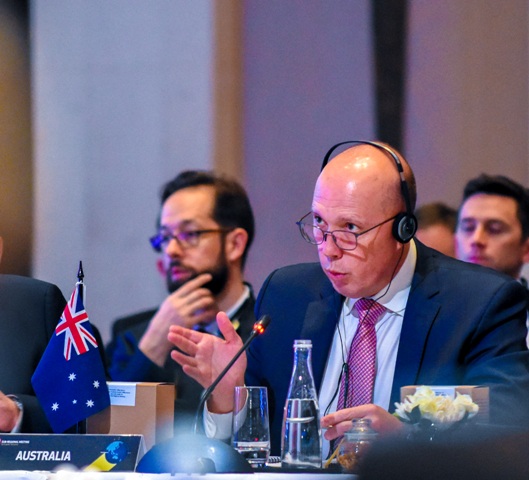
- Country:
- Australia
In a stunning turn of events that underscores a shifting political landscape in Australia, opposition leader Peter Dutton conceded both the national election and his parliamentary seat on Saturday, marking a historic victory for the ruling Labor Party. Dutton, a stalwart of Australia's conservative Liberal Party and its national figurehead, announced his concession at a subdued Liberal Party event in Brisbane. "Ali and I have been combatants for several elections now, but she was successful in Dickson tonight and she will do a good job as a local member," he said, referring to Labor candidate Ali France, who unseated him in the Queensland district of Dickson.
For Dutton, the loss is both personal and emblematic. Having held Dickson since 2001, his grip on the seat had weakened in recent years, holding it with a slim 1.7% margin after the 2022 election. This latest defeat reflects deeper currents of political dissatisfaction, particularly in traditionally conservative strongholds. Earlier on Saturday, the Australian Broadcasting Corporation (ABC) projected that Dutton's opposition coalition had lost the federal election to the incumbent center-left Labor Party. The win cements Labor's growing dominance, not just nationally but in key battleground districts like Dickson.
Ali France, a disability advocate and former journalist, has contested the seat against Dutton multiple times. Her victory signals voter appetite for fresh leadership and a departure from Dutton's hardline stances, particularly on immigration and law enforcement. Throughout the campaign, Dutton was dogged by criticism of his ideological alignment with former U.S. President Donald Trump, a connection that may have alienated centrist voters.
Dutton's fall leaves a leadership vacuum in the Liberal Party at a moment of existential reckoning. As the party faces its worst national defeat in decades, questions swirl about its path forward: Will it double down on right-wing populism or pivot toward centrist policies to regain public trust? Political analysts suggest that Labor's appeal to suburban and younger voters, coupled with dissatisfaction over the opposition's negative campaigning, created an insurmountable challenge for Dutton. Meanwhile, Prime Minister Anthony Albanese's focus on cost-of-living issues and climate policy resonated strongly with an electorate increasingly anxious about economic and environmental stability.
As Ali France prepares to take office, attention turns to how she will balance national Labor priorities with the hyper-local needs of Dickson's diverse constituency. Her win is not just a personal triumph but a symbolic blow to a figure long associated with Australia's conservative hardline policies. For Peter Dutton, the road ahead remains uncertain. Once tipped as a potential prime minister, he now exits the political stage with his legacy at a crossroads—a cautionary tale of leadership in an evolving democratic landscape.


 Google News