



Don't miss these two potentially active meteor showers in May 2022
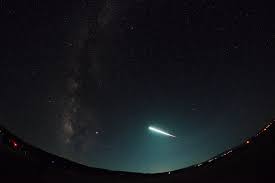
May is a perfect opportunity for stargazers and space enthusiasts to experience one of the most beautiful natural light shows - with a pair of potentially active meteor showers opening and closing the month.
On May 5-6, you will get a chance to watch the eta Aquariid meteor shower, caused by the annual encounter with debris from Halley's comet. It is named for the brightest star in that constellation, eta Aquarii.
According to NASA, the annual meteor shower has the best rates for those in the Southern Hemisphere, but even in the Northern Hemisphere, if weather conditions are right, there is a possibility of seeing up to 30 meteors per hour. The waxing crescent Moon will set before the eta Aquariid radiant gets high in the sky, leaving dark skies for what should be an excellent show.
To catch the best view, wake up early - around 3:00 am CDT.
Next up, is the tau Herculid meteor shower, forecast to peak on May 30-May 31. The possible newcomer will be high in the night sky at the forecast peak time - on the night of May 30 and the early morning of May 31.
German astronomers Arnold Schwassmann and Arno Arthur Wachmann discovered a comet named 73P/Schwassmann-Wachmann, or SW3 in 1930 when the comet passed within 5.8 million miles of the Earth. SW3 seemed pretty normal until 1995, when astronomers realized the comet had become about 600 times brighter and went from a faint smudge to being visible with the naked eye during its passage. Upon further investigation, they found that SW3 had shattered into several pieces and in 2006, it was in nearly 70 pieces and has continued to fragment further since then.
NASA says the debris from SW3 will strike Earth's atmosphere very slowly, travelling at just 10 miles per second, if it makes it to us this year.


 Google News