

Hubble captures stunning picture of a spiral galaxy 24 million light-years away
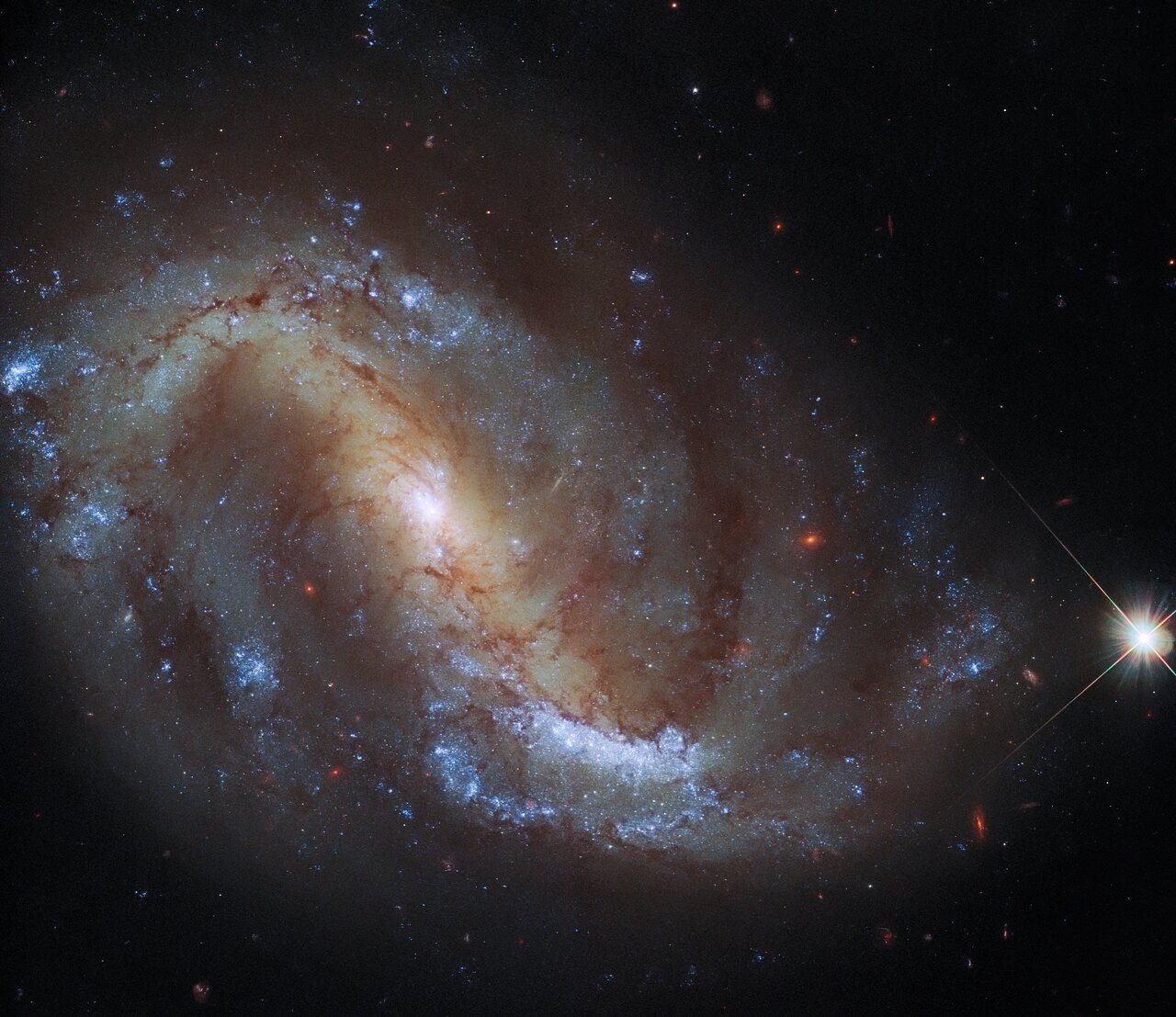
The NASA/ESA Hubble Space Telescope has captured a stunning picture of NGC 7496, a barred spiral galaxy that lies over 24 million light-years away in the constellation Grus, one of four constellations collectively known as the Southern Birds. The image was shared by the European Space Agency (ESA).
The other constellations are Pavo, Phoenix and Tucana, depicting a peacock, phoenix, and toucan respectively. The rest of the night sky also hosts a flock of ornithological constellations, including an eagle (Aquilla), swan (Cygnus), crow (Corvus), and dove (Columba).
This Picture of the Week from the NASA/ESA Hubble Space Telescope shows the barred spiral galaxy NGC 7496, which lies over 24 million light-years away in the constellation Grus.🔗 https://t.co/hvbeSt1D7Q pic.twitter.com/vZcHLfDiJt
— HUBBLE (@HUBBLE_space) May 30, 2022
Captured using Hubble's Wide Field Camera 3 and Advanced Camera for Surveys, this image of NGC 7496 comes from a collection of observations delving into the relationship between young stars and the cold, dense clouds of gas in which they form. In addition, data from the Atacama Large Millimeter/submillimeter Array (ALMA), one of the largest radio telescopes in the world, was also used for this project.
Sharing the picture, ESA wrote in a blog post, "This treasure trove of data from two of the world's most capable observatories will contribute to wider research into star formation, as well as paving the way for future science with the James Webb Space Telescope."
For the unversed, Webb is the world's largest and most powerful space-based observatory, which was launched in December 2021. Currently in the instrument commissioning phase, the space-based observatory will start its science operations this summer. While moving through space, the telescope will constantly find distant stars and galaxies and point at them with extreme precision to acquire images and spectra.


 Google News