

Watch planetary breakup, a large star cluster and more celestial events in June 2022
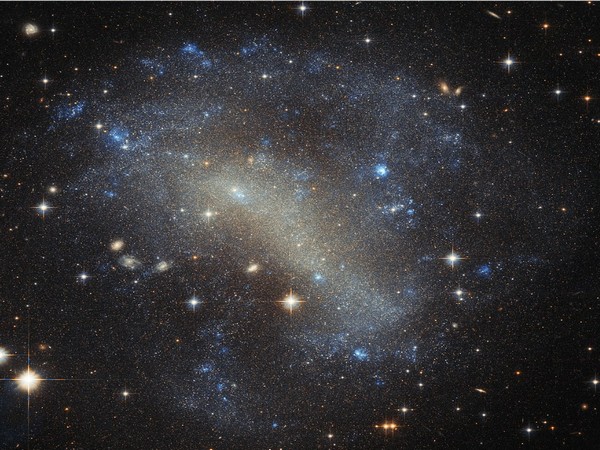
NASA has shared skywatching highlights for the month of June, which includes a planetary breakup, and a well-known star cluster, among others.
For the past few months, skywatchers have been enjoying the planetary gatherings of Saturn, Mars, Jupiter, and Venus. Now, these naked-eye planets will appear increasingly spread out across the morning sky.
Look for this increasingly spaced out planetary precession, and watch the crescent moon as it jumps into the lineup on the morning of June 23rd.
Hello June skies! Another month means another round of skywatching. Throughout June, be on the lookout for a parade of planets, the Hercules Cluster and the constellation Lyra.More tips: https://t.co/LQVVi3x0zU pic.twitter.com/169VwjQLBp
— NASA JPL (@NASAJPL) June 1, 2022
Next up, this month, you will get to watch M13, also known as the Hercules Cluster, which is one of the brightest star clusters visible from the Northern Hemisphere. Located 25,000 light-years from Earth, this cluster contains several hundred thousand stars, which are thought to be around 12 billion years old.
You can locate M13 in Hercules by first locating the stars that form the Keystone, about a third of the way between bright stars Vega and Arcturus. While you can spot the star cluster using a pair of binoculars, it is best observed with a telescope.
In June 2022, Lyra, a small constellation in the northern sky that is home to one of the brightest stars, will also be visible in the sky. You can locate the constellation by looking for Vega - the westernmost of the three bright stars in the Summer Triangle.
Grab a pair of binoculars, look northeast and let the bright star Vega lead you to the constellation, which is also home to the famous Ring Nebula, where a star has blown off most of its outer layers, leaving behind a remnant star known as a white dwarf.


 Google News