

Asteroid Bennu’s boulders protect it from small meteoroid impacts, NASA mission reveals
- Country:
- United States
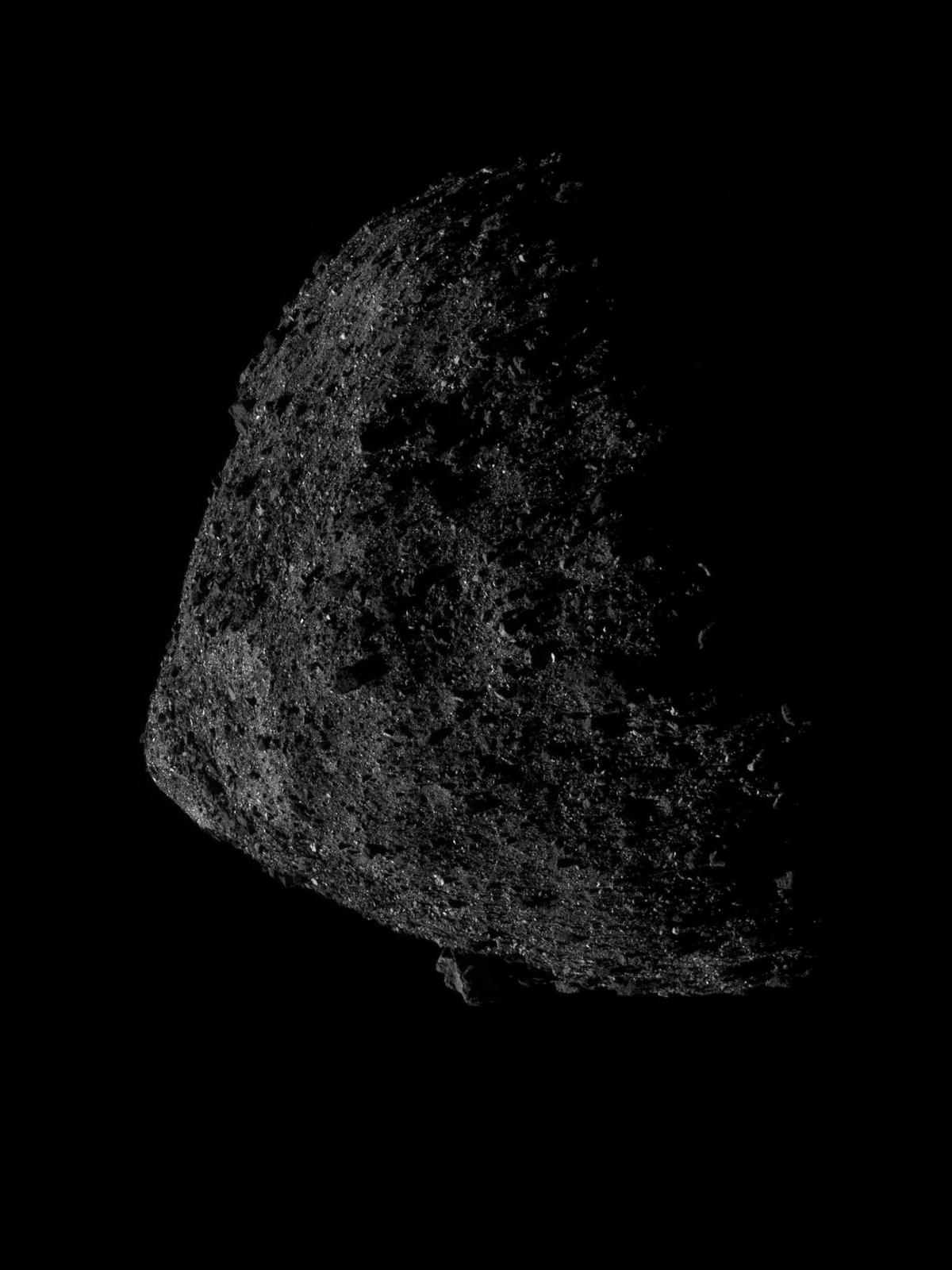
Observations of craters on Bennu, one of the two most hazardous known asteroids in our solar system, by a NASA mission have revealed that the asteroid's boulder-covered surface gives it protection against small meteoroid impacts.
Researchers, using unprecedented, high-resolution global data sets from NASA's OSIRIS-REx (Origins, Spectral Interpretation, Resource Identification, Security-Regolith Explorer) mission, examined craters on Bennu. By measuring the abundance and sizes of craters, scientists can estimate the age of surfaces.
A surface with many craters is older than a surface with few craters while the crater's size depends on the size of the impactor, with larger impactors generally making larger craters. Since small meteoroids are far more abundant than large meteoroids, celestial objects like asteroids usually have many more small craters than large ones.
In the case of asteroid Bennu, larger craters follow this pattern, with the numbers of craters decreasing as their size increases. However, for craters smaller than about 6.6 to 9.8 feet in diameter, the trend is backwards, with the number of craters decreasing as their size decreases, indicating that something unusual is happening on its surface.
According to the researchers, Bennu's boulders act as a shield, preventing many small meteoroids from forming craters. These impacts are more likely to break apart the boulders or chip and fracture them. The researchers also noted that some impactors that do make it through the boulders make small craters.
"Measuring craters and their population on Bennu was exceptionally exciting. At Bennu, we discovered something unique to small and rocky bodies, which expanded our knowledge of impacts," said David Trang of the University of Hawaii at Mānoa, Honolulu, a co-author of the paper.
Asteroid Bennu continues to surprise us. Recent results from the #OSIRISREx mission indicate that Bennu's boulders protect the asteroid from small meteoroid impacts – which is not the case for other airless rocky worlds we've observed, such as the Moon. https://t.co/J4LbspW2zQ
— NASA Solar System (@NASASolarSystem) June 16, 2022


 Google News