

This spacecraft will be meeting Mercury for the second time tomorrow: What's the purpose?
- Country:
- France
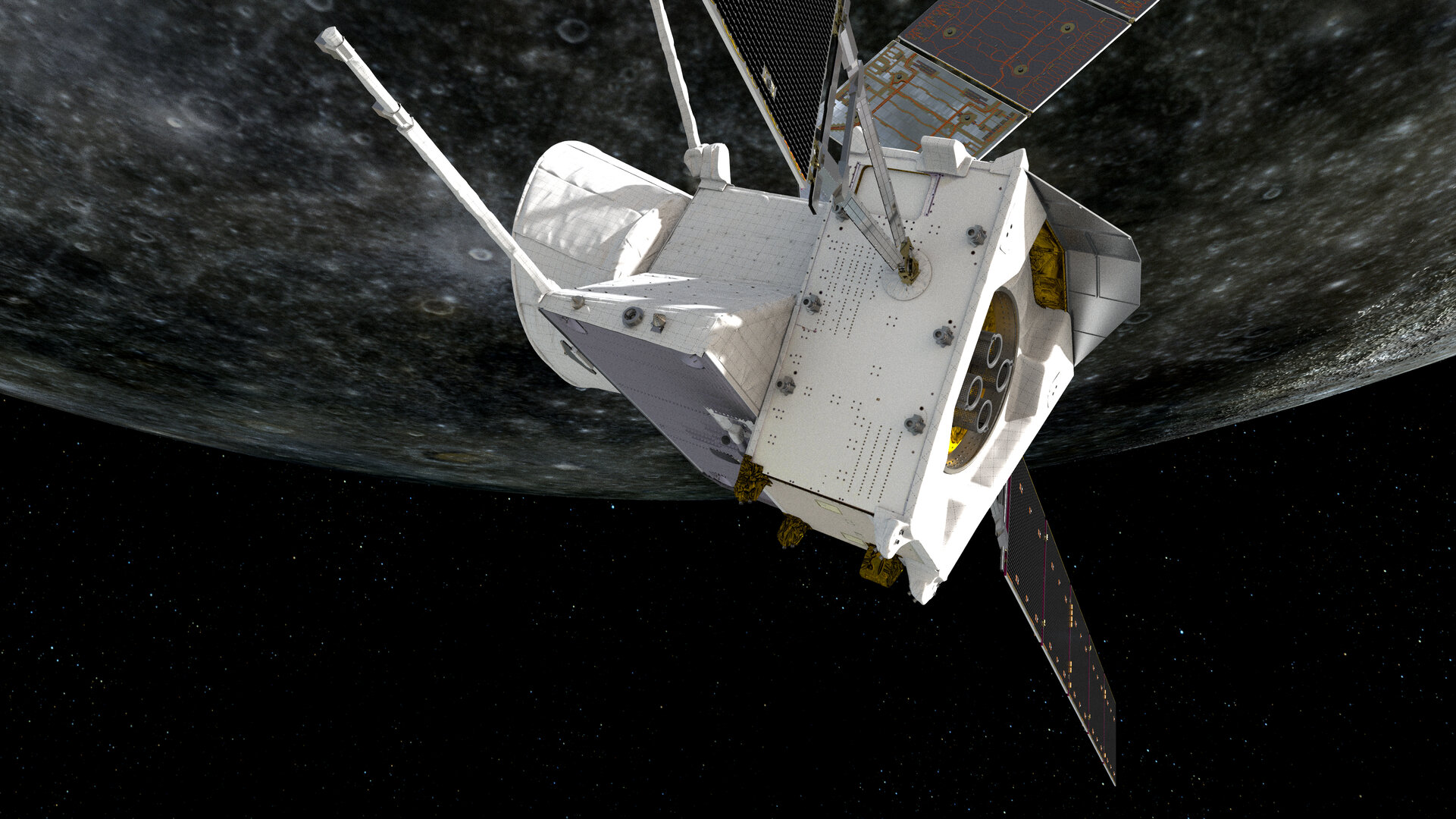
The BepiColombo mission is all set for its second close encounter with Mercury, the closest planet to the Sun, on Thursday, 23 June. During this flyby, the joint European-Japanese mission will pass Mercury at a distance of just 200 km from its surface, with the closest approach being anticipated at 09:44 UT (11:44 CEST).
BepiColombo, an international collaboration between the European Space Agency (ESA) and the Japan Aerospace Exploration Agency (JAXA) is the second mission ever to orbit Mercury and the most complex one. The spacecraft is scheduled to make nine gravity assist manoeuvres (one of Earth, two of Venus and six of Mercury) before entering orbit around Mercury in 2025.
During these flybys, the spacecraft uses the planet's gravity to fine-tune its trajectory. BepiColombo's three monitoring cameras (MCAMs) will be taking photos of tomorrow's flyby and the first snapshot is expected to be available for public release during the afternoon of 23 June, according to ESA. A second image release, comprising multiple new images, is also expected by Friday morning.
"For the closest images it should be possible to identify large impact craters and other prominent geological features linked to tectonic and volcanic activity such as scarps, wrinkle ridges and lava plains on the planet's surface," ESA said.
One day to #MercuryFlyby! I wonder what we'll see this time @JAXA_MMO @ESA_MTM ? In the meantime, here's a recap (and photo!) of our very first taste of #Mercury science from last year 👉 https://t.co/R0mDncllrP #ExploreFarther pic.twitter.com/Kv5xDw8OnY
— Bepi (@ESA_Bepi) June 22, 2022
The BepiColombo mission comprises two scientific orbiters: the ESA-led Mercury Planetary Orbiter (MPO) and JAXA's Mercury Magnetospheric Orbiter (MMO). Together, they will study all aspects of the planet - from the structure and dynamics of its magnetosphere and how it interacts with the solar wind, to its internal structure with its large iron core, and the origin of the planet's magnetic field.


 Google News