



Scientists find new evidence for ancient ocean on Mars
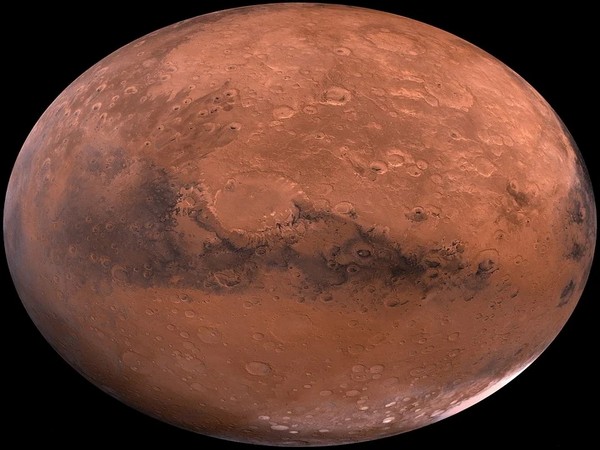
Using recently released topography data, researchers have found new evidence for an ancient northern ocean on Mars. The new topography maps provide the strongest case yet that the Red Planet once experienced sea-level rise consistent with an extended warm and wet climate, as opposed to the present harsh, frozen landscape.
"What immediately comes to mind as one the most significant points here is that the existence of an ocean of this size means a higher potential for life. It also tells us about the ancient climate and its evolution," said Benjamin Cardenas, assistant professor of geosciences at Penn State and lead author of the study.
The research team found definitive evidence of a roughly 3.5-billion-year-old shoreline with substantial sedimentary accumulation, at least 900 meters thick, that covered hundreds of thousands of square kilometers
Using software developed by the United States Geological Survey (UGS) to map data from NASA and the Mars Orbiter Laser Altimeter, the team discovered over 6,500 kilometers of fluvial ridges and grouped them into 20 systems to show that the ridges are likely eroded river deltas or submarine-channel belts, the remnants of an ancient Martian shoreline.
"On Earth, we chart the history of waterways by looking at sediment that is deposited over time. We call that stratigraphy, the idea that water transports sediment and you can measure the changes on Earth by understanding the way that sediment piles up. That’s what we’ve done here — but it’s Mars," Cardenas explained
Elements of rock formations helped the team understand the evolution of the region's paleogeography. According to Cardenas, the area that was once ocean is now known as Aeolis Dorsa and contains the densest collection of fluvial ridges on the planet. Here on earth, the ancient sedimentary basins contain the stratigraphic records of evolving climate and life. To find a record of life on Mars, an ocean as big as the one that once covered Aeolis Dorsa would be the most logical place to start for researchers.
The study is published in the Journal of Geophysical Research: Planets.


 Google News