

Science News Roundup: Eerie image shows spectacular aftermath of a large star's death; Blue whales found to swallow 10 million microplastic pieces daily and more
A light year is the distance light travels in a year, 5.9 trillion miles (9.5 trillion km). SpaceX launches first Falcon Heavy mission since 2019 from Florida SpaceX's Falcon Heavy, the world's most-powerful active rocket, lifted off on Tuesday for the first time in more than three years through dense fog at Florida's Cape Canaveral, with Elon Musk's company sending satellites into orbit for the U.S. Space Force.
Following is a summary of current science news briefs.
Eerie image shows spectacular aftermath of a large star's death
The aftermath of a large star's explosive death is seen in an image released on Monday by the European Southern Observatory, showing immense filaments of brightly shining gas that was blasted into space during the supernova. Before exploding at the end of its life cycle, the star is believed to have had a mass at least eight times greater than our sun. It was located in our Milky Way galaxy about 800 light years from Earth in the direction of the constellation Vela. A light year is the distance light travels in a year, 5.9 trillion miles (9.5 trillion km).
Blue whales found to swallow 10 million microplastic pieces daily
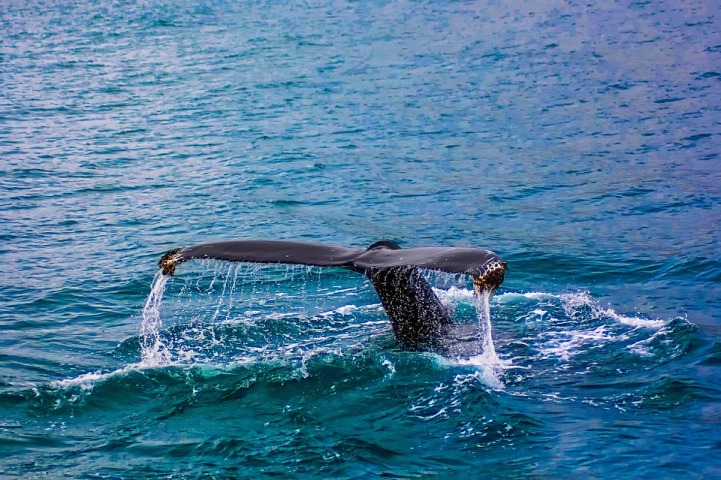
As Earth's largest animals, blue whales are mighty big eaters, gulping tons of food each day. They also now are ingesting huge amounts of plastic, according to scientists, due to the alarming volume of tiny particles of pollution choking the oceans. Researchers on Tuesday presented an estimate of the number of microplastics ingested by three species of baleen whales - blue, fin and humpback - off the U.S. Pacific coast, detailing an issue posing uncertain health concerns for these marine mammals.
SpaceX launches first Falcon Heavy mission since 2019 from Florida
SpaceX's Falcon Heavy, the world's most-powerful active rocket, lifted off on Tuesday for the first time in more than three years through dense fog at Florida's Cape Canaveral, with Elon Musk's company sending satellites into orbit for the U.S. Space Force. The rocket system, consisting of three Falcon 9 boosters strapped side-by-side, took off from a SpaceX launch pad, with two satellites from the Space Force and a group of smaller satellites bound for orbit. The Space Force did not provide details of its satellites and requested that SpaceX end its launch live stream early without showing their deployment.
Elon Musk's SpaceX expects first Starship launch to orbit this year -NASA
SpaceX is targeting early December to launch its giant Starship rocket system into orbit for the first time, a pivotal demonstration flight as it aims to fly NASA astronauts to the moon in the next few years, a U.S. official said on Monday. Billionaire Elon Musk's SpaceX has sought for years to send its towering next-generation rocket system into orbit from the company's private launch facilities in Texas, where it has only launched prototypes of Starship's upper half some 6 miles (10 km) high to demonstrate landing attempts.
'Dreaming of the Heavens': China launches final module to space station
China on Monday launched the last of the three modules that will comprise its space station, set to be the second permanently inhabited outpost in low-earth orbit after the NASA-led International Space Station. The uncrewed Mengtian, or "Dreaming of the Heavens", module was launched atop China's most powerful rocket, the Long March 5B, at 3:37 p.m. (0737 GMT) from the Wenchang Space Launch Centre in the southern island province of Hainan.


 Google News