

Science News Roundup: Astronomers marvel at 'perfect explosion,' a spherical cosmic fireball; Explainer-Bird flu: what are the risks to people and animals? and more
Thwaites, which is roughly the size of Florida, represents more than half a meter (1.6 feet) of global sea level rise potential, and could destabilize neighboring glaciers that have the potential to cause a further three-meter (9.8-foot) rise. JAXA delays Japan's H3 rocket launch to Feb 17 citing weather conditions Japan Aerospace Exploration Agency (JAXA) will delay the maiden launch of its heavy-lift H3 rocket to Feb. 17 from Feb. 15 due to weather conditions, the space agency said on Tuesday.
Following is a summary of current science news briefs.
Astronomers marvel at 'perfect explosion,' a spherical cosmic fireball
Astronomers have observed what might be the "perfect explosion," a colossal and utterly spherical blast triggered by the merger of two very dense stellar remnants called neutron stars shortly before the combined entity collapsed to form a black hole. Researchers on Wednesday described for the first time the contours of the type of explosion, called a kilonova, that occurs when neutron stars merge. The rapidly expanding fireball of luminous matter they detailed defied their expectations.
Explainer-Bird flu: what are the risks to people and animals?
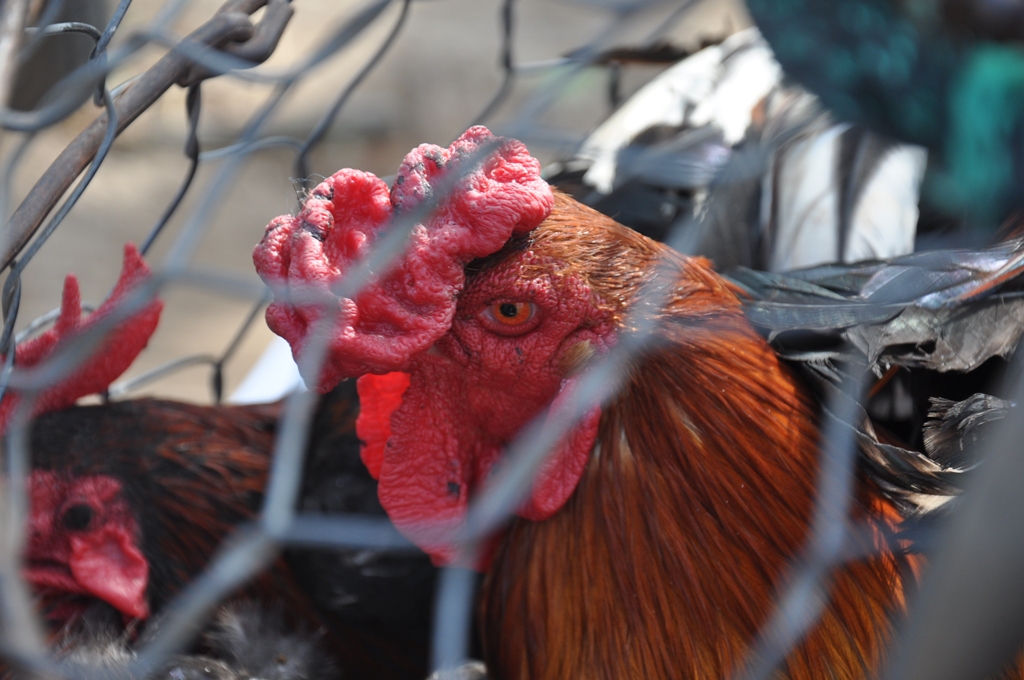
Countries ranging from the United States and Britain to France and Japan have suffered record losses of poultry in outbreaks of avian flu in the past year. The disease, which experts said is being spread by migratory birds, reached South American nations such as Ecuador, Peru and Bolivia for the first time.
Roman-era sarcophagus uncovered in Gaza
A Roman-era sarcophagus, likely to have belonged to a prominent individual, was uncovered at the site of a 2,000-year-old Roman cemetery discovered last year in the northern Gaza Strip, the territory's antiquities ministry said on Tuesday. So far 90 individual and mass graves have been found at the site, which is being supervised by a French team of experts and which was uncovered last year by construction workers on an Egyptian-funded housing project.
Warm water melts weak spots on Antarctica's 'Doomsday Glacier', say scientists
Scientists studying Antarctica's vast Thwaites Glacier - nicknamed the Doomsday Glacier - say warm water is seeping into its weak spots, worsening melting caused by rising temperatures, two papers published in Nature journal showed on Wednesday. Thwaites, which is roughly the size of Florida, represents more than half a meter (1.6 feet) of global sea level rise potential, and could destabilize neighboring glaciers that have the potential to cause a further three-meter (9.8-foot) rise.
JAXA delays Japan's H3 rocket launch to Feb 17 citing weather conditions
Japan Aerospace Exploration Agency (JAXA) will delay the maiden launch of its heavy-lift H3 rocket to Feb. 17 from Feb. 15 due to weather conditions, the space agency said on Tuesday. "As a result of today's weather assessment, it is anticipated that weather conditions on the day of the launch will not be suitable, so changes will be made as a precautionary measure," it said in a statement.


 Google News