

Hubble telescope snaps nearby galactic neighbour | Check out this breathtaking image
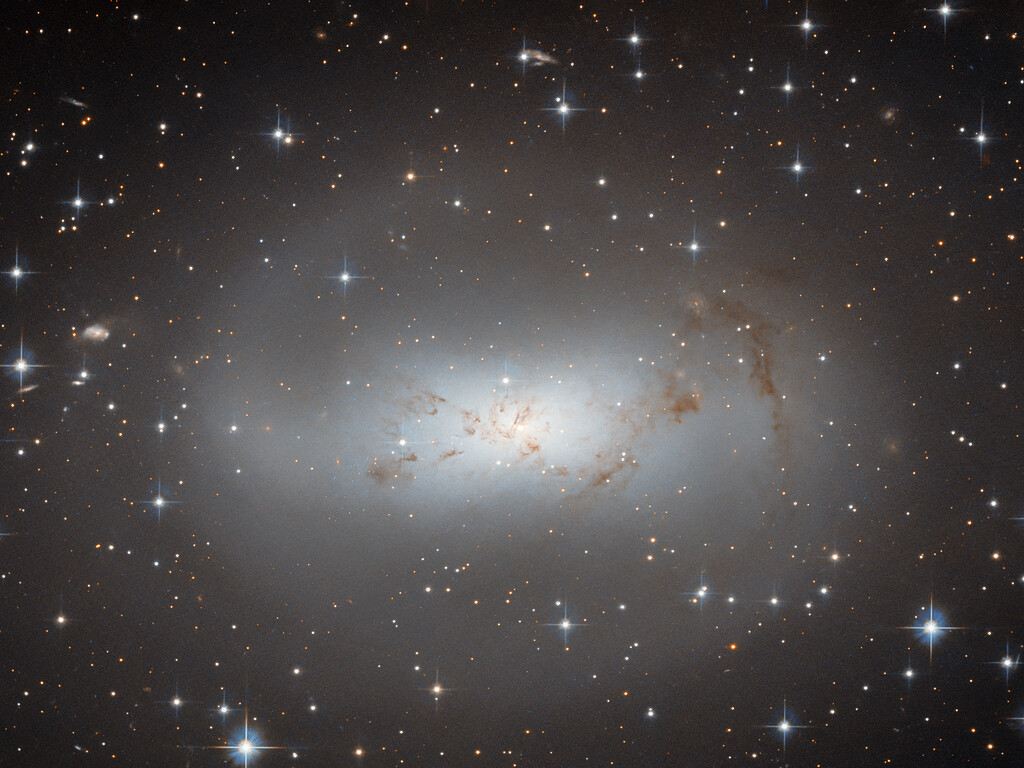
The galactic beauty featured in this latest image from the NASA/ESA Hubble Space Telescope is a highly irregular galaxy known as ESO 174-1. Resembling a solitary, ethereal cloud set against a backdrop of brilliant stars, this captivating galaxy lies around 11 million light-years from Earth
This remarkable photograph is just one among many others in a vast collection of Hubble observations, all aimed at acquainting us with our nearby galactic neighbours. This particular observation aims to scrutinize the brightest stars and fundamental characteristics of every known galaxy within a 10-megaparsec radius. In the astronomical realm, a parsec serves as a unit of measurement for the immense distances between galaxies. To put it into perspective, 10 megaparsecs equates to an astounding 32 million light-years.
The program was designed to utilize the 2-3% of Hubble's precious observing time that no other scientific endeavour can claim. The Hubble Space Telescope's schedule is an intricate puzzle, with countless celestial objects vying for observation during specific times of the year. Hence, projects like the one responsible for capturing the ethereal beauty of ESO 174-1 play a crucial role in optimizing the observatory's limited resources and extracting every drop of knowledge from its precious minutes of observation.
Our ESA/Hubble Picture of the Week features the highly irregular galaxy ESO 174-1, which resembles a lonely, hazy cloud against a backdrop of bright stars. ✨ Read more: 🔗 https://t.co/ee6rIC6VH0 or 🧵👇 pic.twitter.com/hYFwcBsL6z
— HUBBLE (@HUBBLE_space) June 26, 2023
Since its launch in 1990, Hubble has revolutionized our understanding of the cosmos. The powerful space-based observatory has made numerous groundbreaking discoveries, such as determining the age of the universe, confirming the existence of supermassive black holes, and measuring the rate of the universe's expansion. It has also provided invaluable insights into the formation of stars and galaxies, the nature of dark matter and dark energy, and the existence of exoplanets.


 Google News