



NASA awards second spacesuit task order to Axiom Space and Collins Aerospace
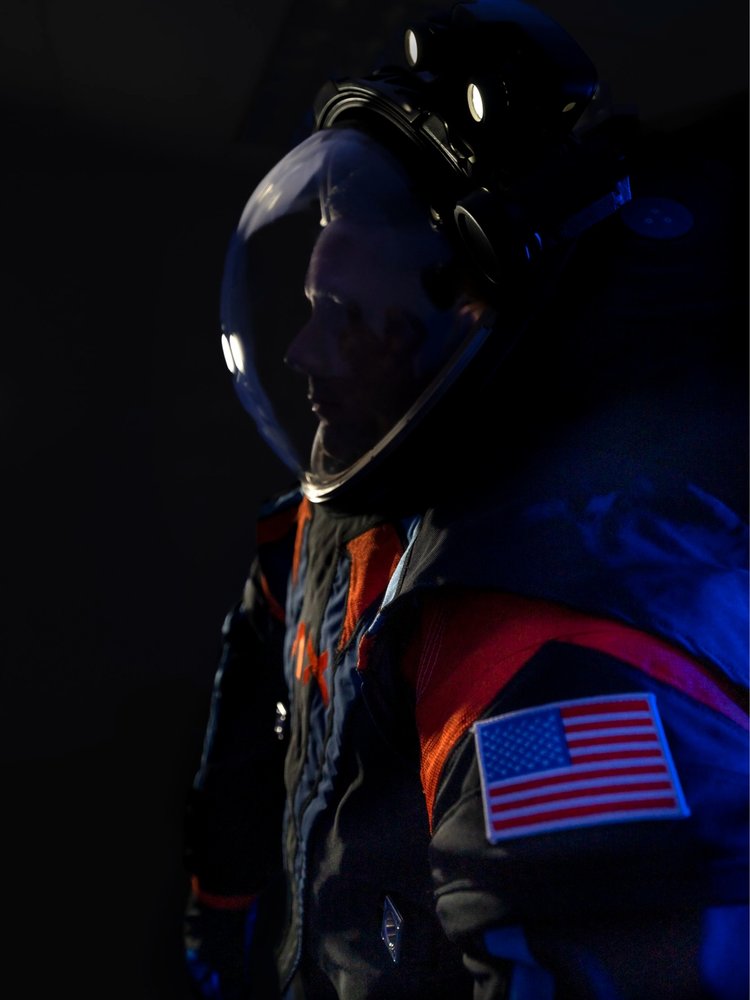
NASA has awarded Axiom Space and Collins Aerospace spacesuit task orders to advance spacewalking capabilities in low Earth orbit as well as the lunar surface, the agency announced on Monday.
This is the second task order to be awarded to the two companies under NASA's Extravehicular Activity Services (xEVAS) contract, which enables Axiom and Collins to compete for contracts that will provide a full suite of capabilities for the agency's spacewalking needs during the period of performance through 2034.
Axiom was awarded a $228 million task order in 2022 to develop the lunar spacesuit for the Artemis III mission to the Moon. Now the company will simultaneously design two spacesuits - one for the International Space Station and the other for the lunar surface.
"We are excited to add our orbital spacesuits as an option for NASA.The team is truly humbled to be a provider of spacesuits for the NASA Artemis missions and now a developer of spacesuits for future ISS missions," said Mark Greeley, Axiom Space EVA Program Manager.
Similarly, Collins Aerospace previously received a task order to develop a spacewalking system for a microgravity demonstration outside the ISS. The company will now begin early assessments for extending that suit for use on the lunar surface.
The contract expansion will not only provide the agency with additional spacewalking and moonwalking capabilities but will also help obtain potential options in case development issues arise.
Commenting on this development, Lara Kearney, manager of the Extravehicular Activity and Human Surface Mobility Program at NASA's Johnson Space Center in Houston, "These task orders position NASA for success should additional capabilities become necessary or advantageous to NASA's missions as the agency paves the way for deep space exploration and commercialization of low Earth orbit. Using this competitive approach we will enhance redundancy, expand future capabilities, and further invest in the space economy."


 Google News