



Sun emits intense solar flare; NASA observatory captures event | See pic
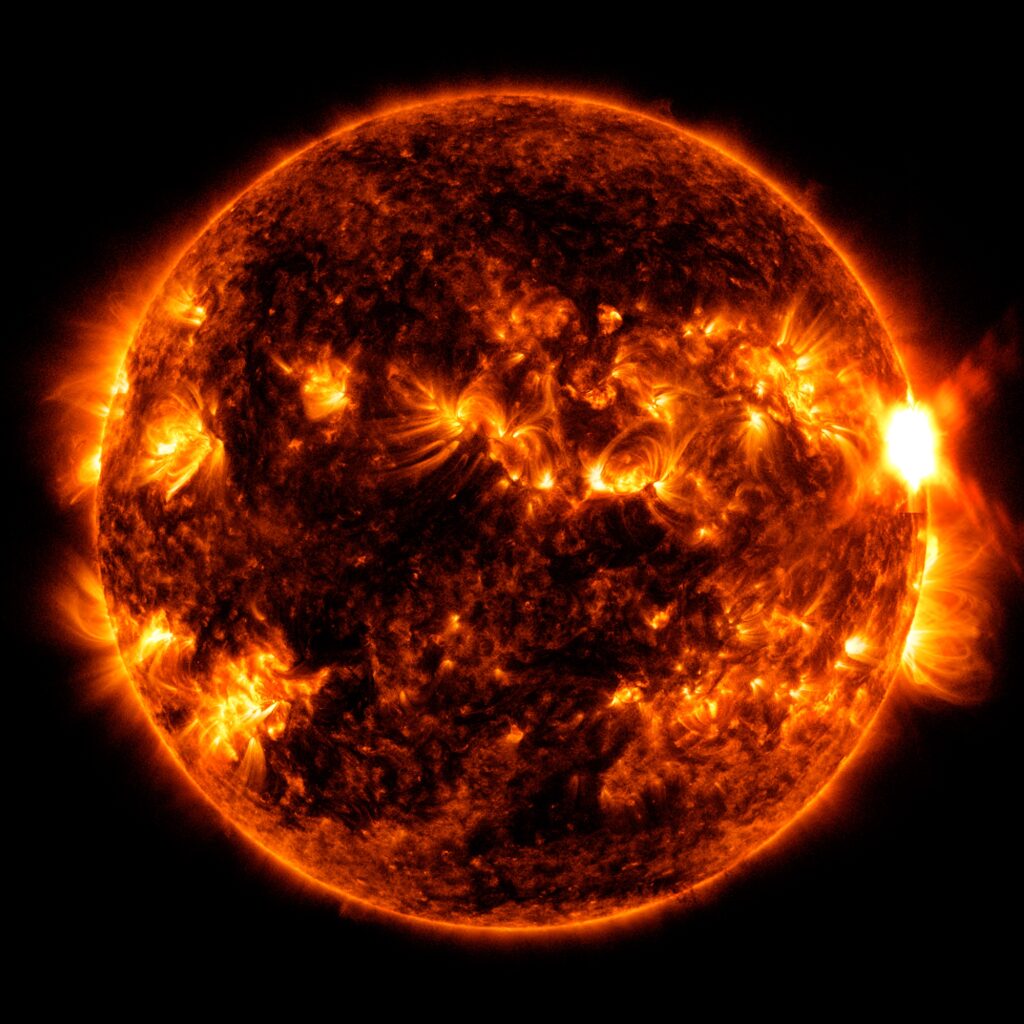
The Sun unleashed an intense solar flare on August 5, 2023, at 6:21 p.m. EDT, a picture of which was captured by NASA's Solar Dynamics Observatory. The image shows a subset of extreme ultraviolet light that highlights the extremely hot material in flares (red and orange).
This recent solar flare is classified as an X1.6 flare, with the letter "X" denoting the highest intensity flares. The numerical value, which provides information about the flare's strength, was 1.6 in this case.
The Sun emitted a strong solar flare on Aug. 5, peaking at 6:21 p.m. ET. NASA’s Solar Dynamics Observatory captured an image of the event, which was classified as X1.6: https://t.co/4fyBJuUfVW pic.twitter.com/DJKyiE29wy
— NASA Sun & Space (@NASASun) August 7, 2023
The Sun, our life-giving star, goes through a natural cycle of 11 years, during which its activity waxes and wanes. The solar cycle consists of two main phases: solar minimum, characterized by a lower level of solar activity, and solar maximum, marked by a peak in solar activity, including a high level of solar flares, and coronal mass ejections.
As the Sun transitions from solar minimum to solar maximum, its activity gradually intensifies. This increase in solar activity can lead to more frequent and energetic solar flares and other space weather phenomena. The current cycle is Solar Cycle 25 and the Sun's activity will continue to ramp up until solar maximum, predicted for 2025.
Solar flares, characterized by their explosive bursts of energy, hold the potential to impact various technological systems on Earth and in space. They can disrupt critical communication systems, challenge the stability of electric power grids, interfere with navigation signals, and even pose potential threats to spacecraft and astronauts navigating the cosmos.
Since its launch in 2010, the Solar Dynamics Observatory, a powerful observatory constantly monitoring the Sun's activity, has been providing a wealth of data and images to help scientists study the Sun's behaviour, particularly its influence on space weather and its impact on Earth.
- READ MORE ON:
- solar flares
- Solar Dynamics Observator
- NASA
- Solar Cycle 25


 Google News