

Perseverance rover navigates to possible ancient lake shoreline on Mars
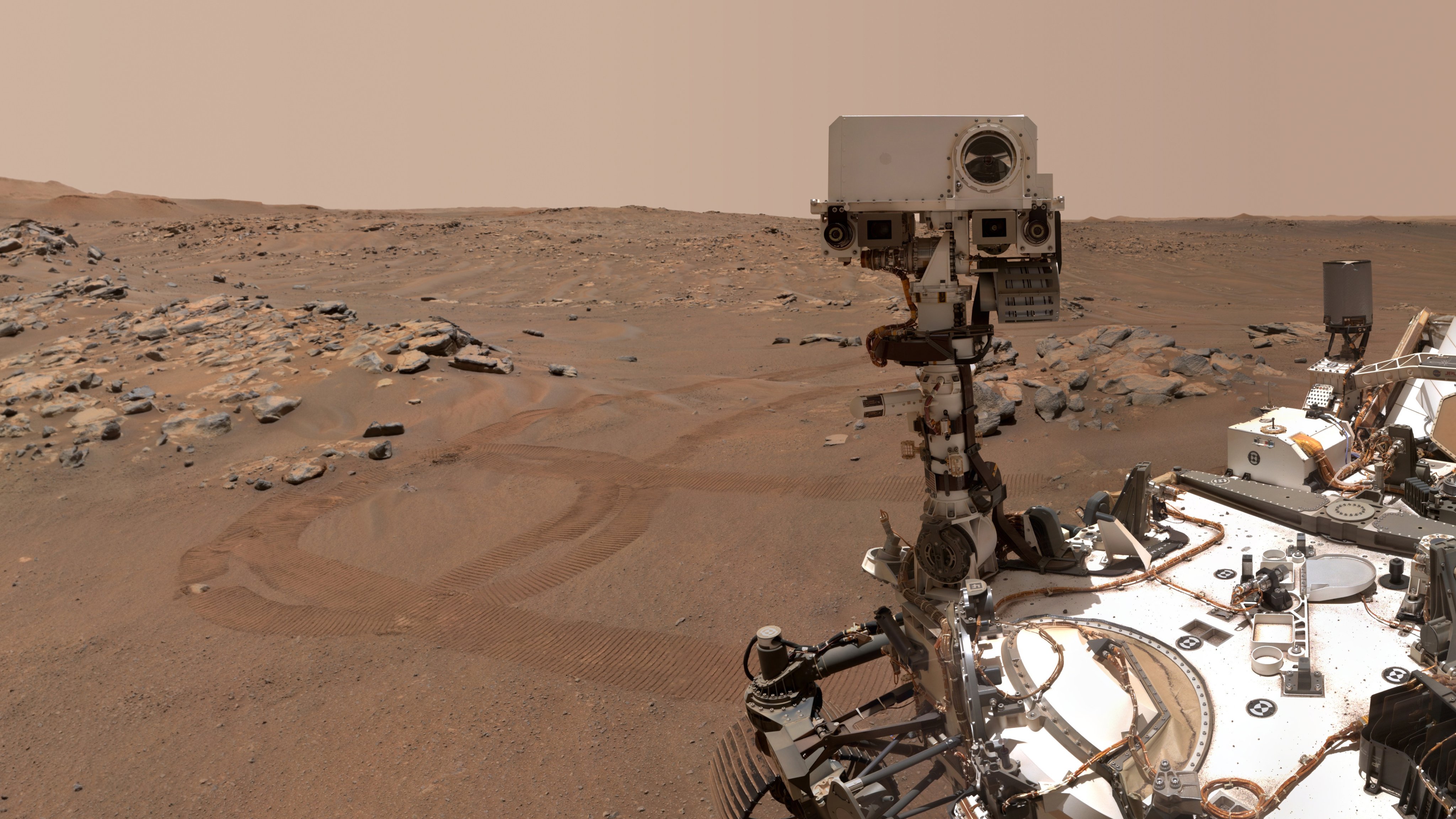
NASA's Perseverance Mars rover is kickstarting its new science campaign at an eagerly anticipated location - the margin carbonate unit. Located in a narrow band along the inner edge of Jezero's western crater rim, this rock unit exhibits pronounced signatures of carbonate - a mineral which typically forms in the shallow shoals of freshwater or alkaline lakes on Earth.
There are many theories surrounding this special rock unit on Mars. One hypothesis proposes is that over 3 billion years ago, the waters of a lake in Jezero crater might have lapped against its shores, depositing this carbonate layer. An alternative hypothesis suggests that this mineral is formed through mineral carbonation, where silicate minerals (like olivine) react with CO₂ and are converted to carbonates.
Carbonates form through a series of chemical reactions that begin when carbon dioxide from the atmosphere reacts with liquid water. Studying the presence, abundance, and isotopic composition of these carbonates, the Perseverance team may be able to infer the past atmospheric CO₂ levels and glean insights into the climatic history of Mars.
Another intriguing aspect of Carbonates is that these minerals are an excellent medium for preserving traces of ancient life if it ever existed. On Earth, carbonates have been observed to form directly around microbial cells, encapsulating them and rapidly turning them into fossils.
The Perseverance team is eager to drill into these rocks and unlock their secrets, offering potential insights into the Red Planet's history and the tantalizing question of whether life once thrived in its distant past.
To kickstart my newest science campaign, I've arrived at a spot that may have been the shoreline of the ancient lake here at Jezero Crater. See why my team has been excited for years about studying this location up close: https://t.co/0HZDxArMwO pic.twitter.com/93aqF26bcx
— NASA's Perseverance Mars Rover (@NASAPersevere) September 16, 2023


 Google News